
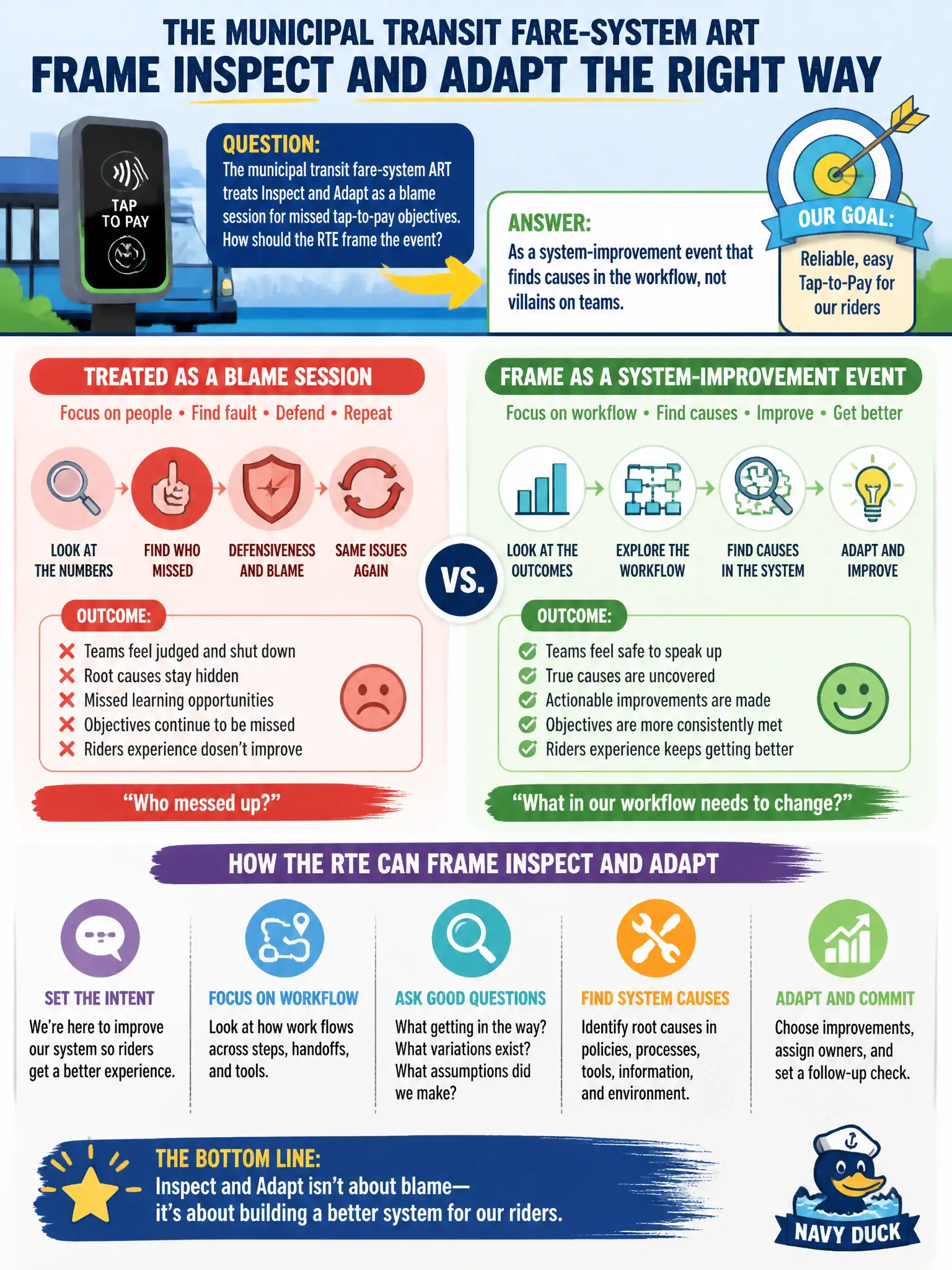
The municipal transit fare-system ART treats Inspect and Adapt as a blame session for missed tap-to-pay objectives. How should the RTE frame the event?
Select an answer to reveal the explanation.
Short Explanation
Blame is a dead end on a transit map. Inspect and Adapt is supposed to look at the whole fare system—handoffs, test environments, policy gates—not hunt for a team to punish. Fix the system and the missed objectives usually move; punish people and they hide the next miss.
Full Explanation
Frame Inspect and Adapt on the municipal transit fare-system ART as a system-improvement event that finds causes in the workflow, not villains on teams. Systems thinking optimizes the whole fare value stream—handoffs, environments, policy gates—rather than ranking teams by missed fare-gate stories. A tribunal that ranks misses chills transparency. A closed hearing where only the fare-policy office may speak hides operational reality. Withholding the next PI until someone is named at fault turns learning into punishment. Exam caveat: accountability for commitments remains; the distinction is systemic cause analysis versus personal blame theater. Operational check: open I&A with working agreements that ban personal blame, require a system-cause statement before actions, and brief transit leaders that Respect for People is how rider-facing fare reliability improves. In municipal and civic service contexts, record the rationale in the ART working agreements or improvement backlog so future PIs preserve the control, and re-validate after the next Inspect and Adapt against resident-facing outcomes rather than activity theater. Confirm owners, success measures, and a re-check date so the practice remains inspectable.