
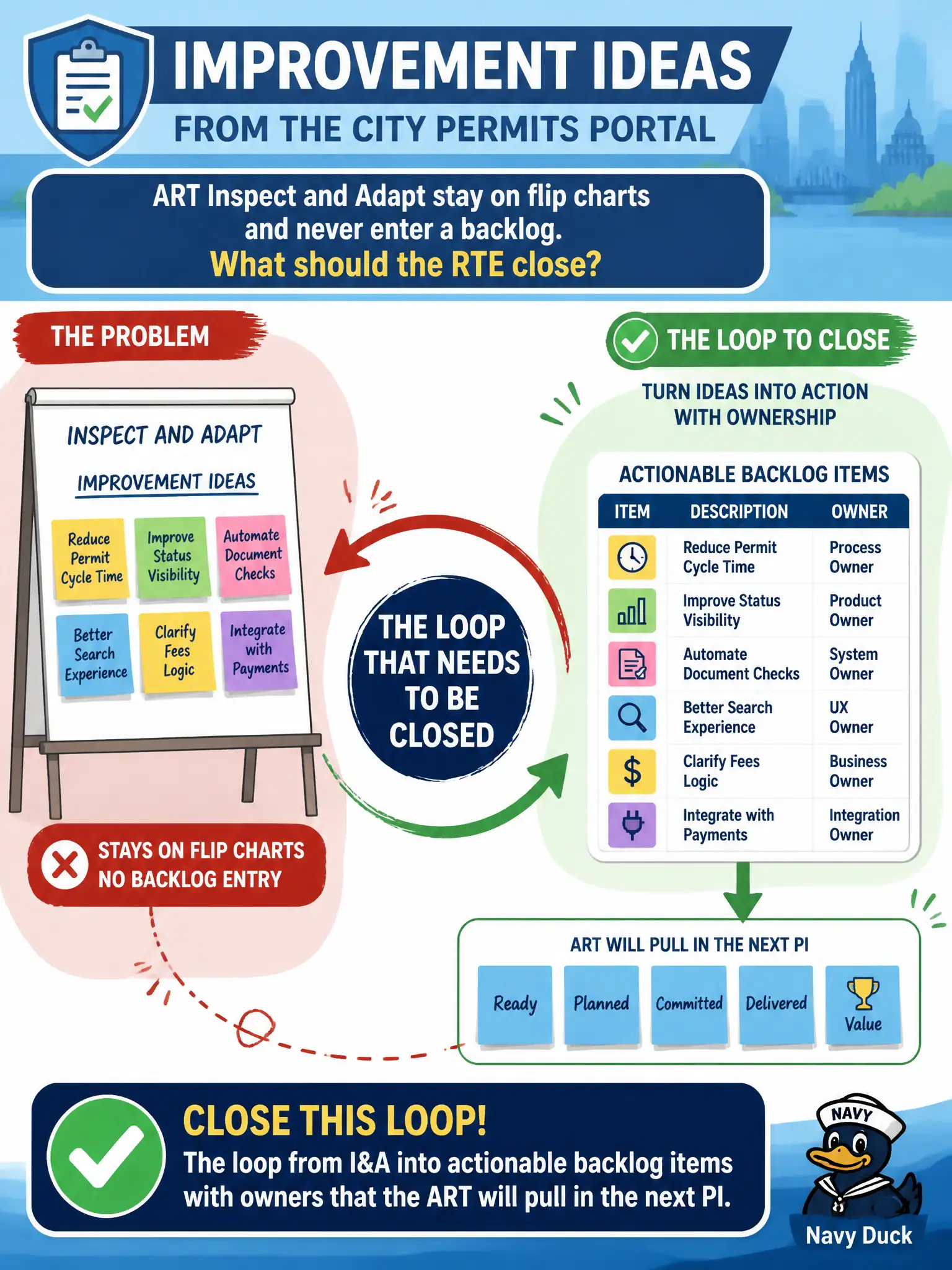
Improvement ideas from the city permits portal ART Inspect and Adapt stay on flip charts and never enter a backlog. What should the RTE close?
Select an answer to reveal the explanation.
Short Explanation
A flip-chart idea that never becomes a backlog item is a New Year's resolution taped to the permit counter. Inspect and Adapt only pays off when someone owns a story the train will actually pull. Close that loop or the portal keeps the same bottlenecks next PI.
Full Explanation
Close the loop from Inspect and Adapt into actionable backlog items with owners that the city permits portal ART will pull in the next PI. Flip-chart ideas, parking-lot documents, and private RTE notebooks do not change the permit system. Photographing charts for admiration recreates the same ideas next PI. A document Product Management may read if volume drops is optional shelfware. Observations teams are not expected to pull never receive capacity. Exam caveat: not every sticky note becomes a story—triage to a few funded items—but triage must still produce owned backlog work. Operational check: before leaving I&A, convert selected improvements into backlog items with owners and tentative PI capacity, review them in PI Planning, and track completion so resident permit lead time can actually move. In municipal and civic service contexts, record the rationale in the ART working agreements or improvement backlog so future PIs preserve the control, and re-validate after the next Inspect and Adapt against resident-facing outcomes rather than activity theater. Confirm owners, success measures, and a re-check date so the practice remains inspectable. In municipal and civic service contexts, record the rationale in the ART working agreements or improvement backlog so future PIs preserve the control, and re-validate after the next Inspect and Adapt against resident-facing outcomes rather than activity theater. Confirm owners, success measures, and a re-check date so the practice remains inspectable.