
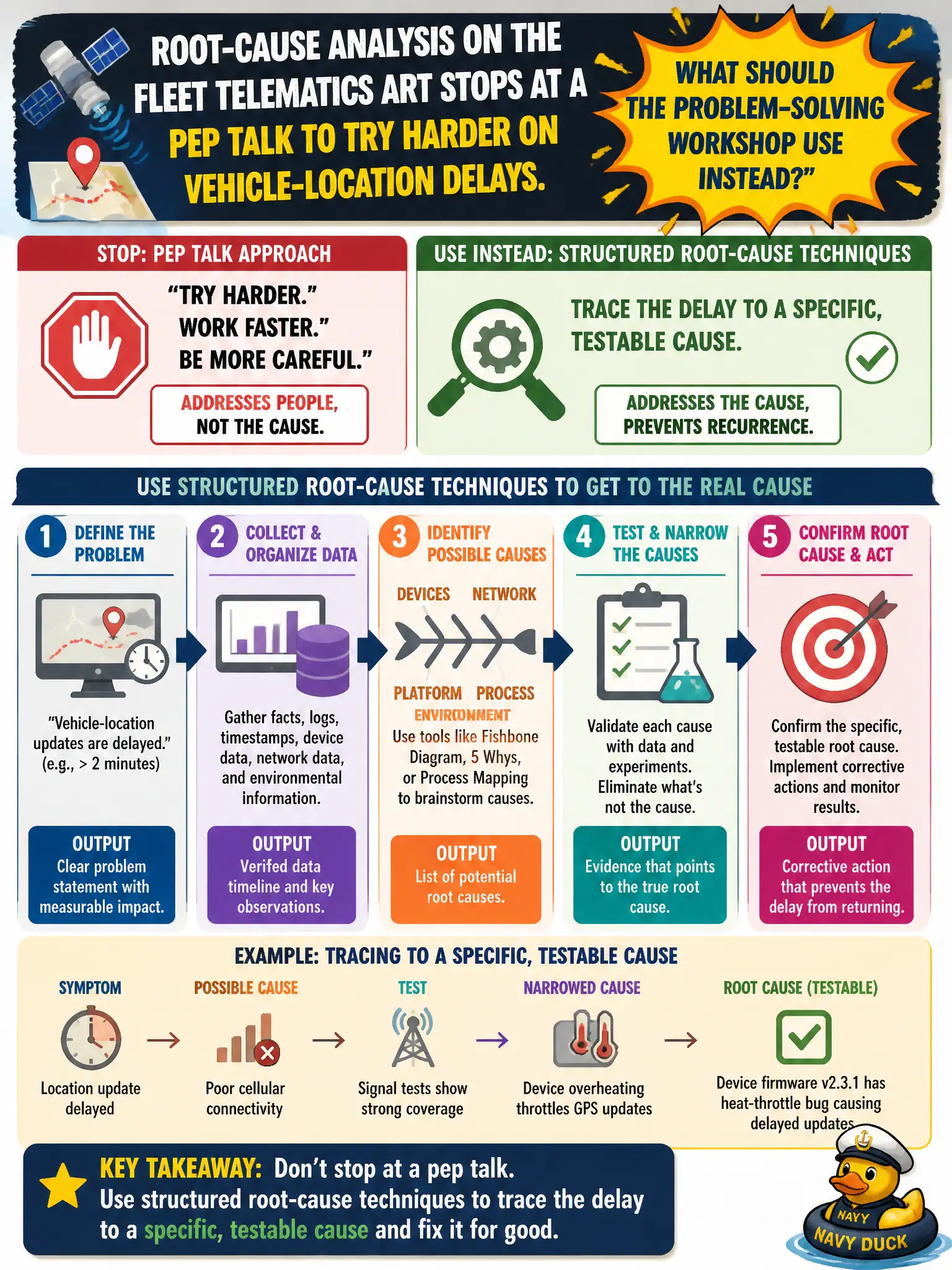
Root-cause analysis on the fleet telematics ART stops at a pep talk to try harder on vehicle-location delays. What should the Problem-Solving Workshop use instead?
Select an answer to reveal the explanation.
Short Explanation
"Try harder" is not a cause; it is a slogan you could hang on any garage wall. The workshop needs a real tool—five whys, a fishbone, something that traces those location delays to a concrete break in the system. Then the backlog item has a chance of actually moving the trucks.
Full Explanation
Use structured root-cause techniques in the Problem-Solving Workshop so the fleet telematics ART traces vehicle-location delays to a specific, testable cause. Pep talks to try harder are slogans, not causes. Motivational briefings from fleet supervisors before PI Planning do not change flow. Voting to blame the vendor without a cause statement closes learning early. Committing to add more location stories without examining current-state flow increases WIP on the same broken path. Exam caveat: vendor issues can be a real root cause when evidence supports them; the failure is blame without analysis or skipping current-state evidence. Operational check: facilitate five whys or a fishbone on the chosen delay, write a cause statement the ART can test, and create one or two improvement backlog items with measures so municipal fleet location accuracy for public services improves. In municipal and civic service contexts, record the rationale in the ART working agreements or improvement backlog so future PIs preserve the control, and re-validate after the next Inspect and Adapt against resident-facing outcomes rather than activity theater. Confirm owners, success measures, and a re-check date so the practice remains inspectable.