
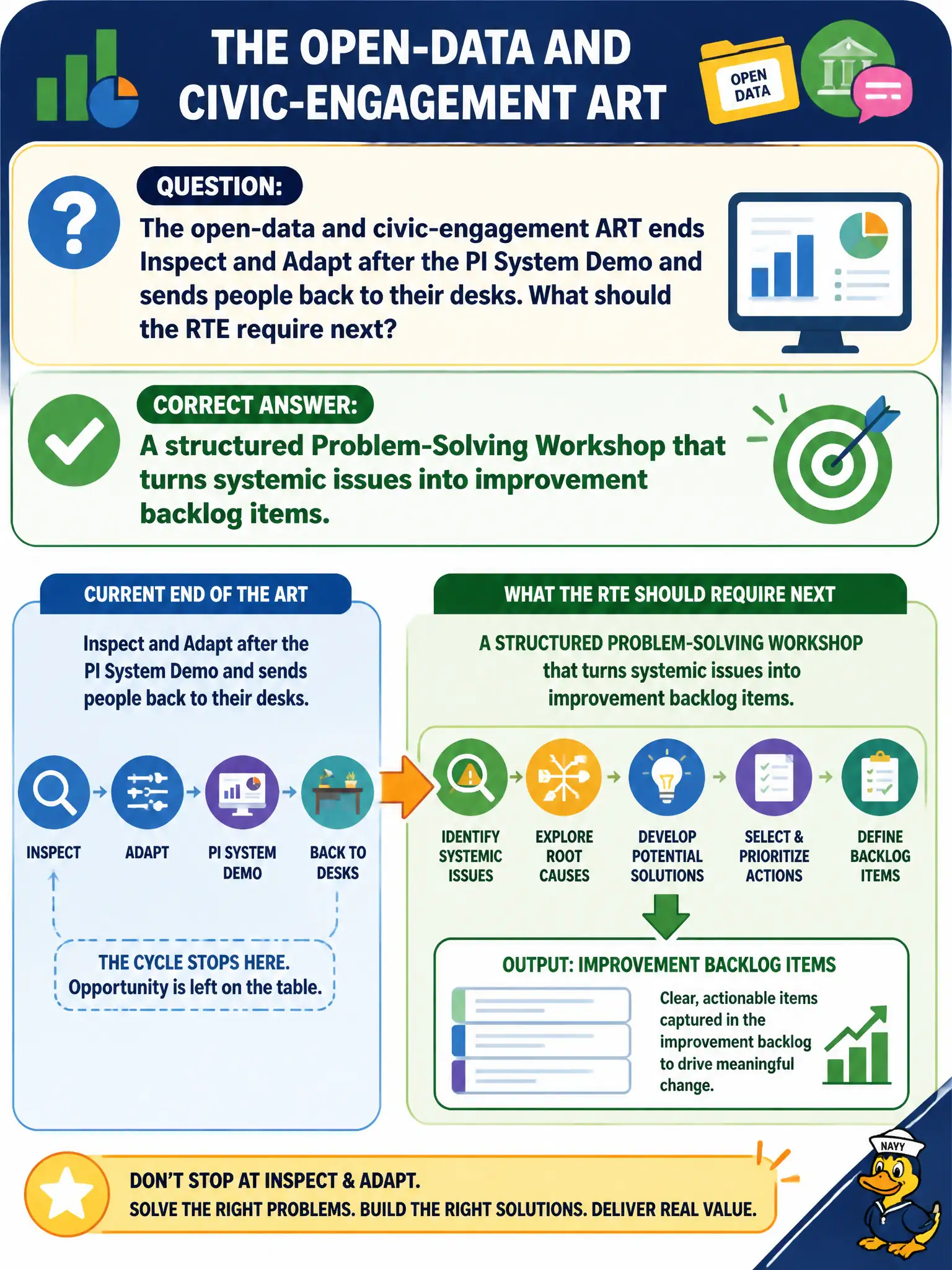
The open-data and civic-engagement ART ends Inspect and Adapt after the PI System Demo and sends people back to their desks. What should the RTE require next?
Select an answer to reveal the explanation.
Short Explanation
A demo without problem-solving is a ribbon-cutting that never asks why the portal still fails. Inspect and Adapt has a third act: a structured workshop that names a real problem and puts fixes in the backlog. Skip it and the civic-engagement train just replays the same demo next PI.
Full Explanation
Require a structured Problem-Solving Workshop after the PI System Demo and measurement review on the open-data and civic-engagement ART so systemic issues become improvement backlog items. Inspect and Adapt does not end when the integrated portal or dataset solution has been shown. A hallway poll of which portal feature felt nicest ranks praise instead of causes. A closed executive huddle that replaces the workshop hides problems from the ART. Jumping straight into next PI Planning because the demo looked healthy skips relentless improvement. Exam caveat: the workshop should select a few high-leverage problems, not an unbounded complaint list. Operational check: schedule the workshop on the I&A agenda with a facilitator, produce owned improvement stories before people leave, and place them on team or ART backlogs for the next PI so civic open-data delays actually change. In municipal and civic service contexts, record the rationale in the ART working agreements or improvement backlog so future PIs preserve the control, and re-validate after the next Inspect and Adapt against resident-facing outcomes rather than activity theater. Confirm owners, success measures, and a re-check date so the practice remains inspectable.