
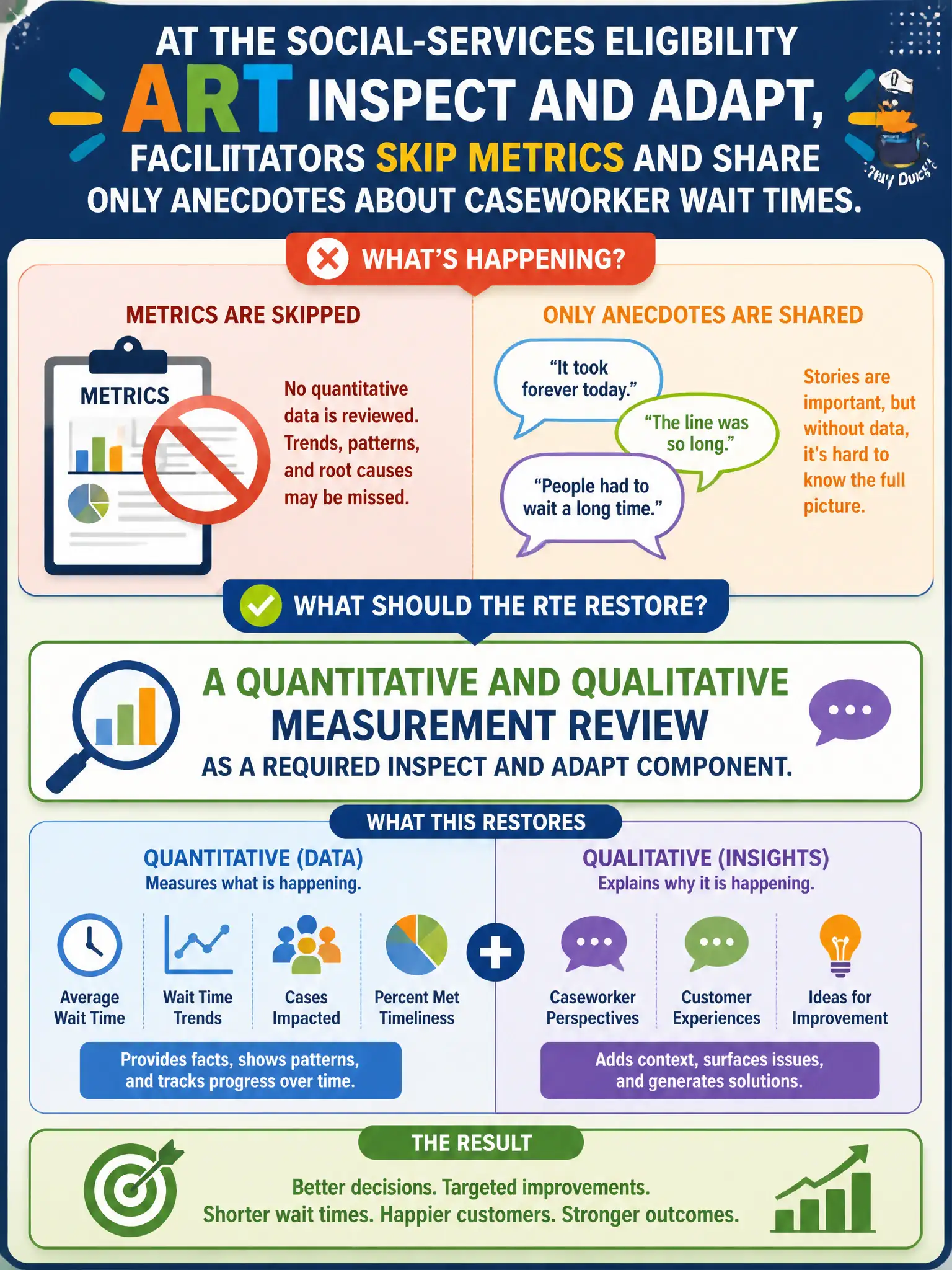
At the social-services eligibility ART Inspect and Adapt, facilitators skip metrics and share only anecdotes about caseworker wait times. What should the RTE restore?
Select an answer to reveal the explanation.
Short Explanation
Anecdotes are the hallway gossip of improvement. They can hint at a problem, but Inspect and Adapt also needs the scoreboard: planned versus actual value, predictability, and other ART measures. Without that review, the eligibility train is guessing which wait-time story to chase.
Full Explanation
Restore a quantitative and qualitative measurement review as a required Inspect and Adapt component for the social-services eligibility ART. After the PI System Demo, the ART reviews planned versus actual business value, predictability, and other meaningful measures so systemic problems are selected on evidence. A longer anecdote circle adds stories without a scoreboard. A leadership-only scorecard emailed after the event hides measures from teams. Dropping measurement until the eligibility backlog is cleared indefinitely postpones learning while residents wait. Exam caveat: qualitative insights remain valuable alongside numbers; the failure mode is anecdotes alone or hidden metrics, not the presence of stories. Operational check: prepare planned-versus-actual value and ART predictability charts before I&A, review them with teams and Business Owners in the room, and select problem-solving topics that caseworker wait-time data support for civic benefit delivery. In municipal and civic service contexts, record the rationale in the ART working agreements or improvement backlog so future PIs preserve the control, and re-validate after the next Inspect and Adapt against resident-facing outcomes rather than activity theater. Confirm owners, success measures, and a re-check date so the practice remains inspectable.