
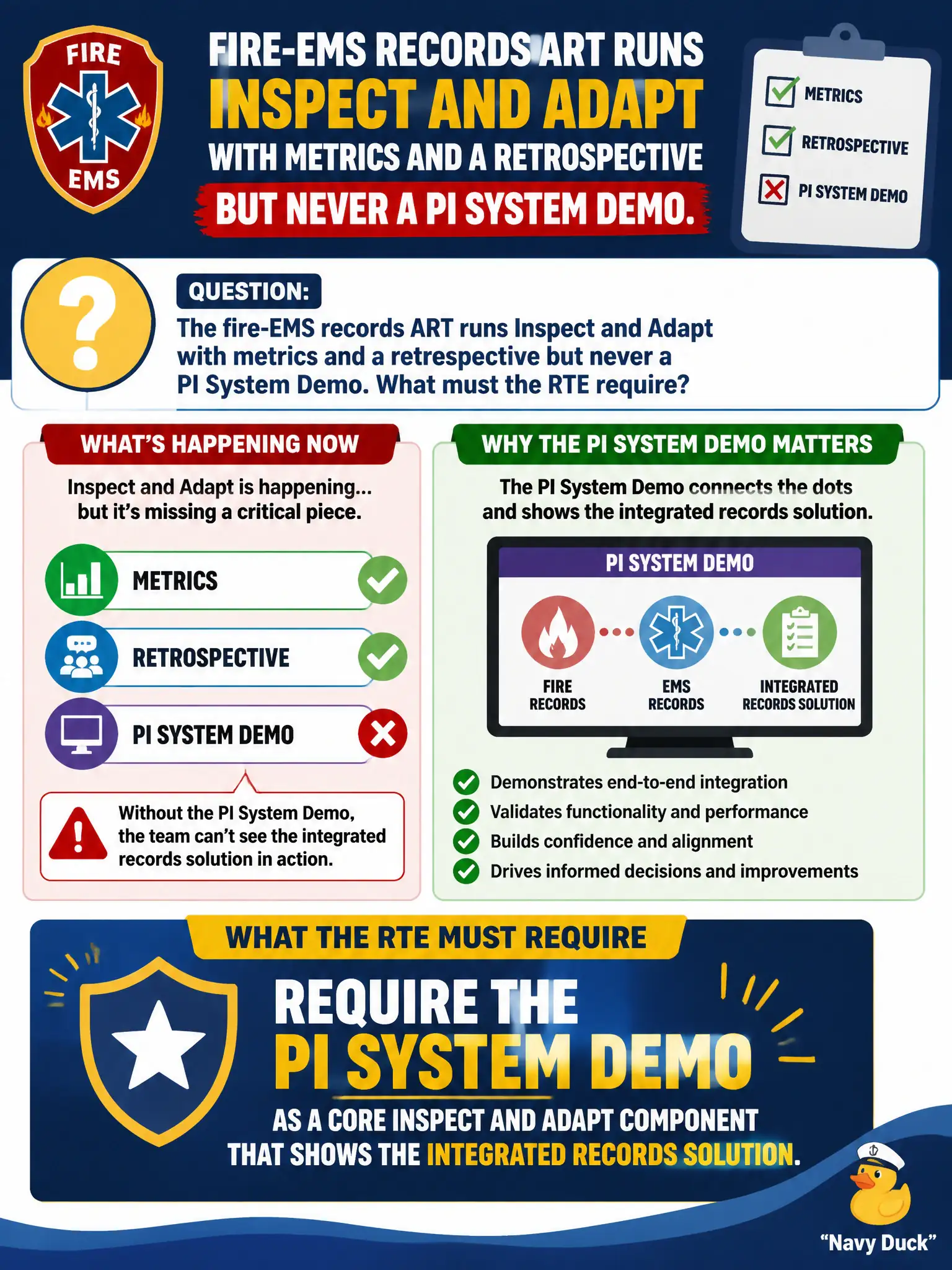
The fire-EMS records ART runs Inspect and Adapt with metrics and a retrospective but never a PI System Demo. What must the RTE require?
Select an answer to reveal the explanation.
Short Explanation
Talking about the fire-records build without showing the integrated system is like debriefing a call without the run report. The PI System Demo is the first act of Inspect and Adapt, not an optional extra. Stakeholders need to see the working solution before they score value or pick problems.
Full Explanation
Require the PI System Demo as a core Inspect and Adapt component that shows the integrated fire-EMS records solution. I&A is structured as demo, quantitative and qualitative measurement review, and a retrospective with problem-solving; the demo provides objective evidence for Business Owner feedback and actual business-value scoring. A written incident-log recap is not a substitute for a working integrated solution. A private architect walkthrough that excludes crews and Business Owners removes stakeholder feedback. Team-only sprint reviews with no ART-level integration at the PI boundary miss system validation. Exam caveat: demos can be risk-appropriate for sensitive records, but stakeholders still need to see integrated capability, not only slides. Operational check: put the PI System Demo first on the I&A agenda, verify integrated records scenarios with Business Owners present, and only then proceed to metrics and problem-solving for public-safety readiness. In municipal and civic service contexts, record the rationale in the ART working agreements or improvement backlog so future PIs preserve the control, and re-validate after the next Inspect and Adapt against resident-facing outcomes rather than activity theater. Confirm owners, success measures, and a re-check date so the practice remains inspectable.