
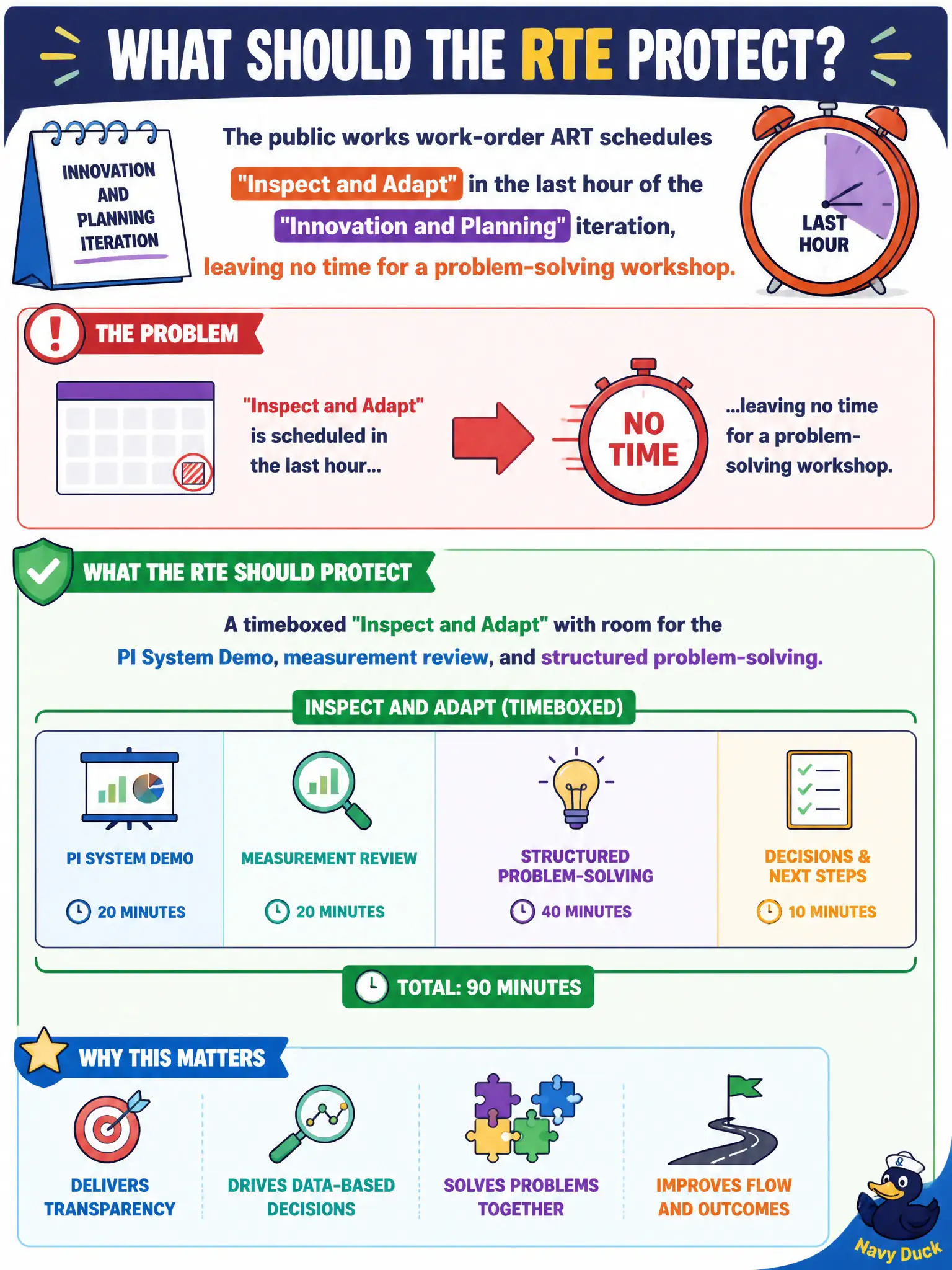
The public works work-order ART schedules Inspect and Adapt in the last hour of the Innovation and Planning iteration, leaving no time for a problem-solving workshop. What should the RTE protect?
Select an answer to reveal the explanation.
Short Explanation
Cramming Inspect and Adapt into the last hour is like trying to hold a town-hall and a root-cause clinic in a lunch break. The IP iteration is supposed to give the work-order train a real timebox for demo, metrics, and problem-solving. Guard that block or the ART just keeps paving over the same potholes.
Full Explanation
Protect a timeboxed Inspect and Adapt with room for the PI System Demo, measurement review, and structured problem-solving on the public works work-order ART. The Innovation and Planning iteration exists in part so I&A is a significant event rather than a leftover hour. A one-hour status readout so crews return to pothole tickets collapses improvement into reporting. Canceling I&A whenever backlog remains after the last development iteration permanently postpones learning. A private manager debrief that replaces the ART event hides system problems from the people who pave and drain streets. Exam caveat: severe operational emergencies can delay I&A briefly, but the RTE should reschedule the full event inside IP rather than permanently shrink it. Operational check: block a multi-hour I&A on the IP calendar before the PI ends, publish the three-part agenda, and refuse last-hour cram scheduling so civic work-order improvement items are identified before the next PI Planning. In municipal and civic service contexts, record the rationale in the ART working agreements or improvement backlog so future PIs preserve the control, and re-validate after the next Inspect and Adapt against resident-facing outcomes rather than activity theater. Confirm owners, success measures, and a re-check date so the practice remains inspectable.