
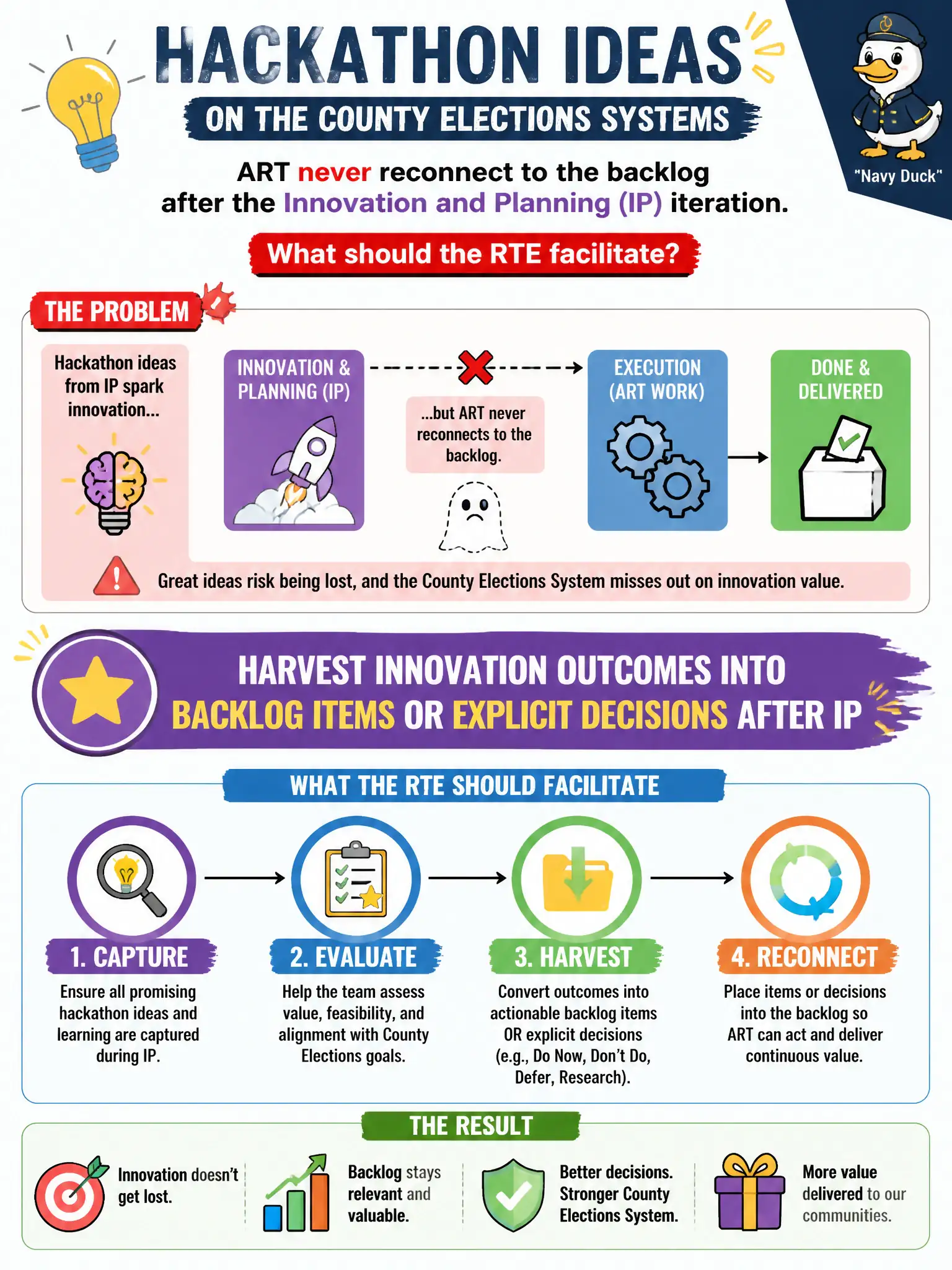
Hackathon ideas on the county elections systems ART never reconnect to the backlog after the Innovation and Planning (IP) iteration. What should the RTE facilitate?
Select an answer to reveal the explanation.
Short Explanation
A poster-session that never becomes a ticket is a science-fair ribbon in a drawer. After the elections hackathon, write down what to try—or what to drop. Harvest, or the weekend was a party.
Full Explanation
Harvest innovation outcomes into backlog items or explicit decisions after IP on the county elections systems ART. Innovation improves the ART only when spikes are demoed, keep-or-drop decisions are made, and warranted ideas enter the appropriate backlog with owners. Leaving winning ideas on a slideshow creates no pullable work. Banning follow-up so innovation cannot affect election systems wastes the investment and blocks civic improvement. Restarting the same hackathon next IP without recording learning repeats theater. Exam caveat: "drop" is a valid harvest outcome; not every spike becomes a Feature, but the decision must be explicit and visible. Operational check: end IP innovation with a short harvest forum, create backlog items or documented rejects within two business days, and share results with election operations stakeholders so public trust work is transparent rather than a party that produced no tickets. In municipal and civic service contexts, record the rationale in the ART working agreements or improvement backlog so future PIs preserve the control, and re-validate after the next Inspect and Adapt against resident-facing outcomes rather than activity theater. Confirm owners, success measures, and a re-check date so the practice remains inspectable.