
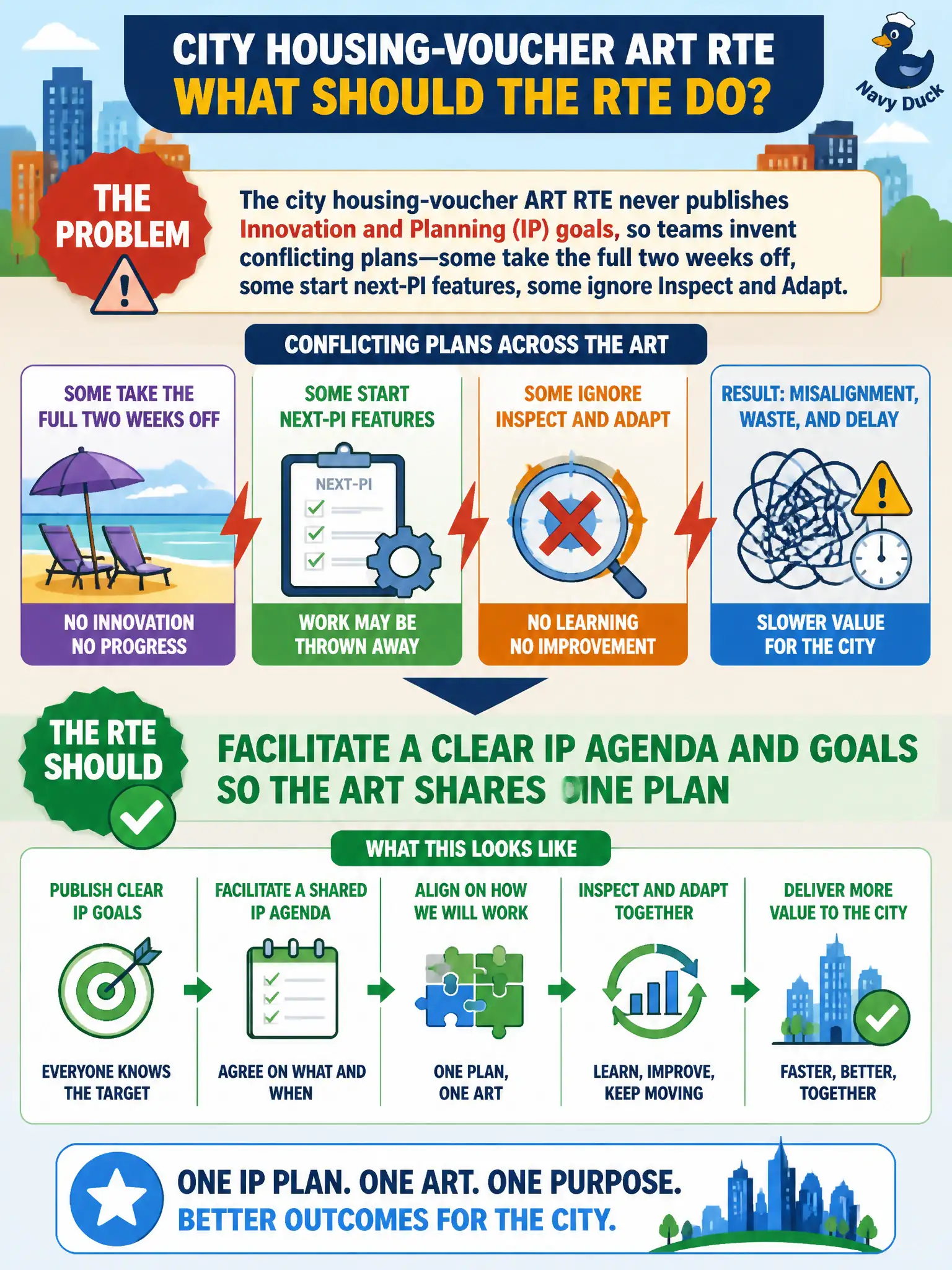
The city housing-voucher ART RTE never publishes Innovation and Planning (IP) goals, so teams invent conflicting plans—some take the full two weeks off, some start next-PI features, some ignore Inspect and Adapt. What should the RTE do?
Select an answer to reveal the explanation.
Short Explanation
If the community-center calendar is blank, one group brings a potluck, one locks the doors, and one starts remodeling. Post the IP agenda. Shared goals beat twenty private inventions.
Full Explanation
Facilitate a clear IP agenda and goals so the city housing-voucher ART shares one plan instead of inventing conflicting private calendars. The RTE facilitates IP like other ART events: purpose, agenda, and outcomes covering innovation windows, education, I&A prep, and time-off guidance. Letting each team invent a private IP plan fragments Inspect and Adapt and planning prep. Announcing IP as unstructured and skipping the ART calendar guarantees potluck chaos. Publishing goals only after IP ends prevents preparation. Exam caveat: teams may still tailor local detail under shared ART goals; facilitation is alignment, not micromanaging every hour. Operational check: publish IP goals before the iteration starts, review them in the final System Demo or Scrum of Scrums, and verify each team can point to how it will support I&A and next-PI prep for voucher services residents depend on. In municipal and civic service contexts, record the rationale in the ART working agreements or improvement backlog so future PIs preserve the control, and re-validate after the next Inspect and Adapt against resident-facing outcomes rather than activity theater. Confirm owners, success measures, and a re-check date so the practice remains inspectable.