
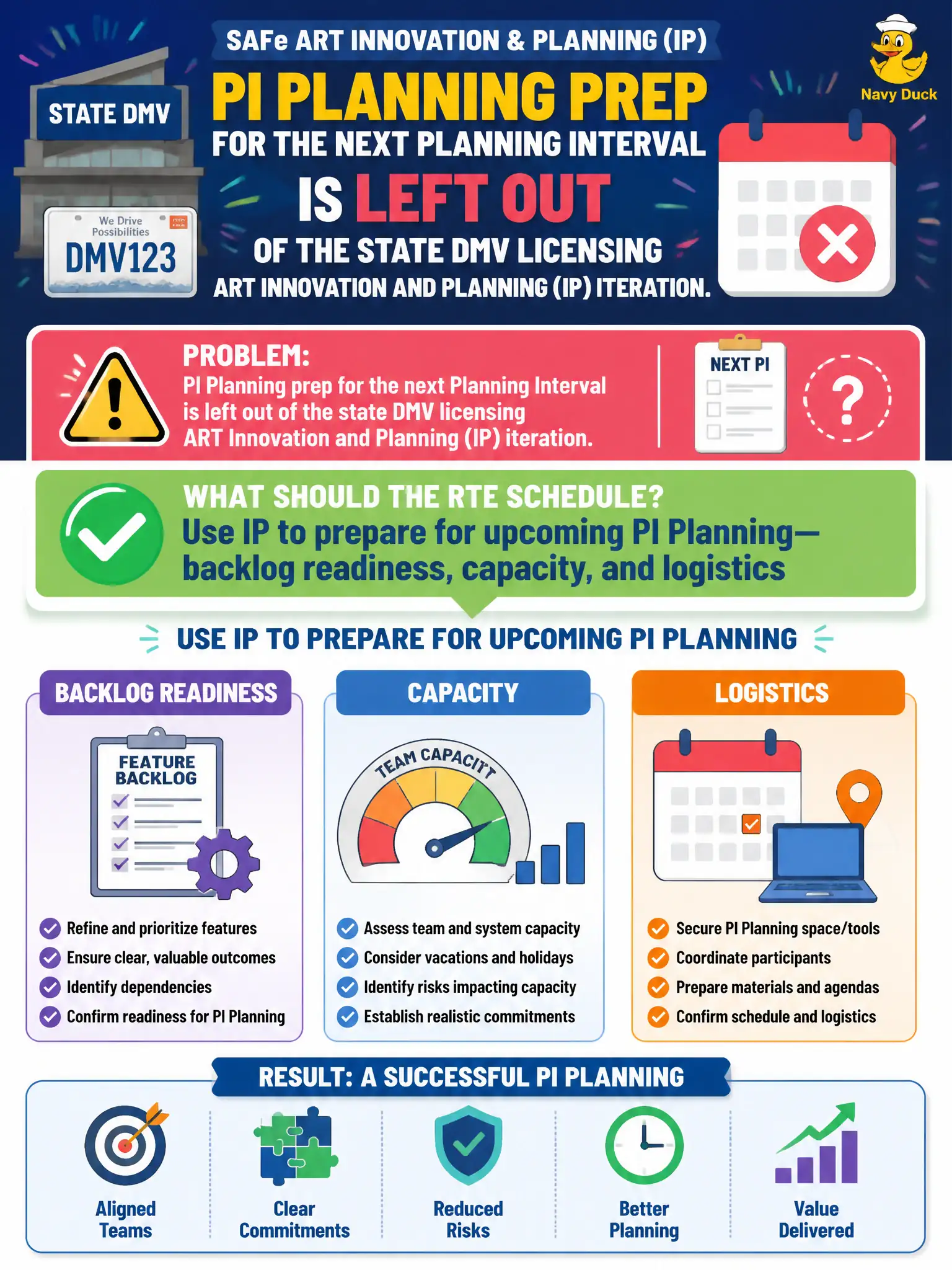
PI Planning prep for the next Planning Interval is left out of the state DMV licensing ART Innovation and Planning (IP) iteration. What should the RTE schedule?
Select an answer to reveal the explanation.
Short Explanation
PI Planning without IP prep is opening the DMV lobby before the printers have paper. Use the planning buffer. Backlog, capacity, and rooms—or links—get ready in IP, not during the first briefing.
Full Explanation
Use IP to prepare for upcoming PI Planning—backlog readiness, capacity, and logistics—on the state DMV licensing ART. IP provides the planning buffer so Day 1 of PI Planning is not cold: refined backlog, capacity understanding, briefing materials, and facilities or virtual setup. Starting PI Planning cold wastes the two planning days citizens indirectly fund through delayed licensing capability. Spending IP only on vanity licensing dashboards ignores prep. Delaying content readiness until the business-context briefing is already underway forces improvisation. Exam caveat: some late Business Owner inputs are normal, but structural prep (capacity, rooms/links, draft objectives, dependency pre-work) should still be done in IP. Operational check: run an IP checklist covering backlog readiness, capacity spreadsheets, agenda, and tooling tests; refuse to open PI Planning until the checklist is green; and frame prep as protecting DMV service predictability for residents, not as optional admin. In municipal and civic service contexts, record the rationale in the ART working agreements or improvement backlog so future PIs preserve the control, and re-validate after the next Inspect and Adapt against resident-facing outcomes rather than activity theater. Confirm owners, success measures, and a re-check date so the practice remains inspectable.