
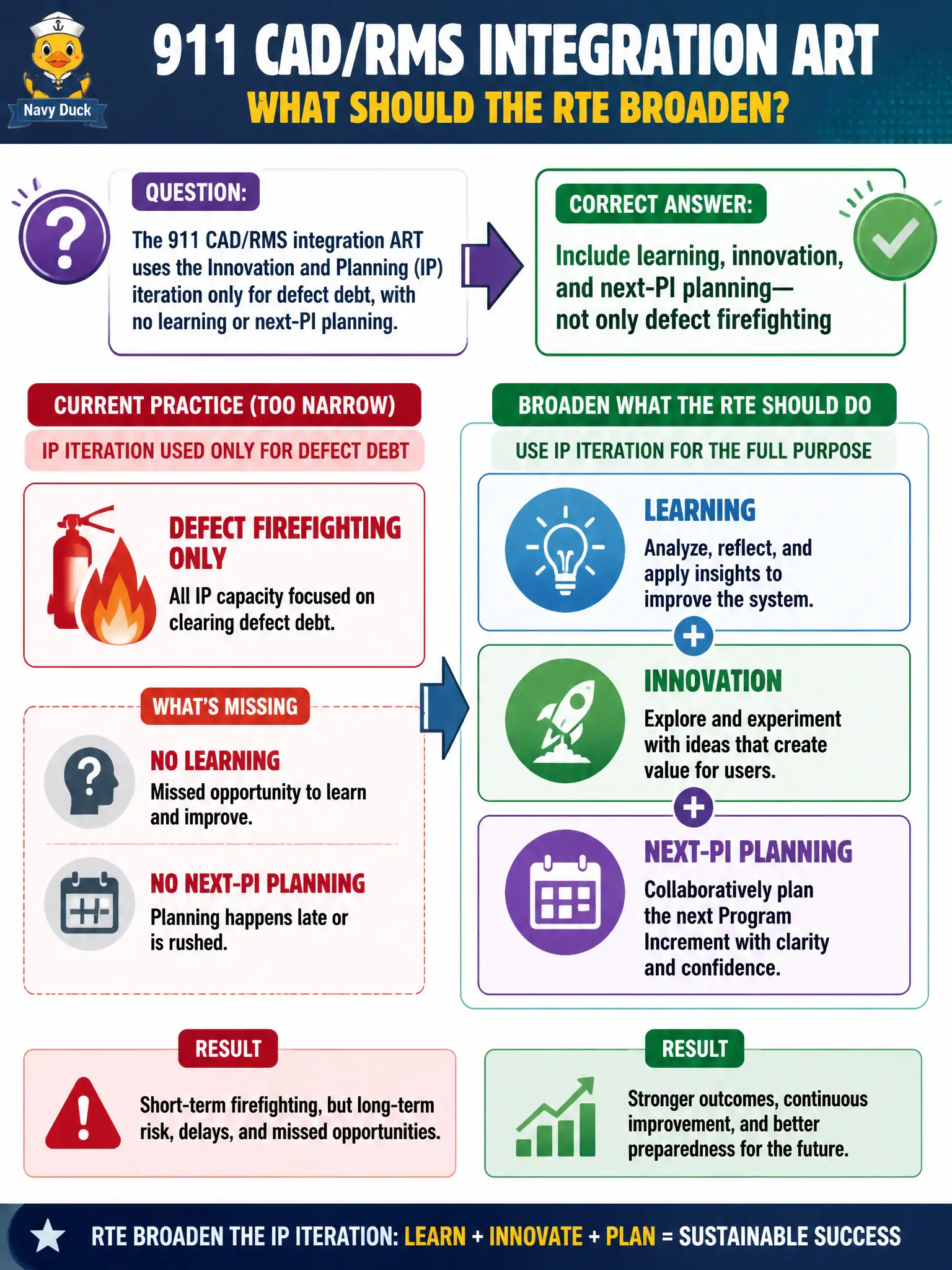
The 911 CAD/RMS integration ART uses the Innovation and Planning (IP) iteration only for defect debt, with no learning or next-PI planning. What should the RTE broaden?
Select an answer to reveal the explanation.
Short Explanation
A 911 shop that spends IP only patching last month’s tickets never gets better radios. Fixing debt can be part of IP, but it cannot be the whole movie. Leave room to learn and to plan the next PI.
Full Explanation
Broaden the 911 CAD/RMS integration ART's IP beyond defect firefighting to include learning, innovation, and next-PI planning. Defect reduction may appear in IP after a stressed PI, but an unmarked defect-only calendar recreates a hardening week and starves improvement for public-safety integration. Canceling learning so dispatch defects consume the entire calendar removes education the ART needs for safer CAD/RMS changes. Moving Inspect and Adapt to email while spending IP solely on hotfixes hides system learning from Business Owners and dispatch customers. Exam caveat: life-safety production issues can preempt planned IP activities, yet the RTE should still protect a minimal I&A and planning-prep spine rather than silently deleting the cadence. Operational check: publish a mixed IP agenda with capped defect capacity, a learning or spike block, and I&A prep; track whether next PI Planning starts with a ready backlog; and brief public-safety leaders that civic readiness includes learning, not only patching last month's tickets. In municipal and civic service contexts, record the rationale in the ART working agreements or improvement backlog so future PIs preserve the control, and re-validate after the next Inspect and Adapt against resident-facing outcomes rather than activity theater. Confirm owners, success measures, and a re-check date so the practice remains inspectable.