
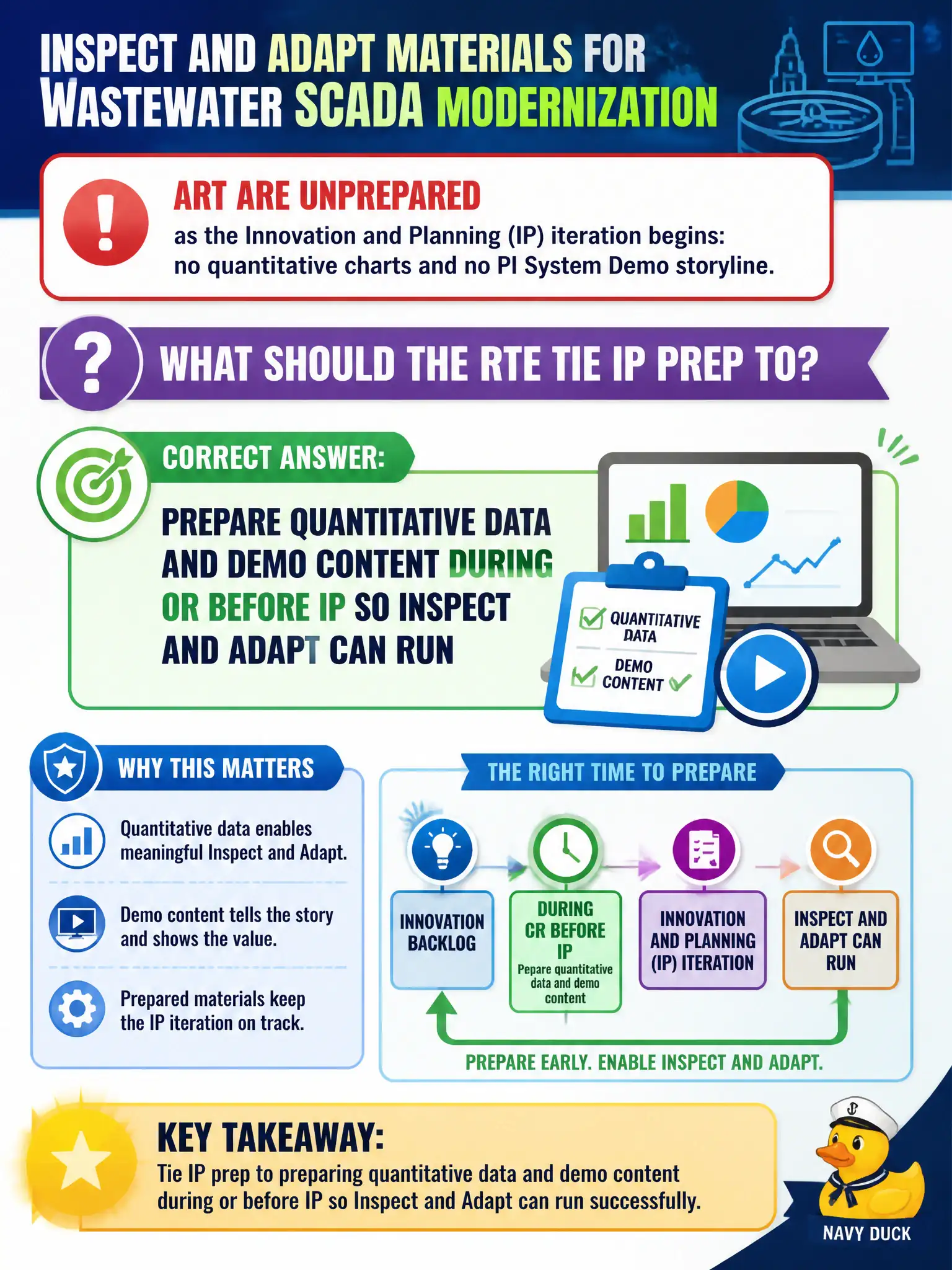
Inspect and Adapt materials for the wastewater SCADA modernization ART are unprepared as the Innovation and Planning (IP) iteration begins: no quantitative charts and no PI System Demo storyline. What should the RTE tie IP prep to?
Select an answer to reveal the explanation.
Short Explanation
Showing up to the plant after-action with an empty clipboard is not an inspect. Use IP to gather the numbers and the demo story. Inspect and Adapt without prep is a meeting that shrugs.
Full Explanation
Prepare quantitative data and demo content during or before IP so Inspect and Adapt can run for the wastewater SCADA modernization ART. I&A requires a PI System Demo, a quantitative measurement review, and a Problem-Solving Workshop; those artifacts are finalized in IP, not invented after the workshop starts. Skipping quantitative review and replaying the PI Planning slide is not inspection. Waiting until the Problem-Solving Workshop to look for metrics wastes the event. Treating I&A as optional because some SCADA stories shipped abandons relentless improvement for a public plant system. Exam caveat: lightweight metrics are acceptable if they are real and comparable; volume of slides is not the goal—honest planned-versus-actual and flow measures are. Operational check: assign owners before IP for demo storyline, predictability/value charts, and candidate problem statements; gate the I&A start on that readiness; and keep plant and compliance stakeholders invited so civic environmental accountability is visible in the review. In municipal and civic service contexts, record the rationale in the ART working agreements or improvement backlog so future PIs preserve the control, and re-validate after the next Inspect and Adapt against resident-facing outcomes rather than activity theater. Confirm owners, success measures, and a re-check date so the practice remains inspectable.