
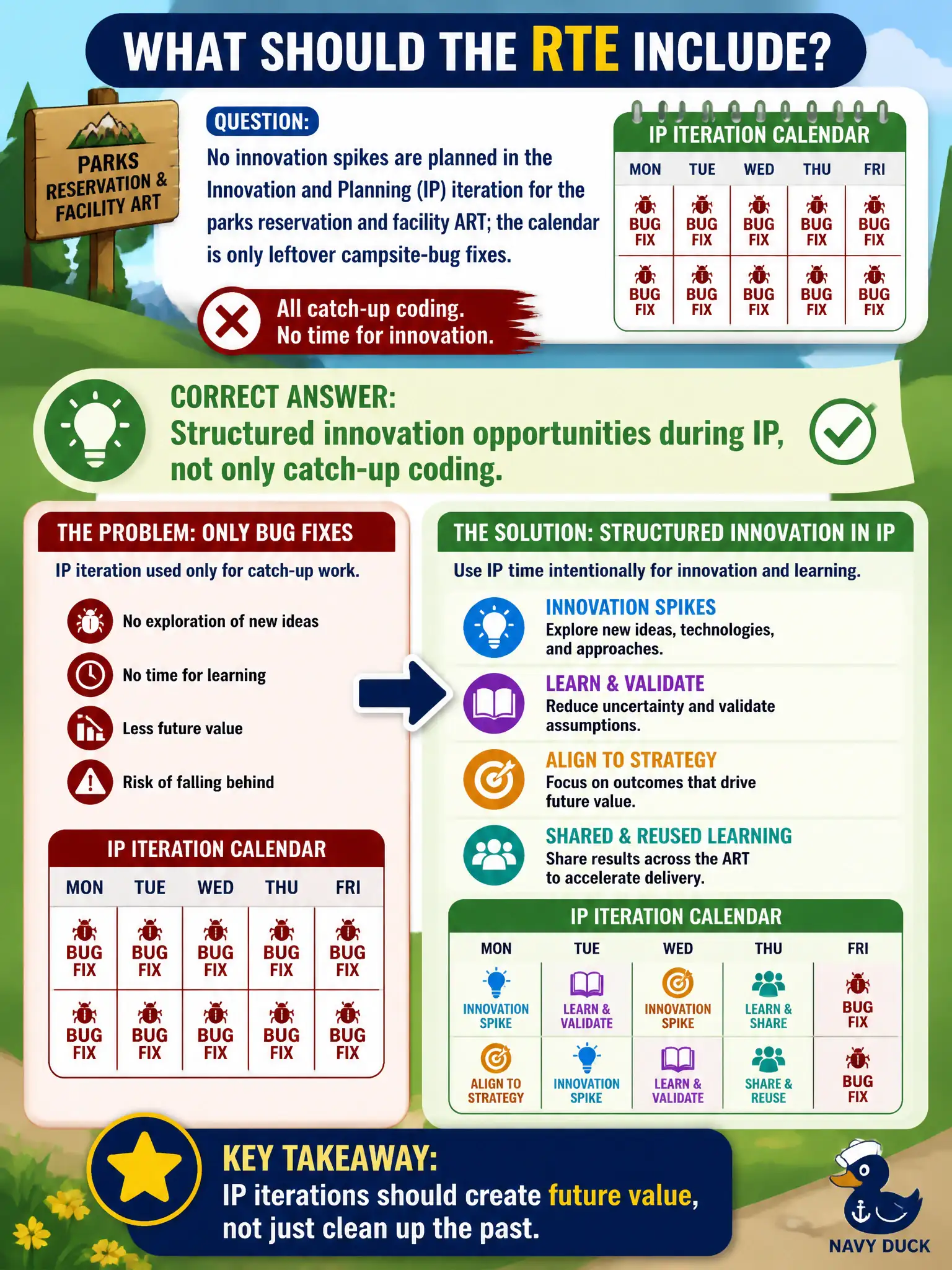
No innovation spikes are planned in the Innovation and Planning (IP) iteration for the parks reservation and facility ART; the calendar is only leftover campsite-bug fixes. What should the RTE include?
Select an answer to reveal the explanation.
Short Explanation
If IP is nothing but leftover leaky-faucet tickets, nobody tries the new trail-map idea. Put a real spike on the calendar. Innovation is a planned campsite, not a weed that grows in leftover dirt.
Full Explanation
Structured innovation opportunities during IP—not only catch-up campsite-bug fixes—belong on the parks reservation and facility ART calendar. IP is the ART's dedicated window for exploration as well as planning and Inspect and Adapt; facilitating spikes prevents IP from collapsing into defect burn-down. Banning spikes so only defects remain starves learning about new reservation or trail experiences residents might need. Replacing all learning time with a second PI Planning dry-run over-indexes on logistics. An empty calendar that hopes innovation happens if someone stays late is not facilitation. Exam caveat: defect reduction can share IP capacity after a stressed PI, but innovation should still appear as planned work with a demo or harvest, not as leftover hours. Operational check: schedule at least one timeboxed innovation spike with a demo slot in IP, capture keep-or-drop decisions into the backlog, and show parks leadership that civic service improvement includes deliberate experiments, not only leaky-faucet tickets. In municipal and civic service contexts, record the rationale in the ART working agreements or improvement backlog so future PIs preserve the control, and re-validate after the next Inspect and Adapt against resident-facing outcomes rather than activity theater. Confirm owners, success measures, and a re-check date so the practice remains inspectable.