
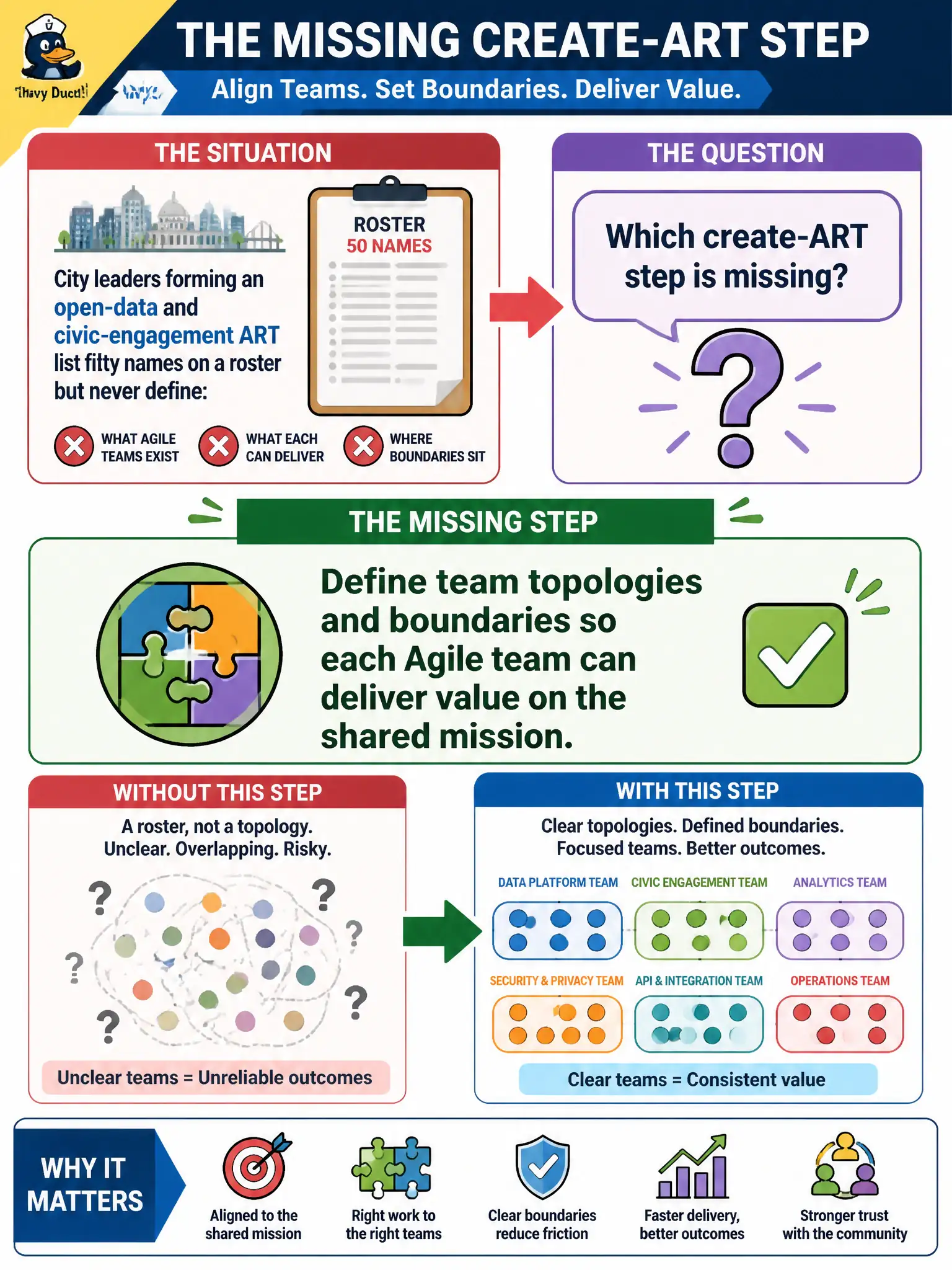
City leaders forming an open-data and civic-engagement ART list fifty names on a roster but never define which Agile teams exist, what each can deliver, or where boundaries sit. Which create-ART step is missing?
Select an answer to reveal the explanation.
Short Explanation
Fifty names on a spreadsheet is a directory, not a train. Teams need a design: who is on which team, what they can ship, and where the seams are. Topology is a create-ART step, not a later nice-to-have.
Full Explanation
Organizing an ART includes designing Agile team boundaries and topologies so teams can deliver Features with minimal handoffs on a shared mission. When city leaders forming an open-data and civic-engagement ART list fifty names on a roster but never define which Agile teams exist, what each can deliver, or where boundaries sit, the missing create-ART step is defining team topologies and boundaries. A directory is not a train. Assigning every person to a single component layer and prohibiting Features that cross those layers often recreates silos and maximizes handoffs. Waiting to design teams until after three PIs of unplanned swarming have revealed natural cliques postpones intentional design and burns early PIs. Putting all fifty people on one Scrum team so topology decisions become unnecessary violates workable team size and makes Scrum events unusable. Exam caveat: topologies can evolve, but launch still requires an initial team design the civic-engagement ART can plan and demo against. Operational check: facilitate a topology workshop that forms teams around deliverable slices of the open-data mission, names each team’s primary value contribution, and publishes boundaries before the first PI Planning.