
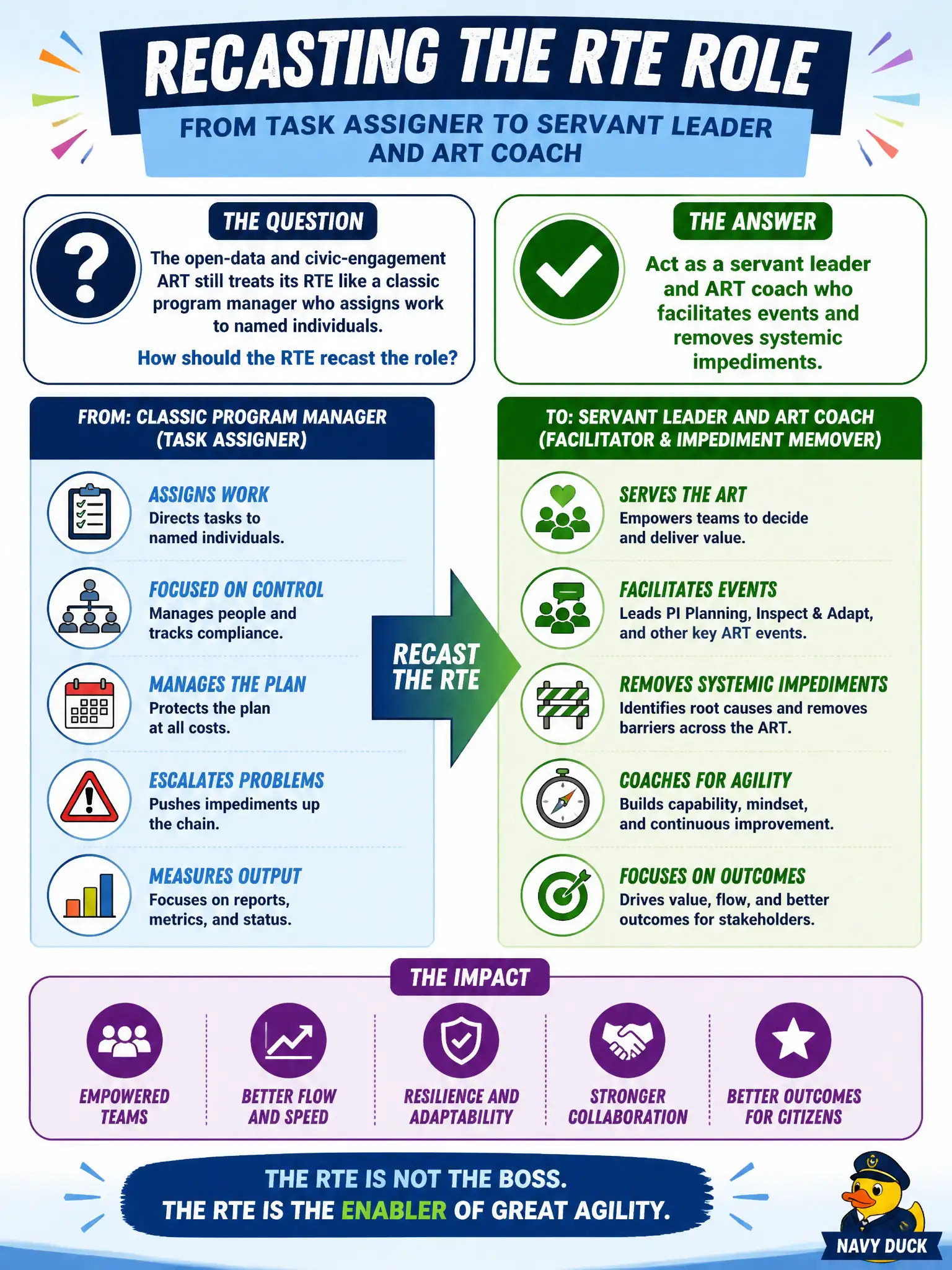
The open-data and civic-engagement ART still treats its RTE like a classic program manager who assigns work to named individuals. How should the RTE recast the role?
Select an answer to reveal the explanation.
Short Explanation
Picture a conductor, not a foreman handing out shovels. The RTE keeps the civic-engagement train on cadence, coaches the coaches, and clears blockers nobody else can move. Assigning tickets to named people is old program-manager muscle, not the SAFe job.
Full Explanation
In SAFe, the Release Train Engineer is a servant leader and ART coach, not a classic program manager who parcels work to named individuals. On a civic open-data and engagement train, that means facilitating ART events and processes, coaching leaders and teams, and escalating or removing systemic impediments that block resident-facing value. Success is measured by whether the train can plan, sync, demo, and improve on cadence—not by whether the RTE personally owns every ticket. Personally assigning every civic-data story to a developer recreates command-and-control task management and collapses team ownership of how work is pulled and delivered. Replacing Product Management and writing the open-data backlog mixes content authority with facilitation; Product Management owns vision and Program Backlog prioritization while the RTE keeps the delivery system healthy. Approving each team's daily standup agenda and scoring individual utilization against the PI plan is traditional utilization theater, not Lean-Agile coaching, and it distracts from flow and outcomes for council and residents. Exam caveat: Servant leadership still includes firm facilitation and escalation—being a coach does not mean staying silent when the ART ignores cadence or when a cross-bureau blocker sits unresolved. Operational check: Review the RTE calendar and recent ART Sync notes; most time should be on events, coaching, and impediment removal, with almost no personal story assignment or individual utilization scoring on the open-data ART.