
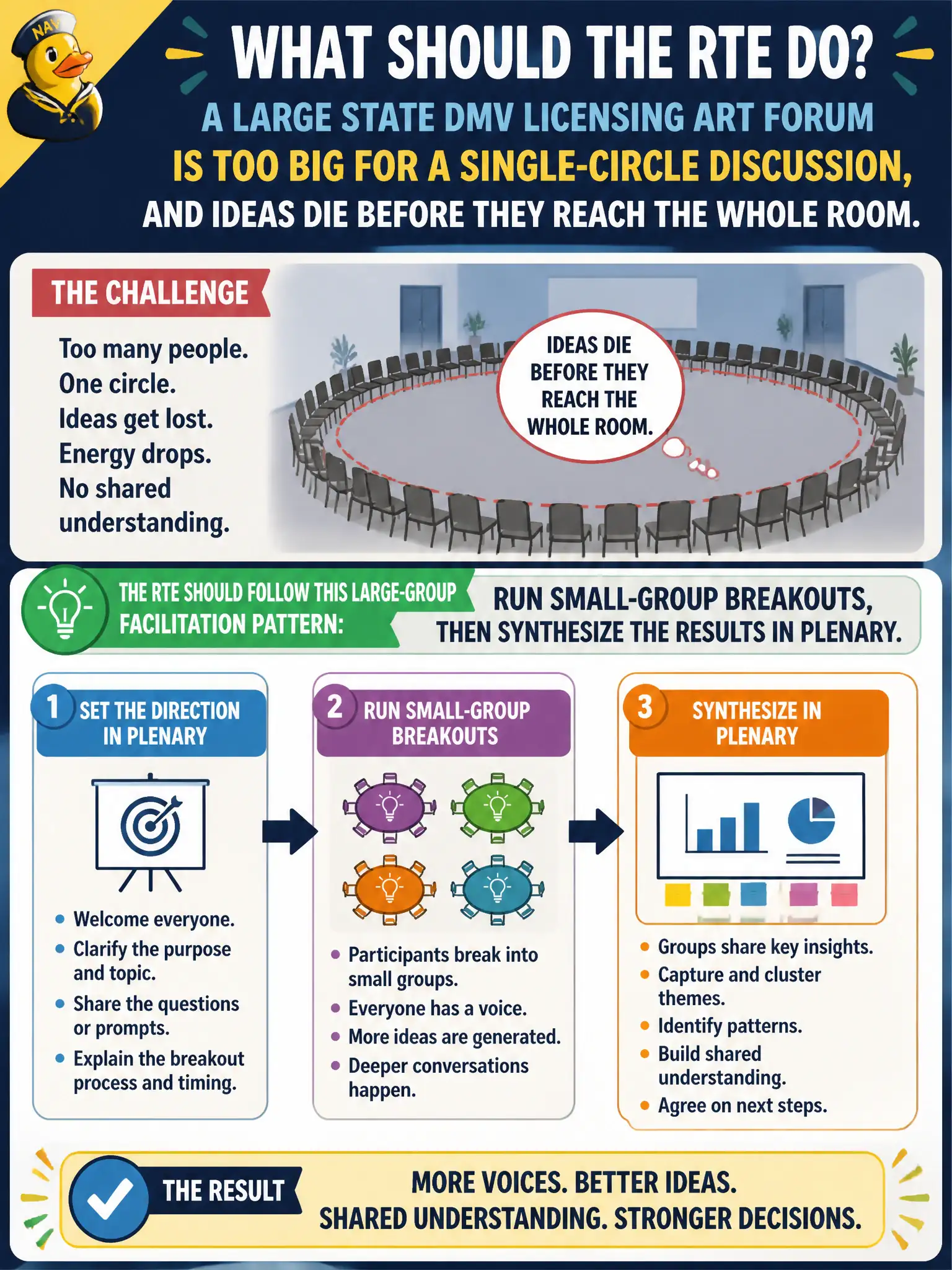
A large state DMV licensing ART forum is too big for a single-circle discussion, and ideas die before they reach the whole room. What large-group facilitation pattern should the RTE use?
Select an answer to reveal the explanation.
Short Explanation
A hundred DMV voices in one circle is a traffic jam. Send them into breakouts where people can actually talk, then bring the nuggets back to plenary and stitch a picture. Small groups plus synthesis is how a big forum becomes a conversation instead of a crowd.
Full Explanation
Large-group facilitation commonly uses breakouts for parallel discussion and a plenary to synthesize themes, decisions, and open questions. When a large state DMV licensing ART forum is too big for a single-circle discussion and ideas die before they reach the whole room, the RTE should run small-group breakouts, then synthesize the results in plenary. Small groups create talking space; plenary synthesis turns fragments into ART-level meaning for licensing operations. Keeping everyone in one circle so every comment is heard by all in real time does not scale and produces the traffic jam the item describes. Collecting comments only from appointed spokespeople and skipping small-group work discards participation from most of the room. Canceling the forum and replacing it with a recorded briefing from the RTE abandons large-group facilitation for one-way communication. Exam caveat: breakouts need a clear prompt, timebox, and report-out format or plenary becomes a second fog. Operational check: design the next DMV forum with equal-sized breakouts, a shared capture template, and a synthesis block that clusters themes into decisions or parking-lot owners the whole ART can see. Keep the civic mission visible when applying the technique so resident-facing outcomes stay the measure of success.