
While facilitating a 911 CAD/RMS integration ART design workshop that requires neutrality, the RTE begins arguing for a preferred vendor architecture. What should the RTE do?
Select an answer to reveal the explanation.
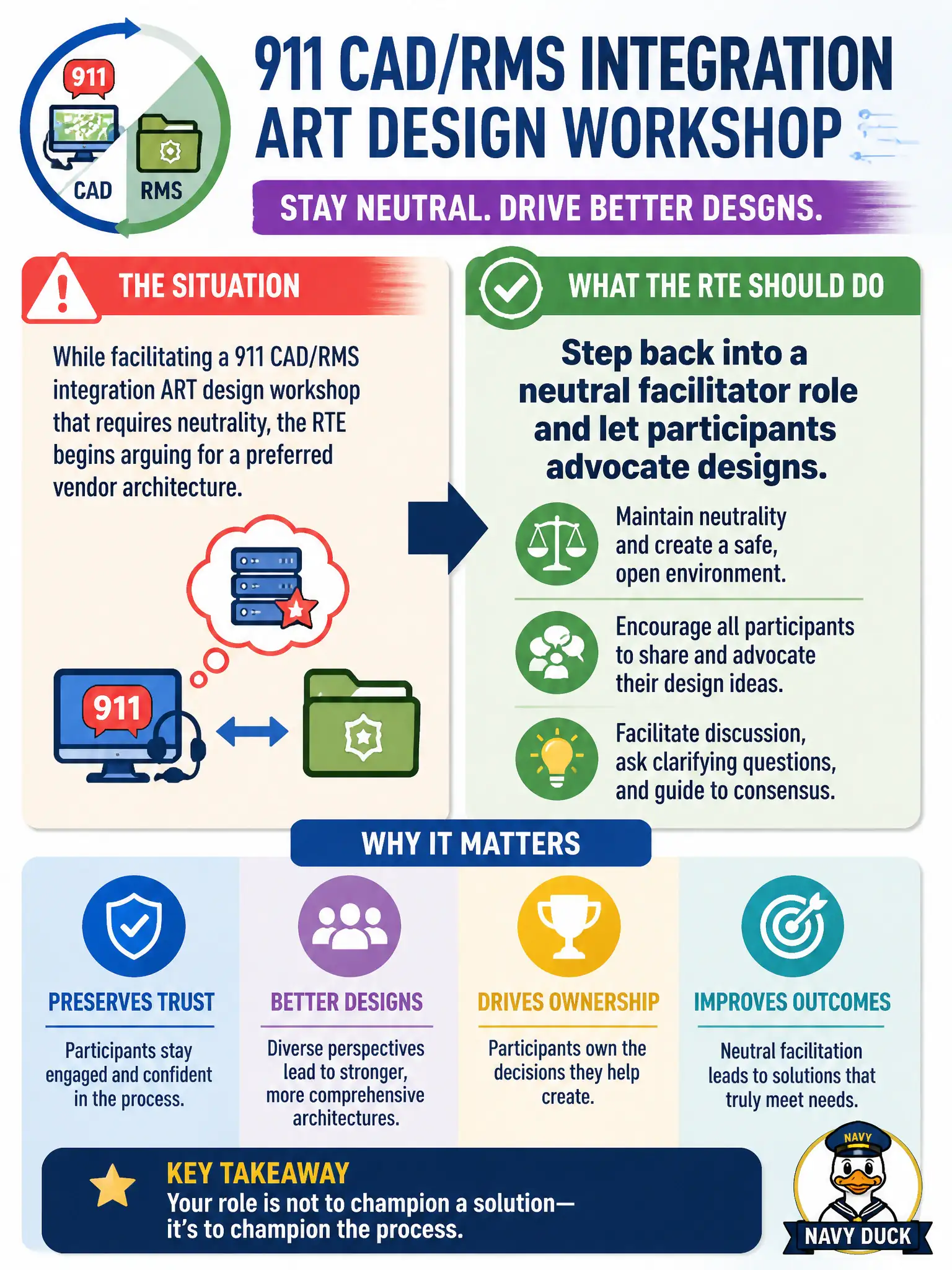
Short Explanation
If the facilitator is also the lead salesperson for a CAD vendor design, the room is not facilitated—it is lobbied. Neutrality means holding the process, not the pet architecture. Step back, hand the argument to the people who own the design, and run a fair process for 911.
Full Explanation
When the session contract requires neutrality, the facilitator must not become the primary advocate. While facilitating a 911 CAD/RMS integration ART design workshop that requires neutrality, if the RTE begins arguing for a preferred vendor architecture, the RTE should step back into a neutral facilitator role and let participants advocate designs. Neutrality protects trust in public-safety integration work where process fairness matters as much as technical preference. Continuing to advocate because the RTE’s opinion should outweigh the architects breaches the facilitation contract and biases the room. Ending facilitation and awarding the design to the preferred vendor in the same hour collapses process into a predetermined purchase. Hiding the preference by restating it as the group’s consensus without a vote launders advocacy as agreement. Exam caveat: RTEs may hold architecture opinions, but in a neutrality-required session those opinions belong in a participant role with a different facilitator, or after the facilitated process completes. Operational check: name the neutrality reset aloud, hand advocacy back to architects and Product Management, capture options with a visible decision rule, and confirm no single vendor path is declared without that process on the CAD/RMS ART.