
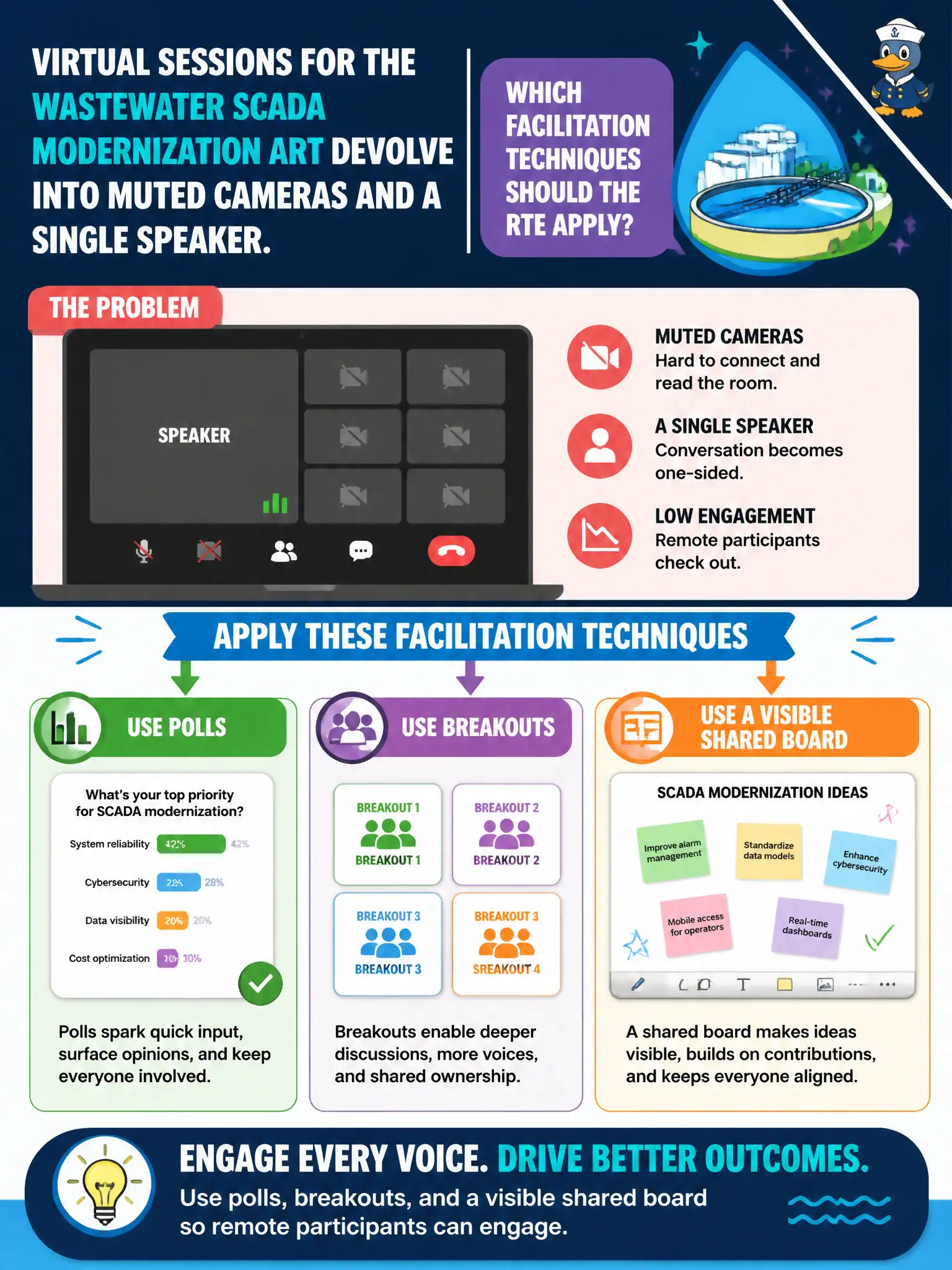
Virtual sessions for the wastewater SCADA modernization ART devolve into muted cameras and a single speaker. Which facilitation techniques should the RTE apply?
Select an answer to reveal the explanation.
Short Explanation
A muted SCADA call with one voice is radio, not a workshop. Polls, breakout rooms, and a board everybody can see put hands back on the work. Virtual is not the problem—passive format is.
Full Explanation
Virtual engagement techniques include polls, breakouts, and shared collaboration boards that make thinking visible. When virtual sessions for the wastewater SCADA modernization ART devolve into muted cameras and a single speaker, the RTE should use polls, breakouts, and a visible shared board so remote participants can engage. Those tools restore facilitation, not just attendance, for plant and IT contributors who cannot all speak in one linear call. Banning cameras and running the session as an audio lecture to reduce fatigue increases passivity and hides nonverbal cues that help facilitators read the room. Requiring everyone to stay in the main room with no interaction so the agenda stays linear prioritizes a slide path over contribution. Replacing virtual sessions with a monthly slide deck that needs no response abandons workshop outcomes entirely. Exam caveat: engagement techniques must still serve posted purpose and outcomes; activity for its own sake is not facilitation success. Operational check: redesign the next SCADA workshop with a poll to open, a timed breakout on a concrete design question, and a shared board for report-out—verify that multiple plants or teams contribute artifacts the plenary can synthesize.