
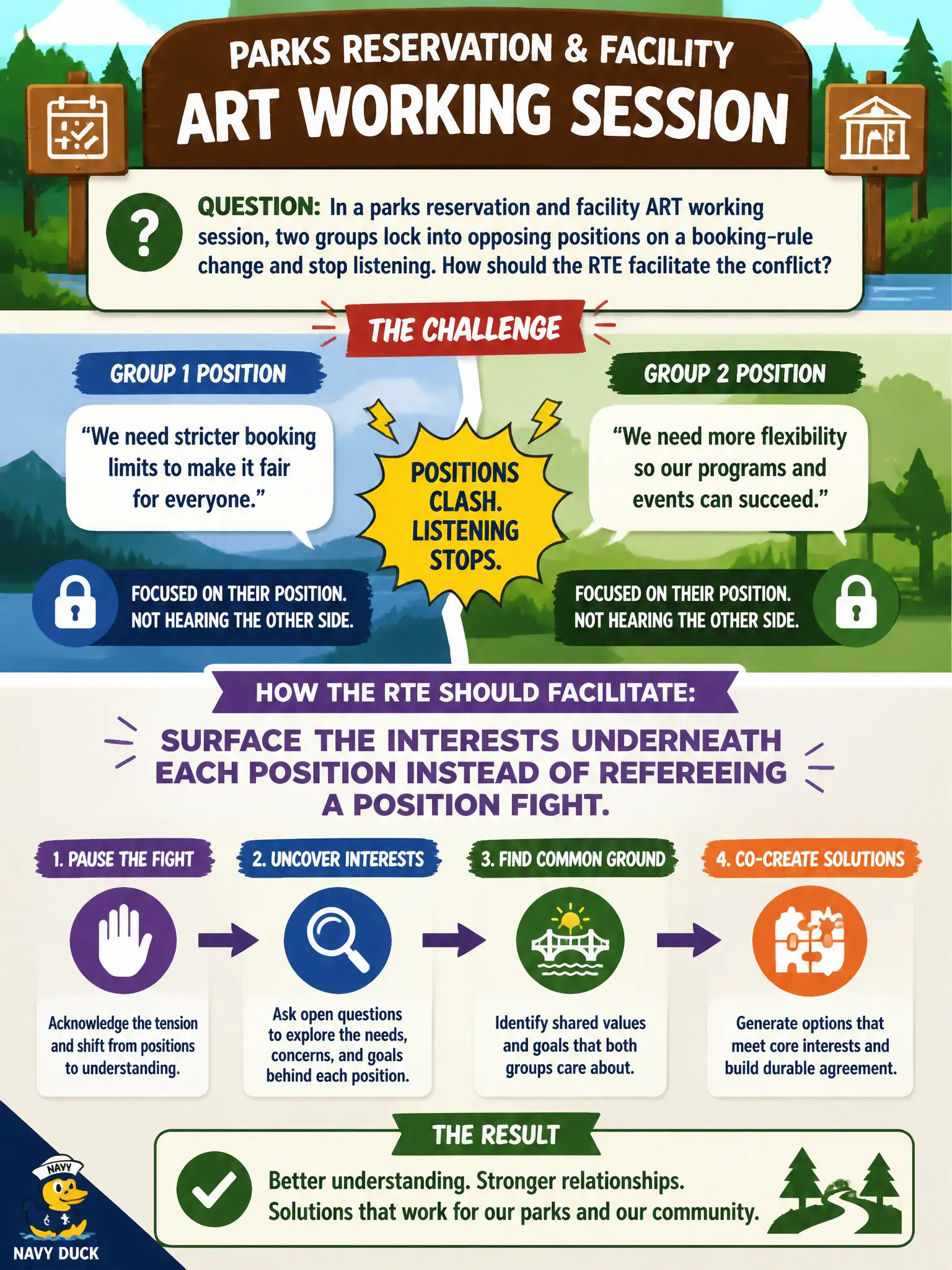
In a parks reservation and facility ART working session, two groups lock into opposing positions on a booking-rule change and stop listening. How should the RTE facilitate the conflict?
Select an answer to reveal the explanation.
Short Explanation
Positions are the slogans; interests are why they care. One parks group wants freeze-the-rules, the other wants walk-up bookings—maybe both care about fairness on peak Saturdays. Get the interests on the wall and the fight has somewhere to go besides a stare-down.
Full Explanation
Interest-based facilitation looks beneath stated positions to the needs that drive them. In a parks reservation and facility ART working session, when two groups lock into opposing positions on a booking-rule change and stop listening, the RTE should surface the interests underneath each position instead of refereeing a position fight. Once interests such as fairness on peak Saturdays, staff load, or resident access are visible, the ART can invent options that neither opening slogan contained. Picking a winner by seniority so the session can move on encodes hierarchy over problem-solving and leaves the losing interest unresolved. Taking a recess until the next PI so the conflict expires delays a living parks operations issue and usually returns the same fight. Adding both positions to the Program Board as unranked milestones and leaving parks the conflict as unfinished inventory without facilitation. Exam caveat: interest-based work still ends with a named decision rule; exploring interests is not endless avoidance of choosing a booking rule. Operational check: ask each side what they need to protect, list interests on a shared board without labeling winners, generate at least two options that address overlapping interests, then apply the session’s decision rule before closing.