
The RTE informally coaches Scrum Masters on the open-data and civic-engagement ART, but no coaching goals are written down and follow-through fades. What should the RTE establish?
Select an answer to reveal the explanation.
Short Explanation
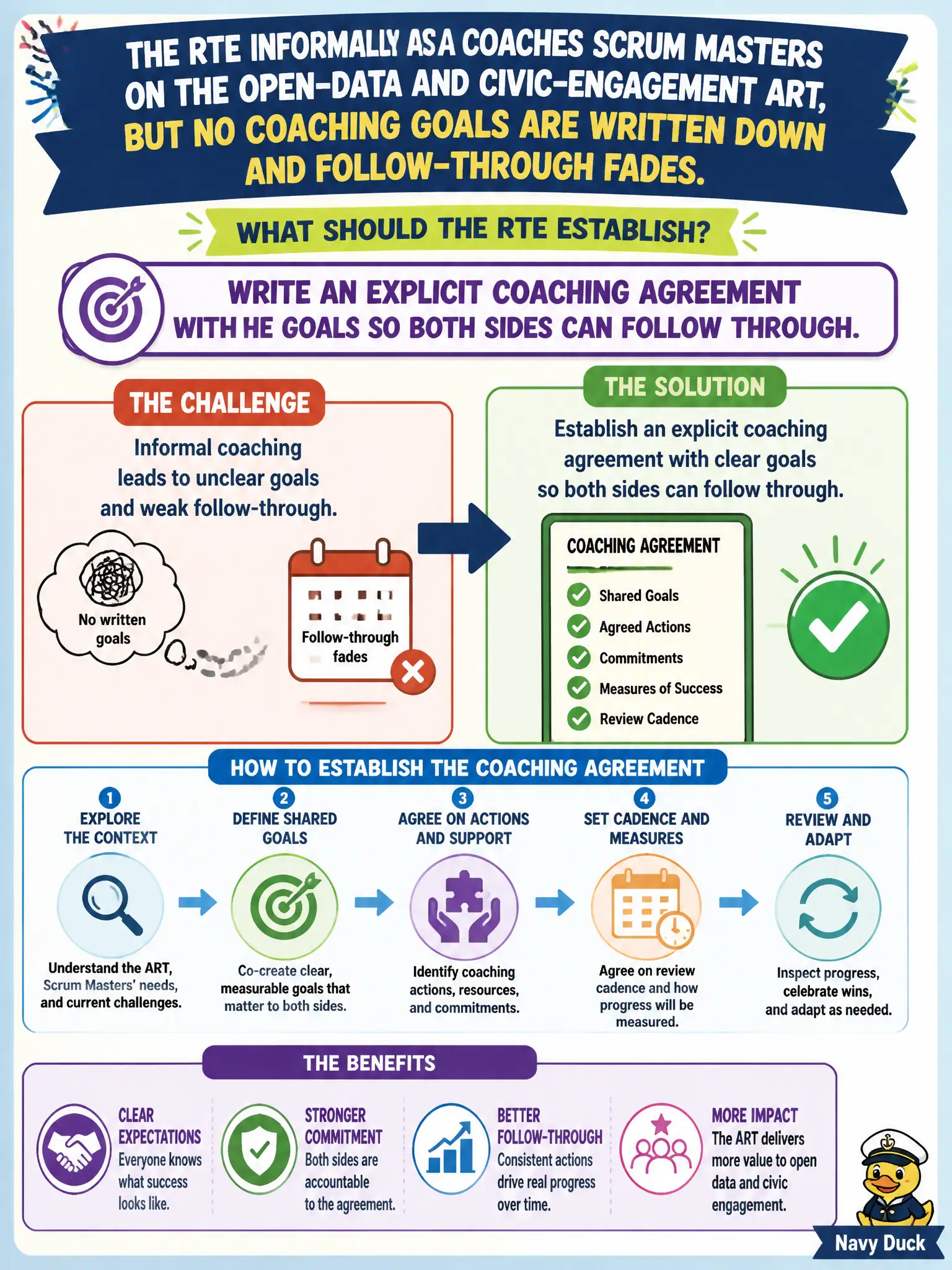
Handshake coaching on the open-data train feels friendly until nobody remembers the deal. Write the goals down—what we are working on, how we will know it moved. That little agreement is the difference between coffee chat and coaching that actually sticks.
Full Explanation
Explicit coaching agreements and goals make follow-through inspectable for both parties. On the open-data and civic-engagement ART, informal coaching without written goals lets follow-through fade; the RTE should write an explicit coaching agreement with goals so both sides can follow through. A short written agreement names outcomes, cadence, and evidence without turning coaching into feature intake or HR paperwork theater. Keeping goals unwritten so coaching stays unstructured and “agile” confuses agility with uninspectable intent and drifting coffee chats. Substituting a team-level Definition of Done for personal coaching goals misuses a delivery quality agreement as a people-development contract. Asking Product Management to put coaching goals on the Program Backlog as Features mixes human development with Feature prioritization and burdens the backlog with non-Feature work. Exam caveat: a coaching agreement can be lightweight—outcomes and check-ins—without becoming bureaucracy, and it can be revised as the civic-engagement ART’s needs change. Operational check: draft a one-page agreement with each Scrum Master (goal, measures, meeting cadence), review it after two iterations, and adjust based on observed facilitation or flow evidence from open-data demos and syncs.