
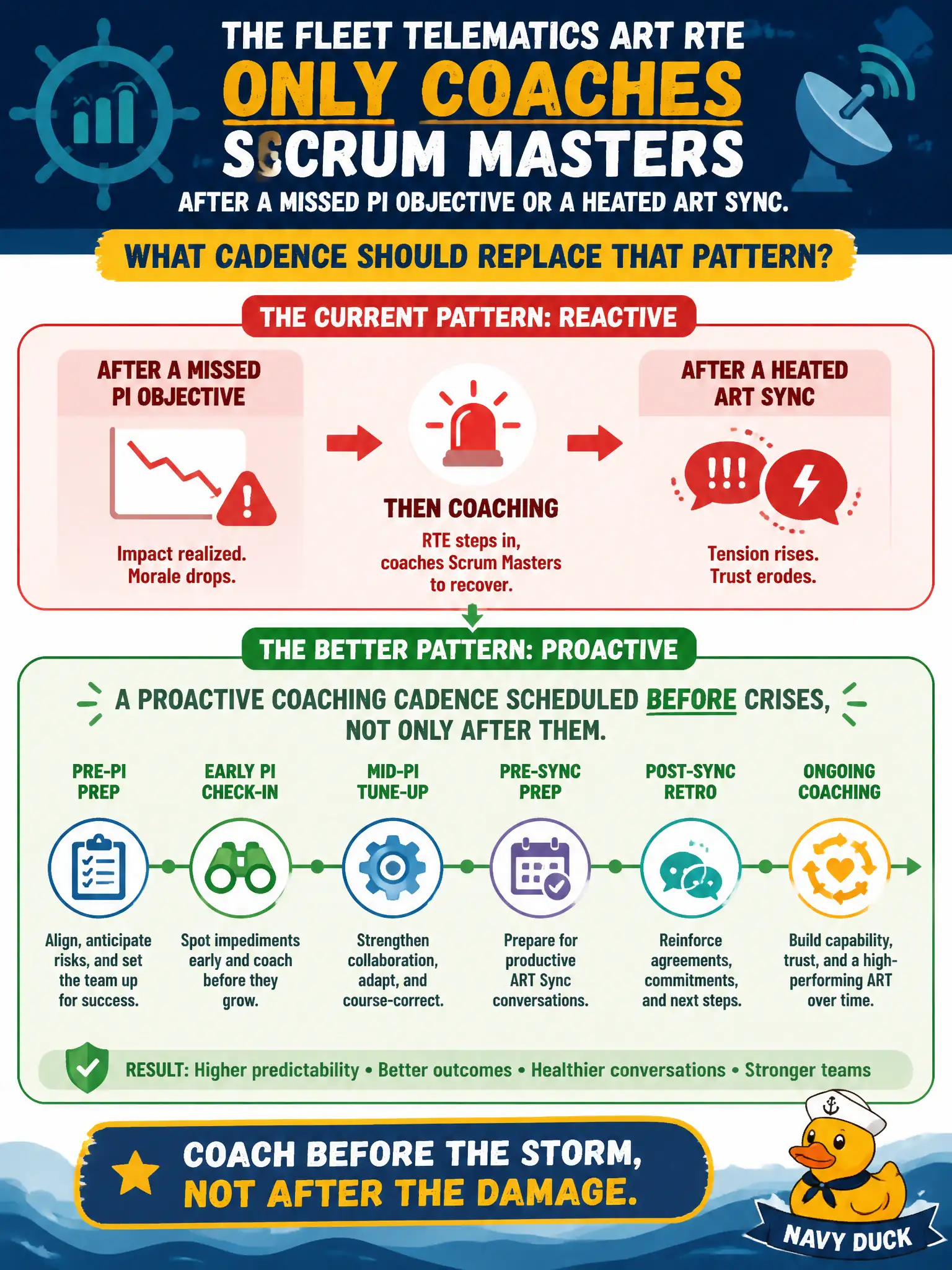
The fleet telematics ART RTE only coaches Scrum Masters after a missed PI Objective or a heated ART Sync. What cadence should replace that pattern?
Select an answer to reveal the explanation.
Short Explanation
Crisis-only coaching is like inspecting the fleet after every breakdown and never between. Put coaching on the calendar while the telematics train is still rolling. Regular 1:1s catch the rattle before it becomes a missed PI Objective.
Full Explanation
Proactive coaching cadence is an RTE practice: scheduled conversations develop facilitators and flow habits before they fail in public. On the fleet telematics ART, coaching only after a missed PI Objective or a heated ART Sync should be replaced with a proactive cadence scheduled before crises. Regular 1:1s catch emerging facilitation debt, dependency blindness, and demo preparation gaps while the train is still delivering municipal fleet value. Coaching only during IP iteration so execution weeks stay untouched leaves most of the PI uncoached when help would change outcomes. Coaching only when Business Owners file a written complaint makes development reactive to political escalation rather than servant leadership. A single annual offsite that replaces all in-PI coaching cannot correct week-to-week sync and demo habits on a telematics train. Exam caveat: crisis response can still happen; it should not be the only trigger for coaching, and IP remains for innovation and planning—not the sole coaching window. Operational check: put recurring Scrum Master coaching slots on the telematics ART calendar each iteration, keep a short notes trail of experiments, and review whether ART Sync quality and ROAM discipline improve before the next PI boundary.