
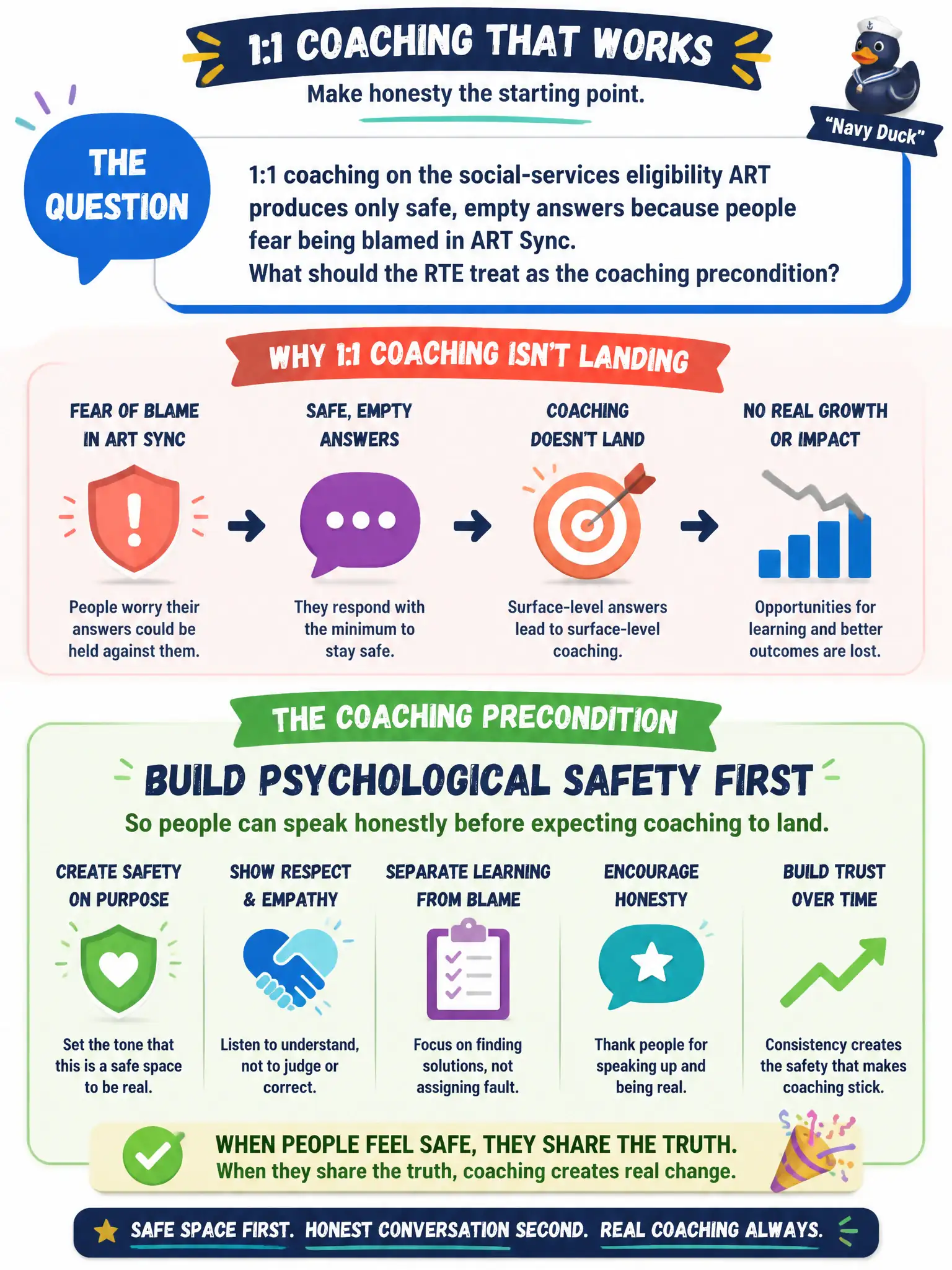
1:1 coaching on the social-services eligibility ART produces only safe, empty answers because people fear being blamed in ART Sync. What should the RTE treat as the coaching precondition?
Select an answer to reveal the explanation.
Short Explanation
You cannot coach a locked door. If eligibility workers think ART Sync is a blame session, 1:1s fill up with polite fog. Fix the safety—no ridicule, no surprise blame—then coaching questions have somewhere to land.
Full Explanation
Psychological safety is a precondition for coaching: people will not disclose real impediments or try new behaviors if they expect punishment or ridicule. On the social-services eligibility ART, when 1:1s produce only safe, empty answers because people fear being blamed in ART Sync, the RTE should build psychological safety first so coaching can land. Without that precondition, more technique simply harvests polite fog and false green status. Increasing the number of coaching sessions so volume overcomes fear multiplies low-trust conversations without changing the climate of the train. Recording every 1:1 and sharing transcripts with Business Owners to “force honesty” intensifies surveillance and fear among benefits staff. Replacing coaching with a mandatory skills exam that does not require dialogue abandons developmental conversation entirely. Exam caveat: safety is not the absence of accountability; it is the absence of ridicule and surprise blame when people surface problems that affect residents. Operational check: model blame-aware language in the next eligibility ART Sync, stop public shaming of raised impediments, protect problem-raisers, and only then resume deeper coaching questions in 1:1s—verify that people name real risks without rehearsed euphemisms.