
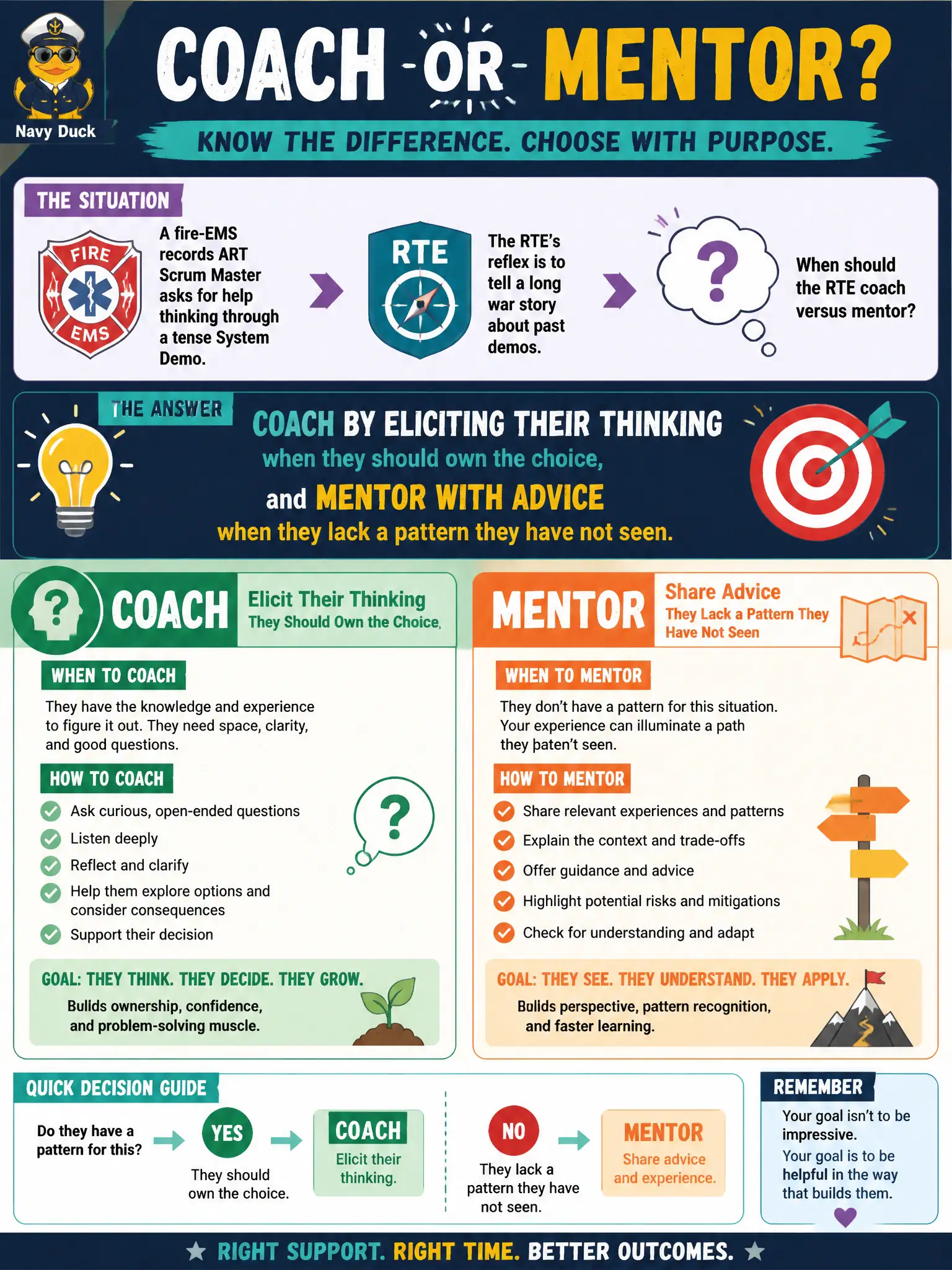
A fire-EMS records ART Scrum Master asks for help thinking through a tense System Demo. The RTE’s reflex is to tell a long war story about past demos. When should the RTE coach versus mentor?
Select an answer to reveal the explanation.
Short Explanation
Coaching pulls their thinking out; mentoring lends a map from a road already driven. A tense fire-EMS System Demo might need both, but not a thirty-minute war story as the default. If they already have the pieces, ask questions; if they have never seen this movie, offer a pattern—then give the room back.
Full Explanation
Coaching elicits the coachee’s reasoning so they own the next move; mentoring offers advice drawn from the mentor’s experience. On the fire-EMS records ART, when a Scrum Master asks for help thinking through a tense System Demo, the RTE should coach by eliciting their thinking when they should own the choice, and mentor with advice when they lack a pattern they have not seen. Defaulting to a long war story when the person already has the pieces steals ownership; refusing all experience when they have never seen this demo pattern leaves them without a map. Always mentoring with advice because eliciting thinking “wastes time” on a public-safety ART treats urgency as a reason to abandon coaching skill. Never sharing experience because mentoring is “outside the RTE role” is false—RTEs use both stances selectively. Handing the System Demo to Product Management so neither coaching nor mentoring is required avoids developing the facilitator the train needs. Exam caveat: public-safety criticality may shorten the timebox, but it does not erase the coach-versus-mentor distinction. Operational check: ask whether the Scrum Master has facilitated a comparable System Demo; if yes, use questions; if no, offer a short pattern, then return the room design decisions to them before the fire-EMS demo.