
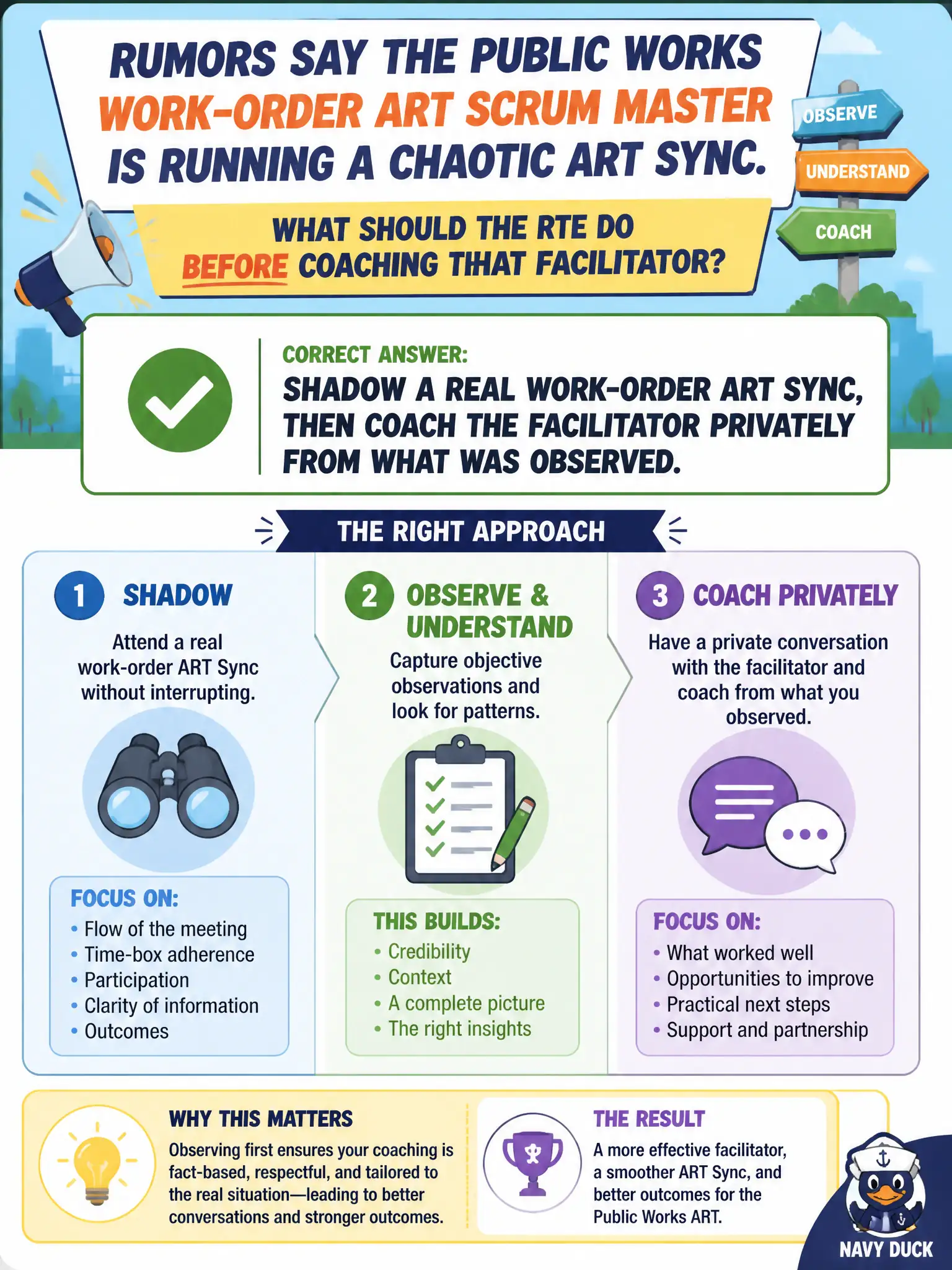
Rumors say the public works work-order ART Scrum Master is running a chaotic ART Sync. What should the RTE do before coaching that facilitator?
Select an answer to reveal the explanation.
Short Explanation
Coaching from hallway gossip is like repairing a pothole from a tweet—you have not seen the street. Sit in a real public-works ART Sync, take notes, then talk with the facilitator in private. Observation first, coaching second, rumors never.
Full Explanation
Observation-based coaching uses firsthand evidence from actual ART events rather than secondhand complaints. On the public works work-order ART, the RTE should shadow a real ART Sync and then coach the facilitator privately from what was observed. That sequence grounds feedback in specific behaviors—timeboxing, dependency handling, decision capture, and how impediments are ROAMed—and protects dignity by keeping the conversation private. Coaching immediately from hallway rumors risks correcting the wrong problem, damages trust, and signals that gossip drives development on a municipal train. Emailing a new ART Sync script to the whole train without watching a session broadcasts a fix before diagnosis and can publicly shame the facilitator. Replacing the Scrum Master before the next sync to stop rumors skips coaching entirely and treats unverified complaints as verdicts. Exam caveat: private coaching after observation does not prohibit later ART-wide technique training once patterns are confirmed across multiple syncs. Operational check: attend one full work-order ART Sync with a simple observation checklist, hold a private debrief within 24–48 hours, agree on one facilitation experiment for the following sync, and verify whether that experiment improved the next public-works sync’s outcomes.