
On the municipal utilities billing ART, the only coaching feedback Scrum Masters receive is a vague annual review. How should the RTE change that pattern?
Select an answer to reveal the explanation.
Short Explanation
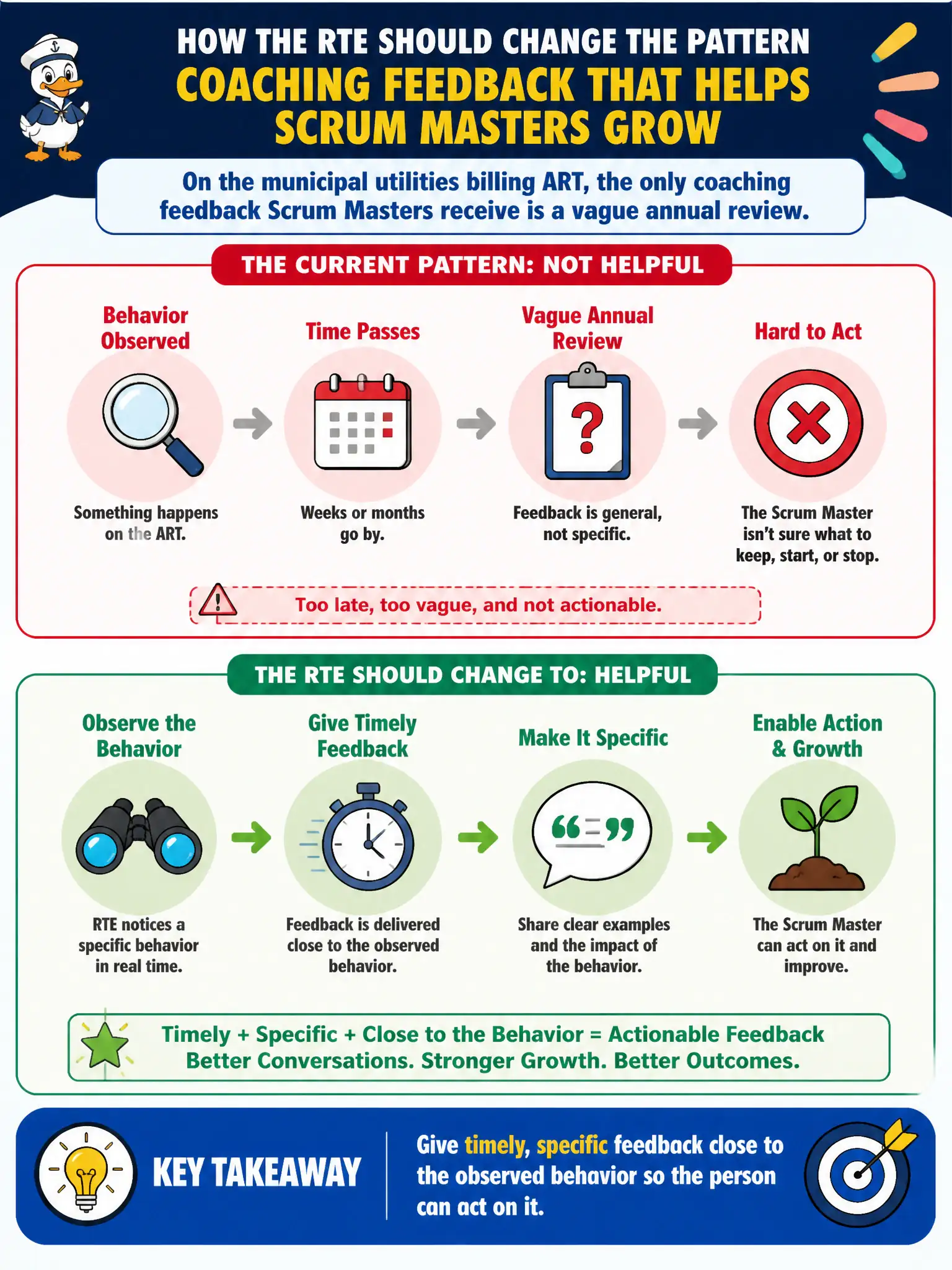
A yearly “do better on billing demos” note is like a water bill that arrives twelve months late—you cannot fix the leak. Coaching feedback has to be close to the play and specific enough to use. Catch it in the PI, name the behavior, and the Scrum Master can actually change something.
Full Explanation
Effective RTE coaching feedback on the municipal utilities billing ART is timely and specific rather than annual and vague. Giving feedback close to the observed behavior lets a Scrum Master adjust facilitation, flow conversations, or collaboration while the PI is still underway. Vague yearly reviews starve people of actionable information and turn coaching into a performance ritual instead of a development practice. Keeping feedback annual so people are “not distracted” during PI execution guarantees that defective patterns persist across iterations. Publishing unnamed ART-wide scorecards forces individuals to guess whether comments apply to them and damages psychological safety. Saving every observation for the next Inspect and Adapt Problem-Solving Workshop regardless of urgency delays coaching that could have fixed a live billing-demo or sync issue this week. Exam caveat: Inspect and Adapt remains valuable for systemic issues, but it is not a warehouse for all interpersonal feedback. Operational check: after the next observed ART Sync or System Demo, deliver one concrete behavior-plus-impact note within a day, invite the person’s view, and agree on one experiment before the following utilities billing iteration.