
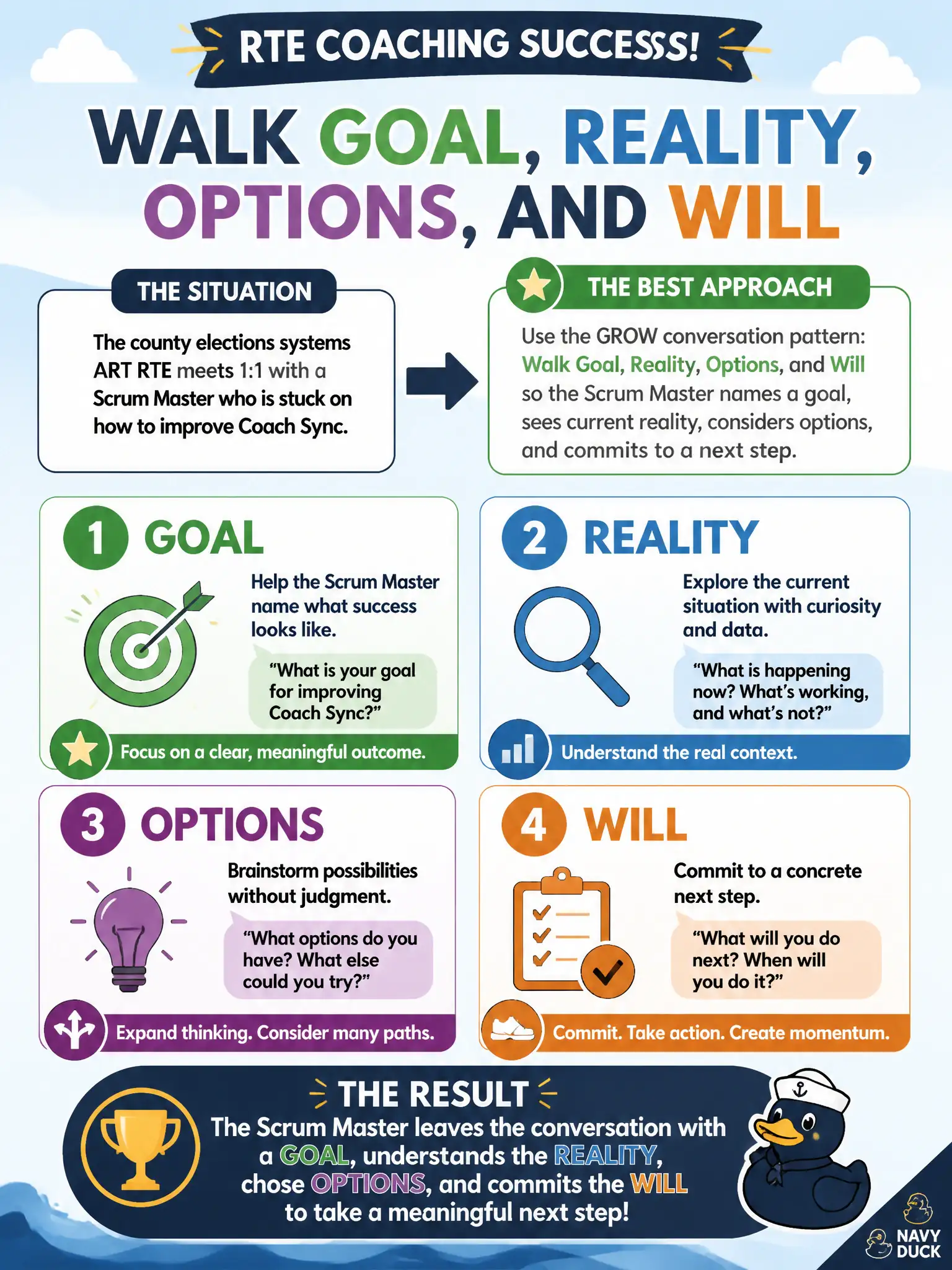
The county elections systems ART RTE meets 1:1 with a Scrum Master who is stuck on how to improve Coach Sync. Which structured coaching conversation pattern should the RTE use?
Select an answer to reveal the explanation.
Short Explanation
Stuck coaches need a map, not a lecture. Goal-Reality-Options-Will is a clean four-stop conversation: where are we going, what is true now, what could we try, and what will you actually do. That beats dumping a ready-made Coach Sync script on a county elections Scrum Master who still has to own the room.
Full Explanation
Structured coaching models such as GROW give the county elections systems ART RTE a repeatable 1:1 pattern without taking the problem away from the coachee. Walking Goal, Reality, Options, and Will helps the Scrum Master name a goal for Coach Sync, examine current reality, generate options, and commit to a next step they own. That structure keeps coaching conversational and inspectable while the elections ART still needs the Scrum Master to facilitate the room. Opening with the RTE’s preferred Coach Sync design and grading the Scrum Master against it is directive evaluation, not coaching. Replacing the 1:1 with a Weighted Shortest Job First ranking of personal skill gaps misapplies an economic prioritization technique to human development. Converting the session into a portfolio Lean Budget Guardrail review for the elections value stream changes the conversation into LPM governance and abandons coaching. Exam caveat: GROW is a pattern for eliciting ownership; it does not forbid occasional mentoring advice when the person lacks a pattern they have never seen. Operational check: end the 1:1 with a written Will statement—what the Scrum Master will try in the next Coach Sync, by when, and how success will be observed—then follow up after that sync on the elections ART calendar.