
Parks reuses tree prototypes across the twin and needs bark and leaf looks on those meshes. What should authors do?
Select an answer to reveal the explanation.
Short Explanation
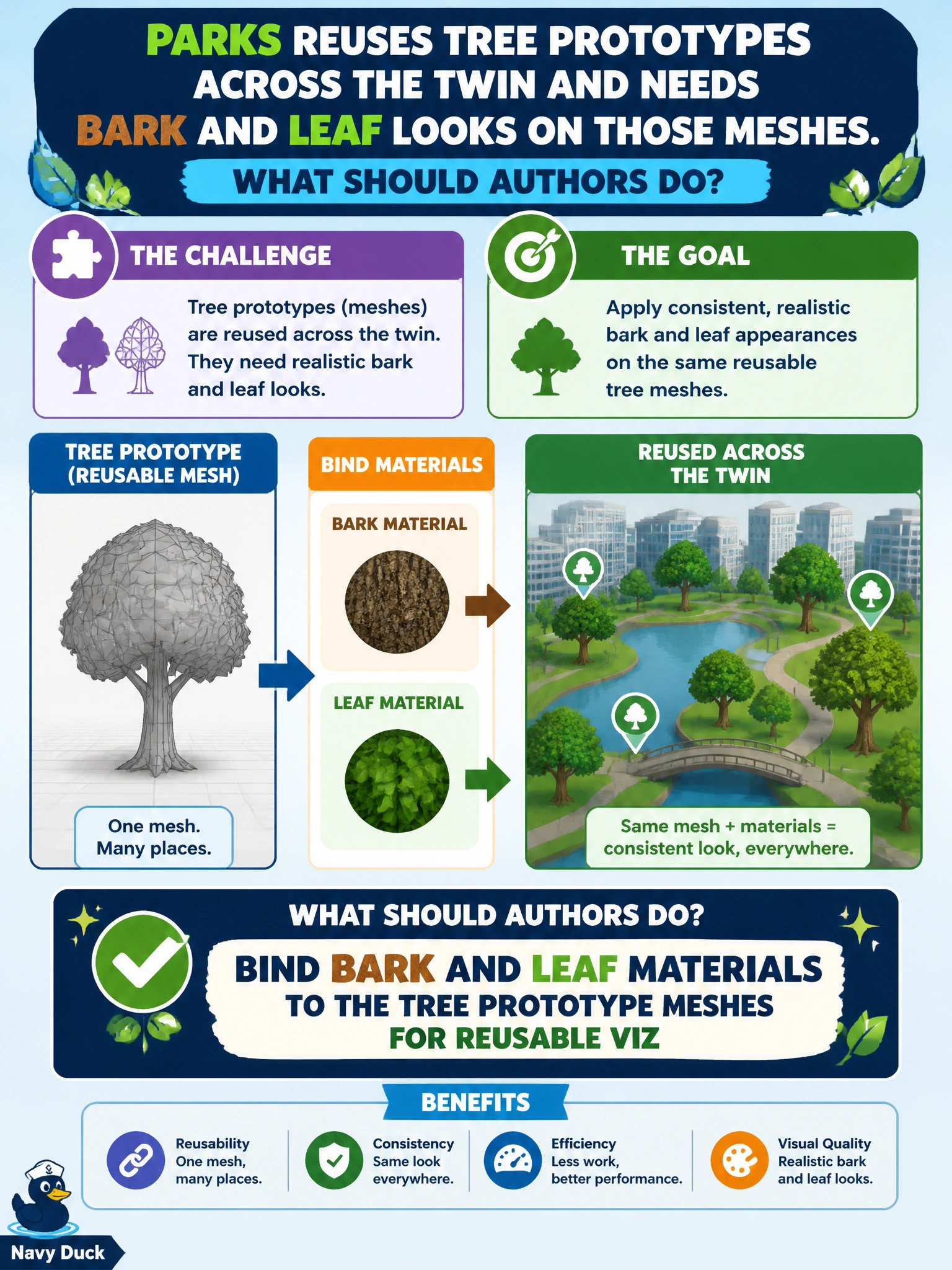
Give your park trees a consistent, reusable look by binding bark and leaf materials to the prototype meshes. That way, each instance inherits the materials as you build out the twin.
Full Explanation
Parks reuse tree prototypes through instancing, so binding bark and leaf materials to the prototype meshes lets instances inherit their looks efficiently. This gives authors reusable visualization without rebinding every tree across the park. Leaving prototypes unbound and coloring trees only in screenshots documents an appearance but does not shade the geometry in the twin. Recording bark and leaf material names in prototype metadata helps teams identify intended looks, but names alone do not create material bindings or shade the meshes. Instancing trees without any material relationships reuses unshaded prototypes, so the trees lack the intended bark and leaf looks. Exam caveat: the material relationships need to be bound on the prototype meshes for instances to inherit them; metadata that merely names materials is not a substitute. As a practical check, bind bark and leaf materials on a tree prototype, instance it across a park block, and open the twin to confirm the instances show those looks. Remove the prototype bindings to verify that the shading disappears, then bind the materials again and confirm the instances inherit the looks.