
Transit wayfinding stripes must shade only selected faces of a platform deck, not the entire mesh. What binding approach fits?
Select an answer to reveal the explanation.
Short Explanation
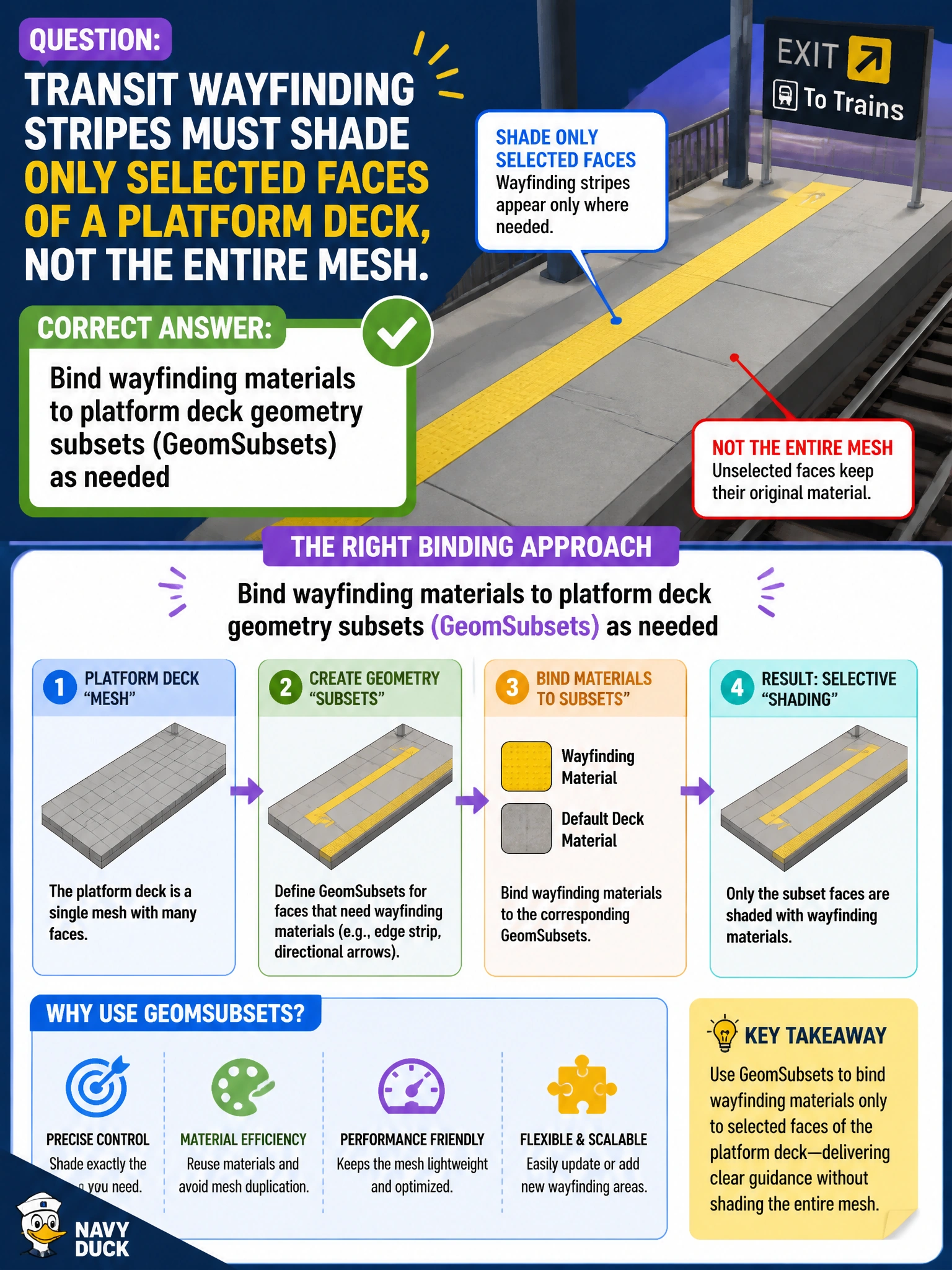
Stripes are a face-level job—bind wayfinding materials to GeomSubsets on the deck so only those faces wear the markings. A citywide root bind paints the whole station wrong.
Full Explanation
Wayfinding stripes often cover only selected faces of a platform deck rather than the entire mesh. Binding wayfinding materials to platform deck geometry subsets (GeomSubsets) applies materials at subset granularity so only those faces receive the stripe look, while the rest of the deck keeps its base material—matching how transit markings work in the real station.
Binding one material to an unrelated citywide root and hoping it cascades paints the wrong scope and can shade unintended city assets far from the platform. Omitting bindings and painting stripes only in a 2D PDF flyer disconnects viz from the twin stakeholders actually open. Applying materials by editing GPU driver registries is unrelated to USD binding and is not a scenegraph or packaging practice.
Exam caveat: GeomSubsets must reference valid face indices for the current mesh; stale subsets after remeshing bind to the wrong faces. Also ensure subset families and material purposes align with what municipal viewers honor for deck shading.
Operational check: create GeomSubsets for stripe faces on a deck, bind wayfinding materials to those subsets, view in the transit stakeholder viewer, confirm only stripe faces show the marking material, bind mistakenly at city root on a clone and observe over-broad shading, then keep subset bindings for publish.