
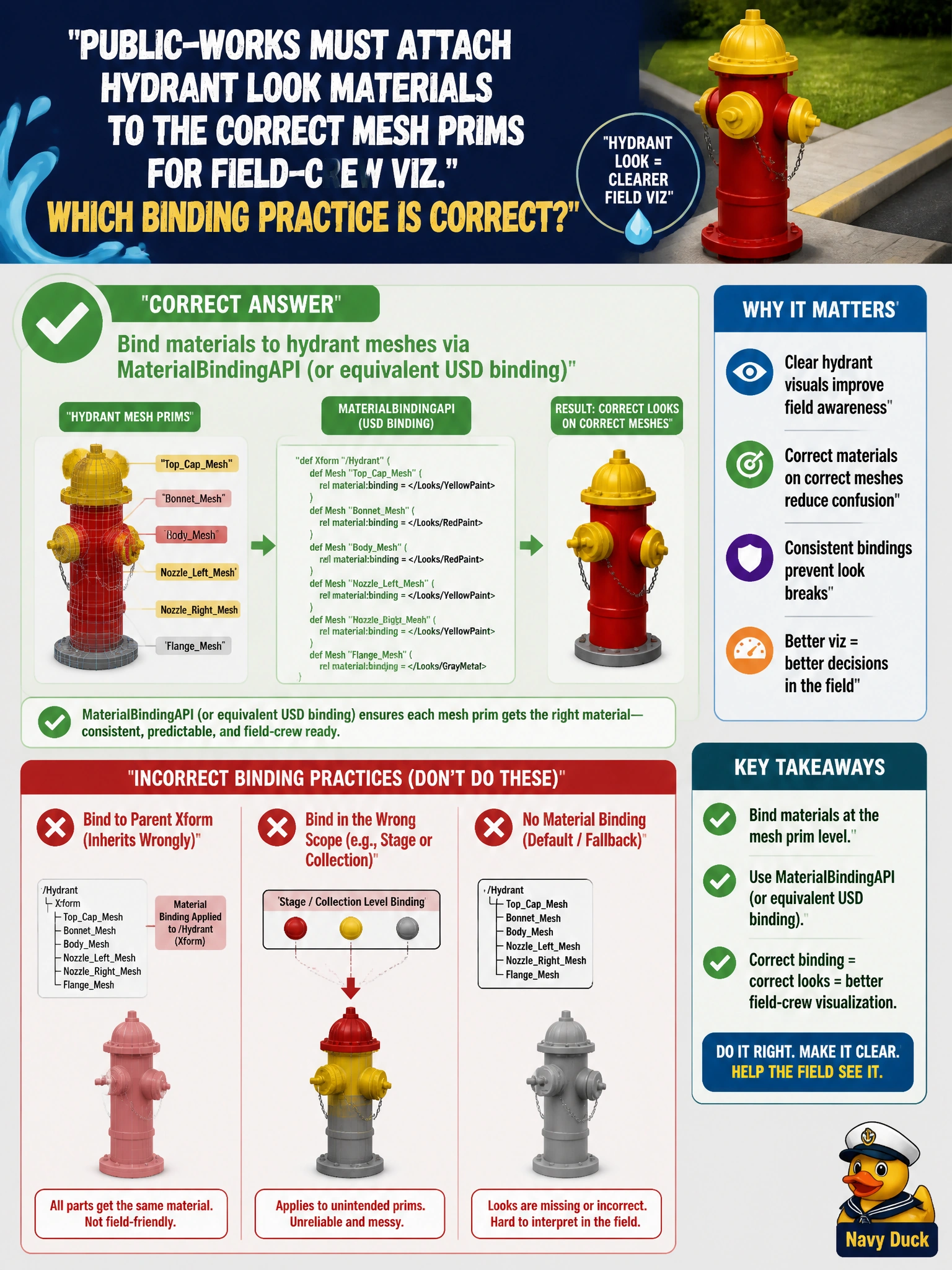
Public-works must attach hydrant look materials to the correct mesh prims for field-crew viz. Which binding practice is correct?
Select an answer to reveal the explanation.
Short Explanation
A hydrant needs its coat actually hung on the mesh—MaterialBindingAPI (or the USD binding equivalent) is how you hang it. Renames and email subjects will not shade the iron.
Full Explanation
Field-crew visualization for hydrants requires materials actually associated with the mesh prims that represent those hydrants. Binding materials via MaterialBindingAPI (or equivalent USD material binding) creates the relationship UsdShade consumers expect so viewers shade the correct public-works geometry rather than hoping names alone imply a look.
Renaming meshes only and hoping viewers invent materials does not create bindings; names are labels, not shade connections. Storing material names solely in email subjects leaves the stage unbound when crews open the twin in the field. Deleting UsdShade prims after each publish removes the materials any binding would target and guarantees unshaded hydrants.
Exam caveat: binding strength, purpose, and collection-based bindings can matter in complex stages. A bind to the wrong prim, an unbound material prim sitting elsewhere in the stage, or a muted shade layer still yields unshaded hydrants even if UsdShade prims “exist” in the package.
Operational check: bind a hydrant look to hydrant meshes with MaterialBindingAPI, open in the field-crew viewer, confirm shading, unbind or delete the shade prims on a test copy and confirm hydrants go unshaded, then restore correct bindings before public-works publish.