
A Nutanix AHV cluster uses asynchronous replication to a DR site, but auditors require VM-level point-in-time copies retained for seven years. What should you design to meet this requirement?
Select an answer to reveal the explanation.
Short Explanation
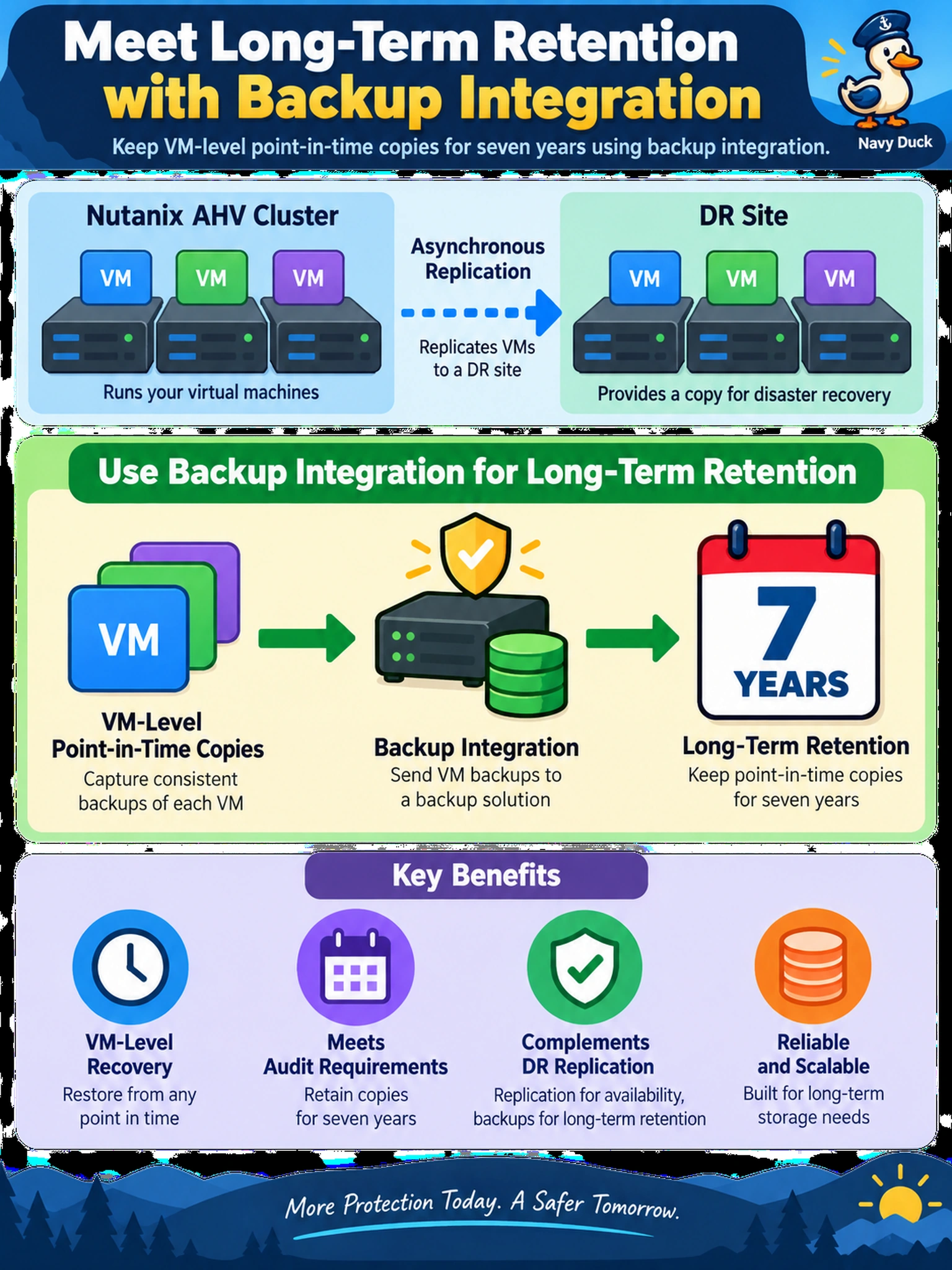
Think of replication as a live copy at the other site, not a filing cabinet. If auditors need seven-year copies, you need backup integration with retention policies. Snapshots and NearSync help recovery, but they don't replace long-term archives.
Full Explanation
Site replication is designed for availability and recovery after site failure, not for archival retention. It keeps copies of protected entities aligned to an RPO, but those copies are part of the DR relationship and are not intended as a long-term, policy-driven archive. A backup integration creates independent backup copies, applies retention schedules, and enables restore of a workload to a chosen point in time months or years later. This matches compliance requirements where a site DR pair may be refreshed, reprotected, or rebuilt while still needing older recoverable copies. Increasing snapshot retention is not a backup strategy because snapshots are managed within the cluster or protection domain, consume local metadata and capacity, and do not provide an independent retention catalog. Switching to NearSync improves recovery point objective by reducing replication lag, but it still does not create long-term retained backup copies. Metro Availability provides synchronous continuous availability for low RPO/RTO needs, but it is an availability service, not an archive mechanism. Exam caveat: choose backup integration when the requirement is long-term retention or compliance restore, not merely a lower RPO. Operational check: run a restore test from a backup copy older than the replication retention window and confirm the backup catalog reports the expected retention period.