
You add several production AHV VMs to a Nutanix protection domain using async replication. The first replication cycle completes slowly, but later scheduled snapshots finish much faster. The link is healthy and bandwidth is not saturated. What best explains the difference?
Select an answer to reveal the explanation.
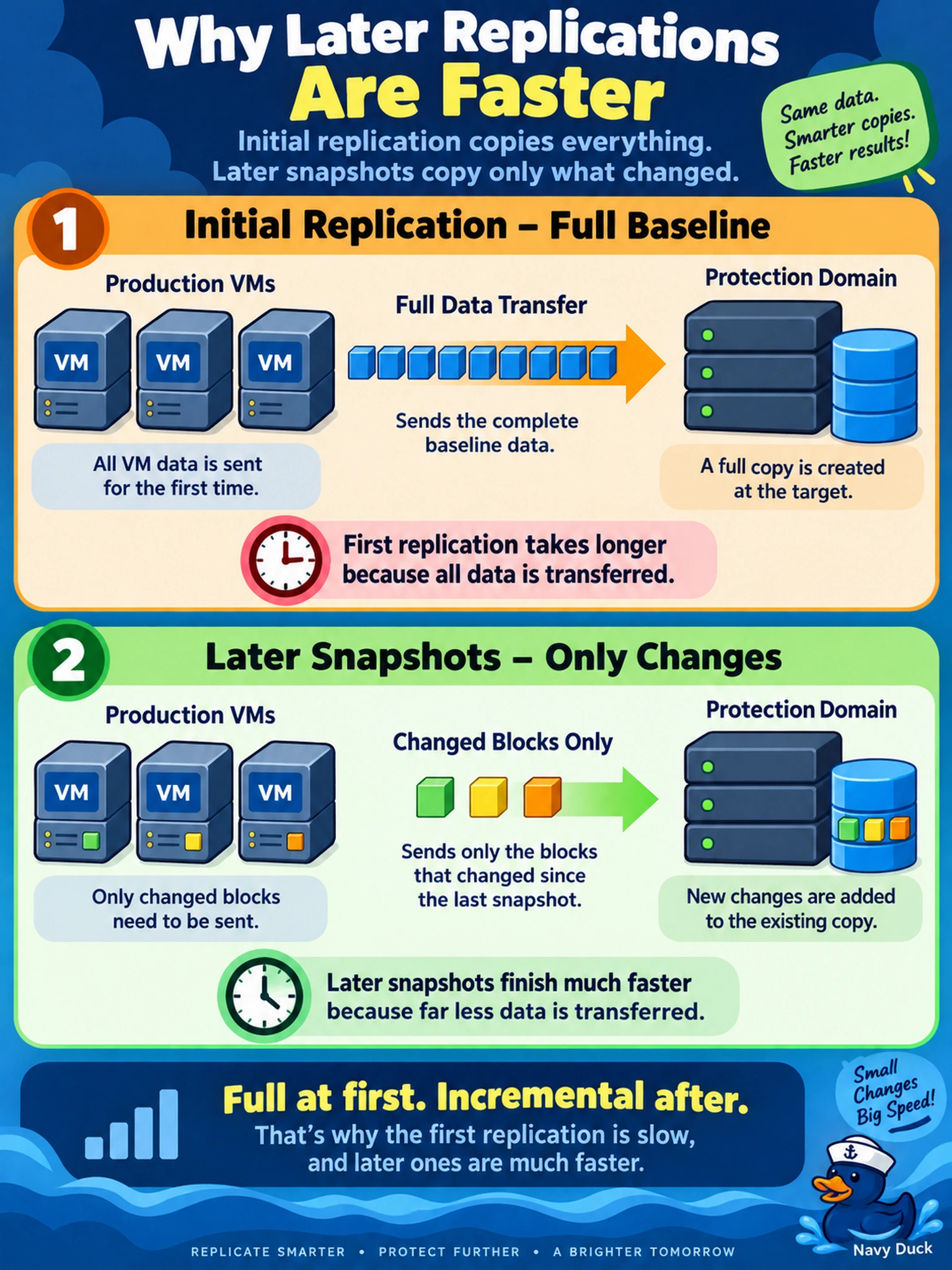
Short Explanation
Think of it like moving house: the first trip hauls everything, while later trips only carry the boxes you actually changed. You shouldn't panic when initial replication is slower than steady-state snapshots. The trick is remembering that the baseline copy is a one-time cost, not a sign the link is broken.
Full Explanation
Async replication first establishes a consistent baseline for each protected VM, so the initial cycle must transfer the data needed to make the remote copy usable. After that baseline exists, scheduled snapshots generally send only the changed blocks or incremental metadata required to advance the remote state, which is why steady-state cycles are shorter. This behavior is expected when adding VMs to a protection domain and is distinct from ongoing replication health. A delay caused by the destination rebuilding local metadata or CVM state before accepting the first snapshot would be an infrastructure failure, not normal initial replication. NearSync does not change its write path by first forcing synchronous writes and then switching to async after a baseline; it uses its defined replication interval to meet a low recovery point objective. Flow policies throttling new protection domain traffic until the first snapshot completes would be a security or network configuration issue, not the normal reason for slower initial replication. Exam caveat: distinguish one-time baseline transfer from a sustained bandwidth or CVM health problem. Operational check: compare the first replication duration against later snapshot durations, then review the protection domain task history and cluster health for errors only if steady-state cycles remain slow.