
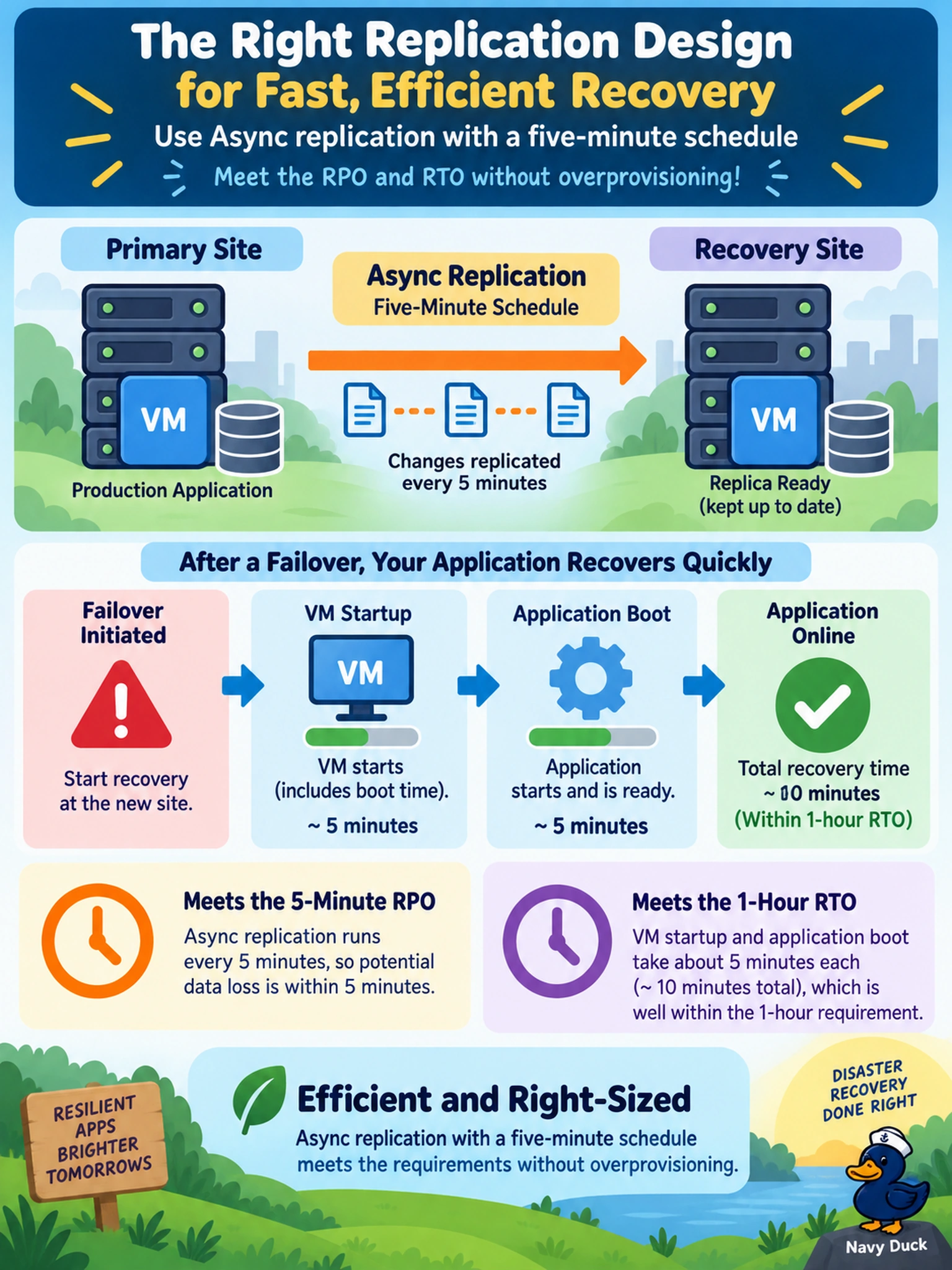
A protected application must meet a five-minute RPO and a one-hour RTO. After failover, VM startup and application boot take about five minutes. Which replication design best meets the requirements without overprovisioning?
Select an answer to reveal the explanation.
Short Explanation
Think of RPO like how much data you're willing to lose, not how fast you can bring the VM up. You match the replication mode and schedule to that five-minute window, then treat the one-hour RTO as a separate boot-time problem. The trap is buying a tighter sync mode just because it sounds safer when it doesn't fix startup time.
Full Explanation
RPO is controlled by how often a consistent recovery point is captured and replicated, so an asynchronous schedule set to the required interval satisfies a five-minute data-loss target. The mode must be selected from the recovery point objective first; asynchronous replication is the normal fit for minute-level RPOs, while tighter modes exist for much smaller windows. A shorter replication interval does not make the virtual machine boot faster, and startup time is only one part of RTO after a failover. Metro availability is a zero-RPO, low-latency design intended for applications that cannot tolerate lost writes, so using it to chase a one-hour RTO overprovisions the relationship. NearSync addresses a much tighter recovery point than a five-minute objective, and it still does not shorten application startup or replace the boot sequence within the RTO. A sixty-minute asynchronous schedule would miss the data-loss requirement because its recovery point is older than the permitted window, even if the total outage is under an hour. Exam caveat: on the exam, map each requirement to the metric it actually measures: RPO to replication frequency, RTO to failover and boot time. Operational check: verify the protection policy schedule and review the last successful recovery point timestamp before validating startup scripts and application readiness.