
An administrator edits a protection domain's replication frequency and remote site after several snapshots have already been replicated. What happens to snapshots that existed before the change?
Select an answer to reveal the explanation.
Short Explanation
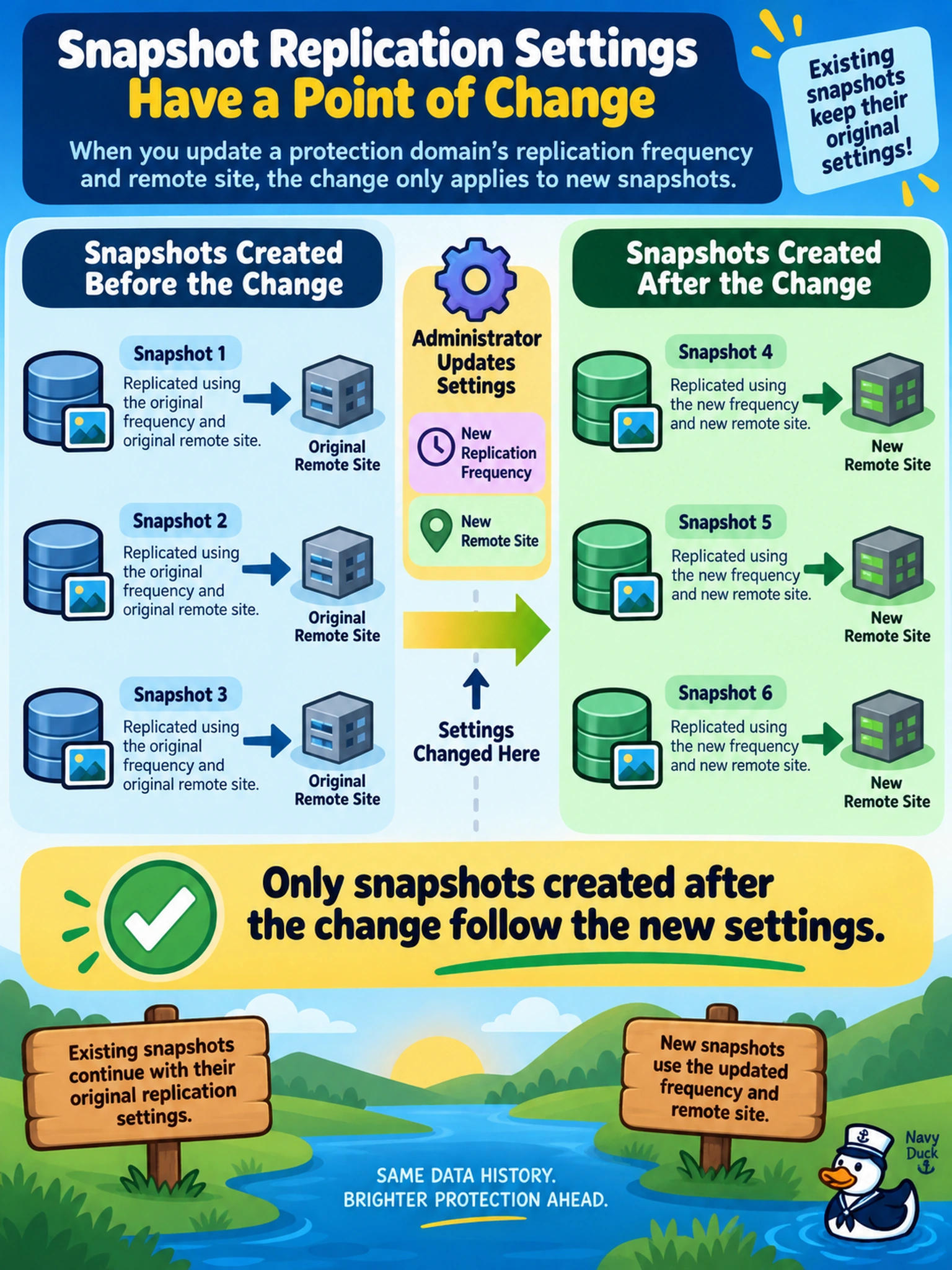
Think of replication settings like a new traffic rule: it applies to cars coming next, not cars already on the road. You tweak the protection domain, and only snapshots created after that change inherit the new behavior. Your old snapshots keep the way they were made.
Full Explanation
In Nutanix protection domains, replication configuration is evaluated when a snapshot is created and queued for replication. Updating the replication frequency, remote site, or related PD settings changes the behavior for snapshots generated after that configuration change is accepted. Snapshots already created retain the metadata and replication state they had at creation, so they continue under the prior schedule and destination unless an administrator explicitly performs another action. Automatic re-replication of historical snapshots is not implied because the system does not rewrite existing snapshot objects to match a new policy. Deleting and recreating those snapshots is also not the expected behavior; it would destroy recovery points and break retention. Moving existing snapshots to a newly selected remote site is likewise not automatic, since remote-site changes govern future replication targets rather than relocating already copied data. Exam caveat: distinguish PD replication changes from snapshot operations or recovery-point actions that may require manual intervention. Operational check: after editing a protection domain, create a test snapshot and verify its replication schedule and target in Prism Central or Prism Element before relying on the change.