
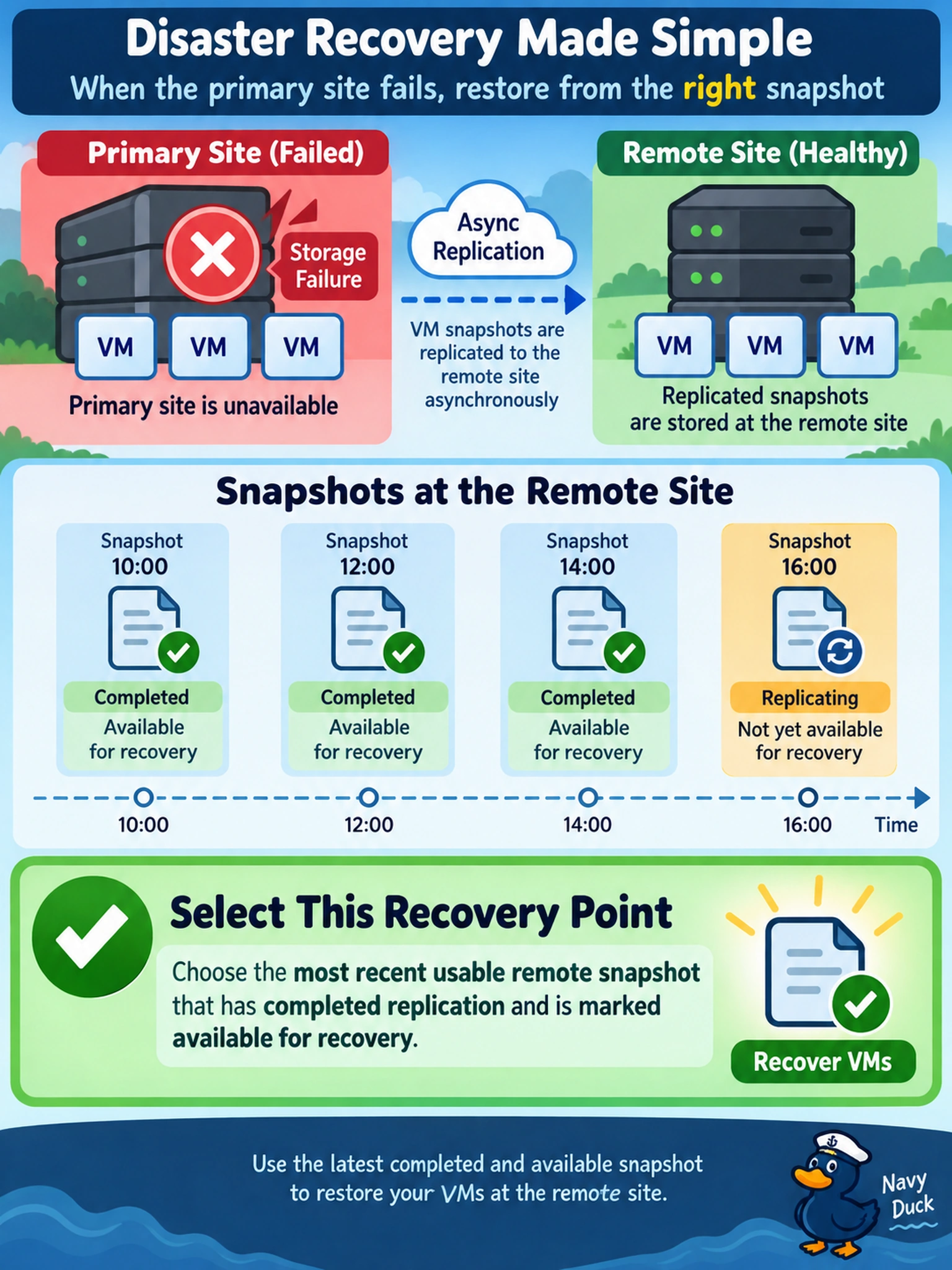
A protection domain replicates VMs from AHV Prism Element to a remote Nutanix cluster using async replication. The primary site suffers a storage failure, and you must recover the VMs at the remote site. Which recovery point should you select for the restore?
Select an answer to reveal the explanation.
Short Explanation
Think of remote replication like mailing copies of your work: the remote site only has what arrived, not what's still on your desk. When the primary site fails, you recover to the latest usable remote snapshot, not the live source or an unreplicated local copy. Don't chase the newest local snapshot if it never became a valid recovery point at the remote site.
Full Explanation
In Nutanix DR, a recovery point is defined by a snapshot that has been replicated and is usable at the target site. Async replication sends completed snapshot data from the protection domain to the remote cluster; the remote site can only restore from snapshots that have arrived and passed integrity checks. Therefore, the correct recovery point is the latest usable remote snapshot, because it represents the most recent state actually available for recovery after the primary site is lost. A snapshot that exists only on the failed primary cluster cannot be used if the source site is unavailable, and a local snapshot that predates replication may be older than the newest valid remote copy. The live source VM state is not a recovery point because async replication does not guarantee that the final writes before the outage reached the remote site. Exam caveat: do not confuse the latest local snapshot with the latest usable replicated snapshot; recovery choices depend on what is available at the DR target. Operational check: before failing over, verify the remote protection domain's snapshot list and confirm the chosen snapshot is marked available for recovery.