
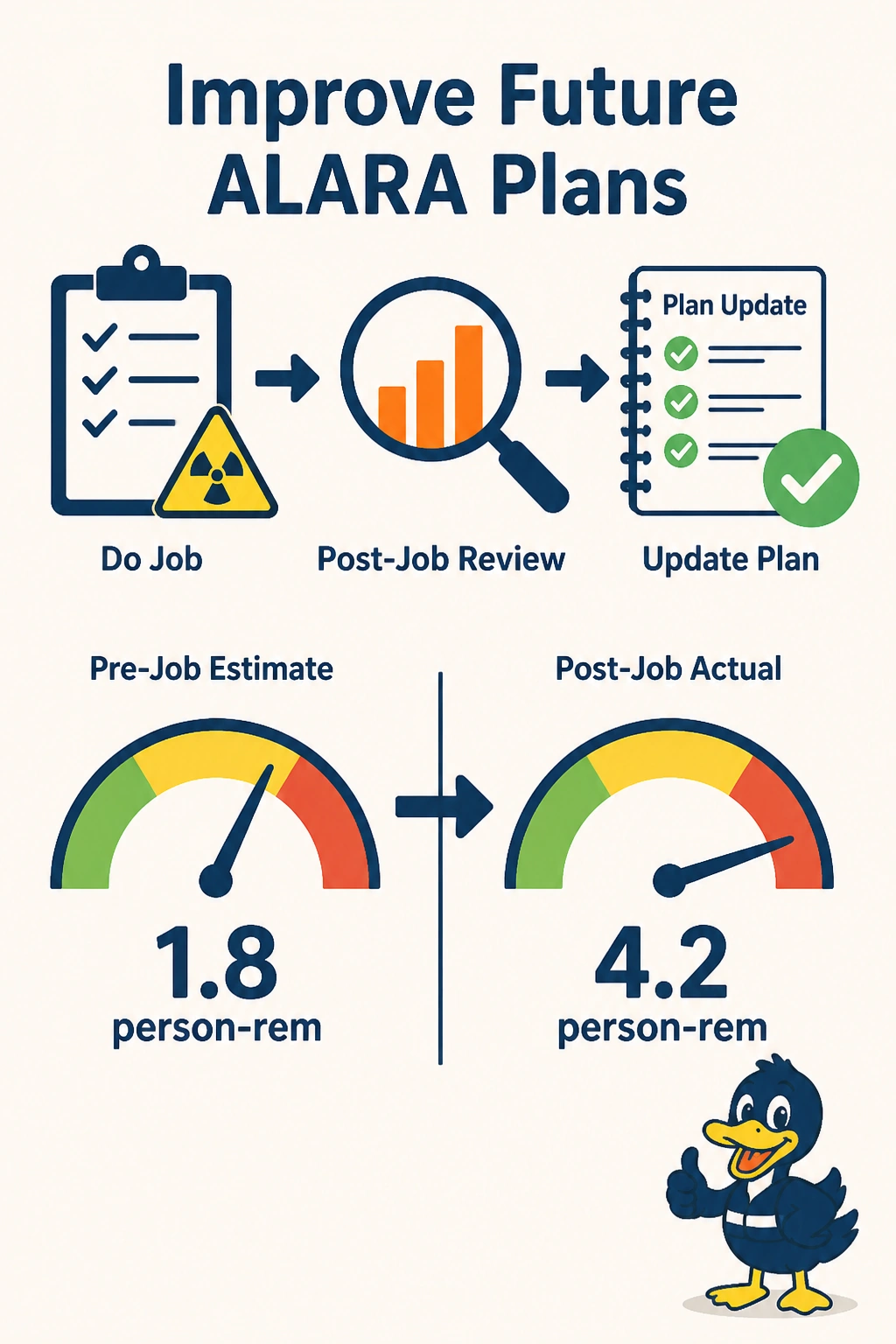
After a routine steam-generator inspection finishes, the health physics supervisor notes that the crew's actual collective dose was 4.2 person-rem compared with the pre-job ALARA estimate of 1.8 person-rem. Which ALARA program action should be taken next?
Select an answer to reveal the explanation.
Short Explanation
Think of an ALARA program as a feedback loop that helps you learn from surprises before the next crew enters the field. When collective dose jumps well past the estimate, you want to uncover what actually drove the exposure rather than falling for cosmetic paperwork fixes or spreading the same dose across more workers.
Full Explanation
When actual collective dose substantially exceeds the pre-job ALARA estimate, the appropriate next step is to Conduct a post-job review to identify unexpected dose drivers and update future work plans. Post-job reviews examine whether higher-than-expected source terms, tooling delays, missing temporary shielding, or inadequate mock-up training drove the extra exposure, turning operational feedback into concrete improvements. Selecting Divide the excess collective dose across additional workers on the next shift to lower individual averages fails because splitting work among more people without reducing field rates or stay time does not reduce collective dose under ALARA. Choosing Raise the pre-job ALARA estimate retroactively so the completed work package matches actual dosimetry falsifies planning records and eliminates the trigger needed to investigate why dose rose. Picking Suspend all routine radiological maintenance at the facility until the NRC completes an inspection is an unwarranted operational shutdown unless a regulatory limit was exceeded or an unsafe condition persists. As a caveat, verify first that individual worker doses remained within administrative and 10 CFR 20 limits before focusing on long-term ALARA lessons learned. As an operational check, compare electronic personal dosimeter records against Radiation Work Permit stay-time logs during the debrief to pinpoint which subtask caused the 2.4 person-rem overrun.
Prefer to study offline? Printable PDF study book + test engine ($7.50, unofficial). These questions stay free here.