
A facility plans to machine lightly contaminated metal components in a shop where airborne alpha activity could exceed occupational limits. Under NRC 10 CFR 20.1701, which control approach must the licensee prioritize first to limit airborne concentrations?
Select an answer to reveal the explanation.
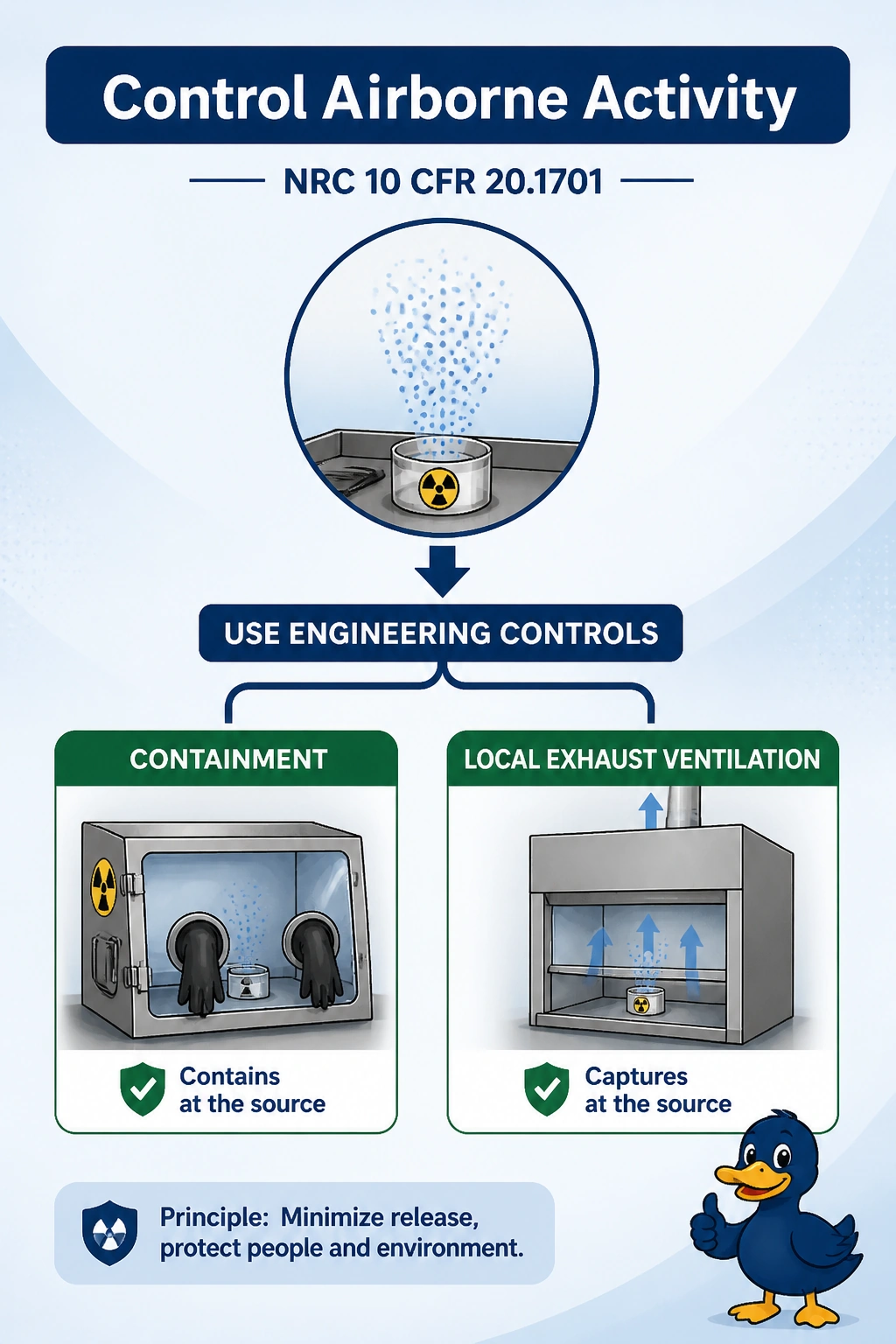
Short Explanation
When airborne dust threatens a workspace, you want to stop the contamination at its source rather than strapping gear onto every worker. The trap is jumping straight to respirators or shift rotation, which regulators allow only when engineering controls are not practical.
Full Explanation
Under NRC 10 CFR 20.1701, licensees must use process or other engineering controls to the extent practical before relying on administrative measures or respiratory protection to control airborne radioactivity. Choosing Process or engineering controls such as containment and local exhaust ventilation captures radioactive particulates at the point of generation, keeping the entire room cleaner and protecting all personnel without adding physical strain. Issuing tight-fitting P100 air-purifying respirators to every machinist in the shop is a secondary measure under 10 CFR 20.1702 that introduces heat stress, communication barriers, and potential fit-test failures while leaving surfaces contaminated. Rotating workers on short shifts to keep individual DAC-hour intakes below limits may lower each person's dose, yet it spreads risk across more people and fails to reduce collective intake or airborne concentrations. Restricting shop entry to qualified radiation workers with current bioassay records controls access and tracks uptake, but it does nothing to prevent airborne release during machining. As a caveat, if engineering controls cannot practically keep concentrations below Airborne Radioactivity Area thresholds, 10 CFR 20.1702 requires combining access control, time limits, or respirators to keep total effective dose equivalent ALARA. For an operational check, measure airflow capture velocity at the machining hood with a calibrated anemometer before work starts.
Prefer to study offline? Printable PDF study book + test engine ($7.50, unofficial). These questions stay free here.