
Under NRC 10 CFR 20.1703 respiratory protection requirements, why is a worker with facial hair in the facepiece sealing surface prohibited from wearing a tight-fitting negative-pressure respirator?
Select an answer to reveal the explanation.
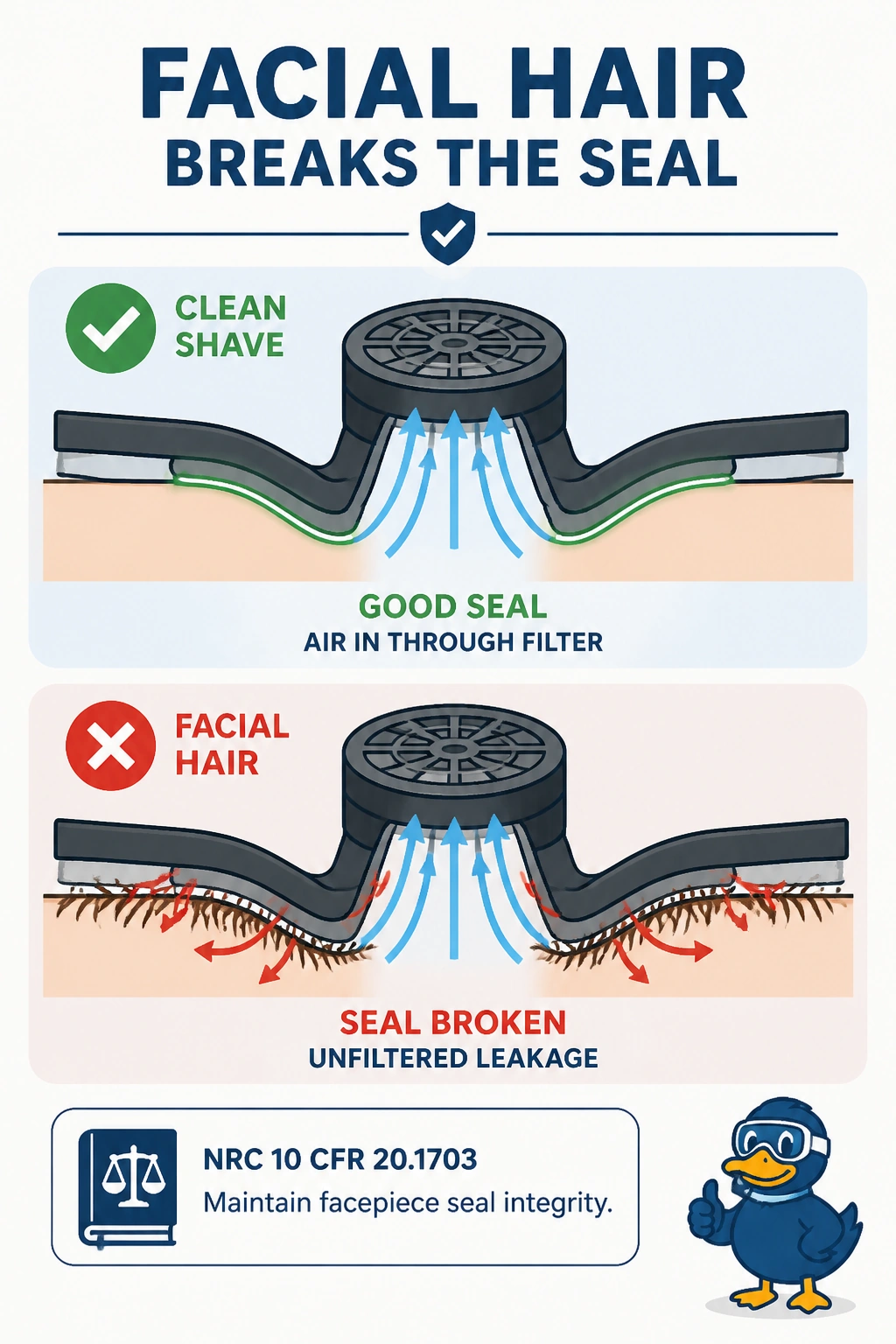
Short Explanation
A tight-fitting respirator works like a submarine hatch—even a tiny gap around the gasket lets the outside hazard rush straight in. Do not fall for the trap that beards merely trap dust on the outside; the real danger is unfiltered air bypassing the seal into your lungs.
Full Explanation
Under NRC 10 CFR 20.1703, tight-fitting respirators cannot be worn with facial hair in the sealing surface because Facial hair breaks the facepiece seal and allows unfiltered leakage. When a worker inhales, negative pressure inside the mask draws air along the path of least resistance; gaps created by stubble or a beard allow contaminated room air to bypass the HEPA cartridge entirely, invalidating the assigned protection factor. Facial hair traps radioactive particles and increases external skin dose is not the reason for the prohibition, because respiratory protection rules address internal inhalation dose rather than external skin contamination. Facial hair increases breathing resistance across the particulate filter is false because inhalation resistance is governed by filter loading and airflow rate, not hair on the face. Facial hair reacts chemically with the elastomeric mask gasket material is also incorrect because silicone and rubber facepieces are chemically inert to human hair. As a caveat, even a single day's beard growth can degrade a quantitative fit factor, whereas loose-fitting powered air-purifying hoods do not rely on a facepiece seal. As an operational check, verify that each user passes a clean-shaven seal check and holds a current quantitative fit test before entering an airborne radioactivity area.
Prefer to study offline? Printable PDF study book + test engine ($7.50, unofficial). These questions stay free here.