
When designing or verifying ventilation for a facility handling unsealed radioactive powders, which airflow pattern best prevents airborne contamination from spreading into clean occupied corridors?
Select an answer to reveal the explanation.
Short Explanation
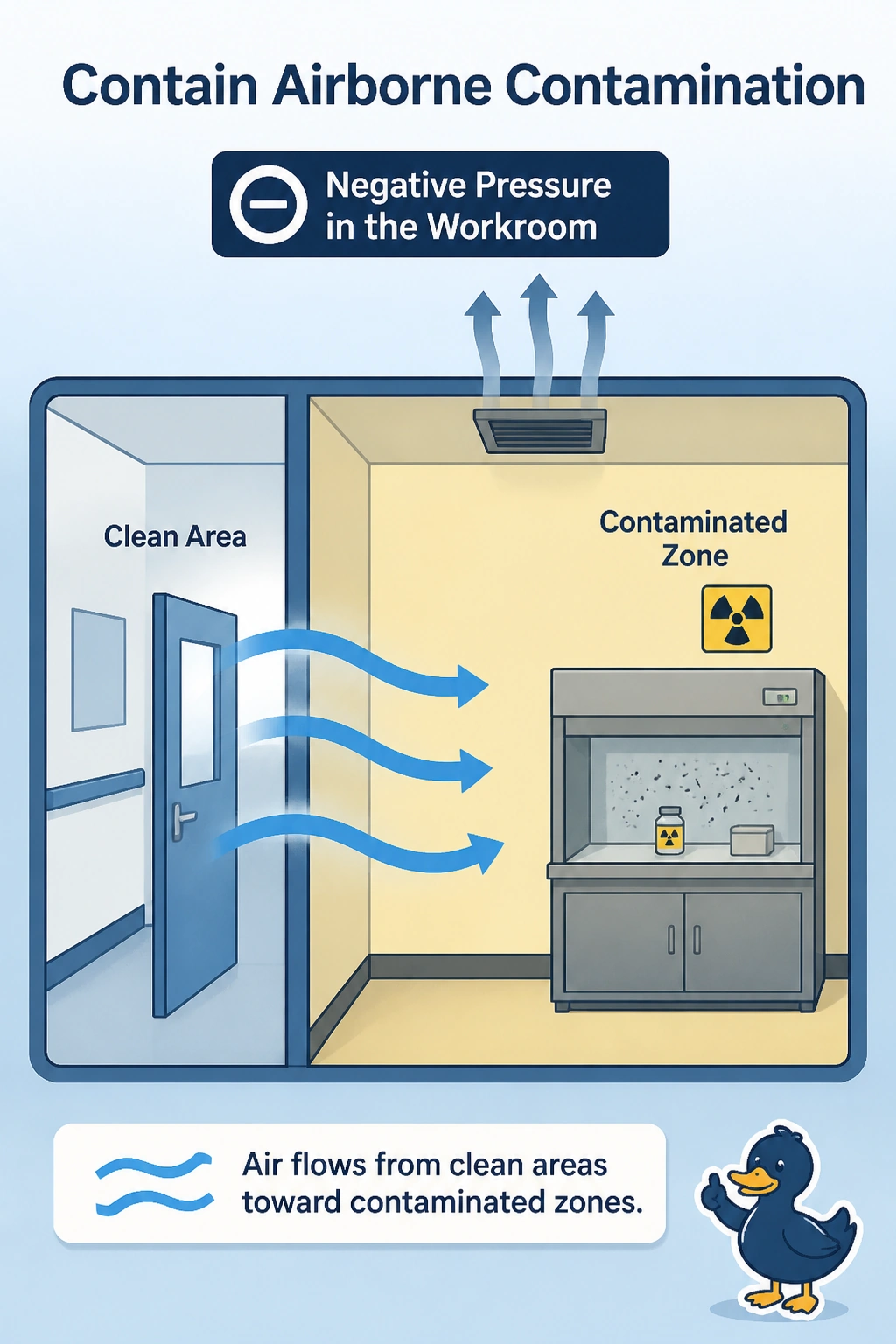
Think of radiological ventilation like a one-way street—you want clean air pushing inward so dirty air can never drift out into the hallway. Keeping the workroom at negative pressure forces airflow from clean corridors toward the powder-handling zone. The trap is choosing positive pressure, which works for cleanrooms protecting a product from dust, not for containing radioactive hazards.
Full Explanation
Containment ventilation relies on pressure differentials so that any leakage through doorways, pass-throughs, or seals moves inward rather than outward. Therefore, the correct design is to Maintain negative pressure in the workroom so air flows from clean areas toward contaminated zones, where exhaust air is captured and passed through high-efficiency particulate air (HEPA) filtration before release. Choosing Maintain positive static pressure inside the workroom relative to the surrounding corridors reverses the pressure gradient and actively pushes airborne radioactive powders out into occupied hallways. Selecting Recirculate 100 percent of workroom exhaust air directly back into the supply air ducts concentrates airborne activity and distributes it throughout the ventilation system instead of exhausting it safely. Picking Exhaust air from the clean corridors directly into the workroom through unfiltered vents describes uncontrolled transfer rather than a controlled negative-pressure cascade and fails to address exhaust filtration. As a ventilation caveat, opening multiple doors simultaneously can collapse the pressure differential and temporarily reverse airflow. As an operational check, verify differential pressure gauges (magnehelics) and perform smoke-tube airflow checks at doorways before work begins.
Prefer to study offline? Printable PDF study book + test engine ($7.50, unofficial). These questions stay free here.