
An inpatient medical unit installs bed-exit alarms on every bed to reduce patient falls, yet fall rates with injury remain unchanged and nurses report frequent false alarms. Which patient safety strategy should the safety officer recommend instead?
Select an answer to reveal the explanation.
Short Explanation
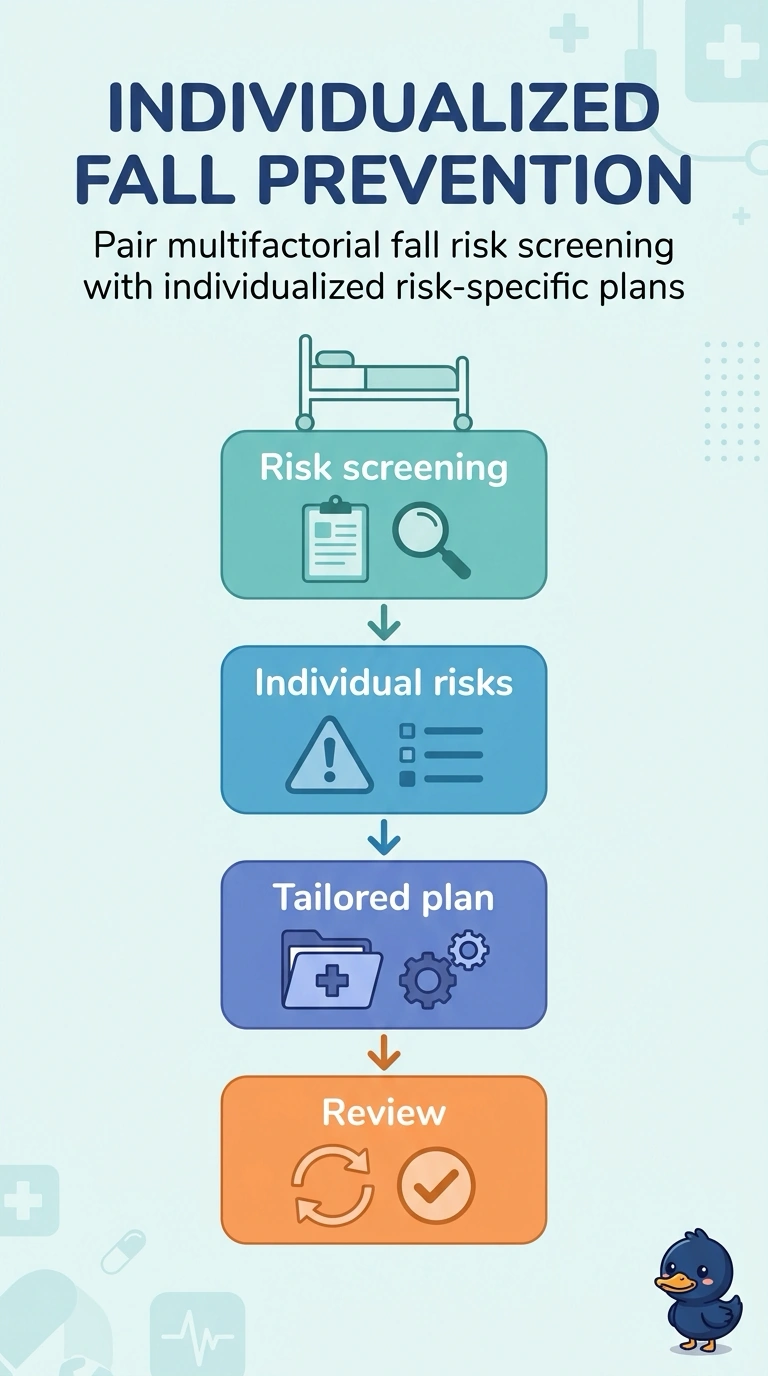
It’s frustrating when alarms keep sounding but injury rates do not improve. You get better results by matching each patient’s fall risks—such as medication effects, toileting needs, or mobility limits—to individualized prevention steps, rather than relying on blanket rules or paperwork alone.
Full Explanation
Pair multifactorial fall risk screening with individualized risk-specific plans because falls can arise from different factors, including orthostatic hypotension, sedating medications, gait instability, and urgent toileting needs. Matching interventions to each patient’s risks is more effective than relying on a uniform approach; frequent false alarms can also desensitize staff without preventing falls. Raising bilateral side rails on beds of patients flagged as high fall risk is still a uniform device approach; rails used to keep a patient from getting out of bed can meet the CMS restraint definition, and they do not match interventions to each patient's risks. Requiring hourly risk-score documentation with review at monthly meetings adds paperwork but does not alter the environment or address hazards. Placing patients over sixty-five on bed-exit alarms with limited night-time ambulation repeats a blanket alarm approach and restricts safe mobility, which can cause deconditioning, delirium, and pressure injuries while false alarms desensitize staff. One exam caveat: universal precautions, including non-skid footwear and clear walkways, still apply to all patients, alongside targeted plans for higher-risk patients. A practical check is to audit post-fall huddles and confirm that the care plan was updated with specific interventions tied to the patient’s identified risks.
Prefer to study offline? Printable PDF study book + test engine ($7.50, unofficial). These questions stay free here.