
A hospital's code blue committee reviews three resuscitation delays in which float nurses and resident physicians struggled to locate epinephrine and airway supplies because each inpatient unit stocked its emergency crash carts differently. Which human factors intervention best reduces search errors during emergencies?
Select an answer to reveal the explanation.
Short Explanation
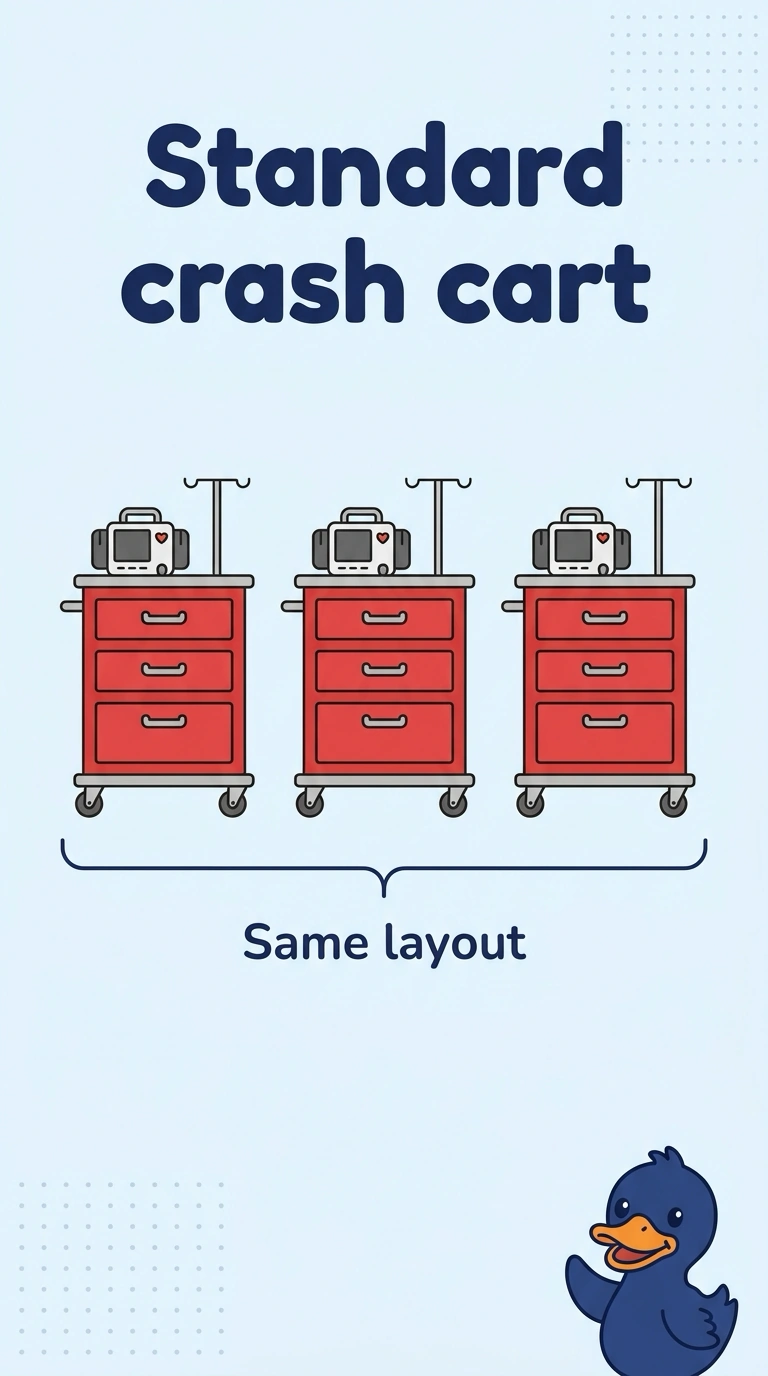
During a cardiac arrest, nobody should have to play a guessing game to find epinephrine. You eliminate search errors by standardizing crash cart layouts and tray contents across inpatient units. Do not fall for the trap of posting cart maps or running drills on mismatched carts, which still leaves float staff hunting under pressure.
Full Explanation
Implementing "Standardizing crash cart layouts and tray contents across inpatient units" applies human factors engineering to eliminate cognitive load and search errors during high-stress resuscitations. When every cart shares identical drawer order and medication placement, float nurses and rotating physicians rely on muscle memory regardless of which unit they are covering. By contrast, "Posting laminated unit-specific cart maps above each nurse station" forces clinicians to stop, read, and translate instructions during a time-critical emergency. Similarly, "Requiring annual timed scavenger drills for float staff on each unit's cart" relies on human memory across inconsistent designs rather than fixing the underlying system hazard. Meanwhile, "Adding extra backup supplies to the bottom drawer of each crash cart" increases clutter and can worsen confusion without standardizing primary locations. One caveat is that specialized areas such as pediatric or neonatal units may require weight-based layouts, which should still follow a single standardized pediatric design across those units. As an operational check, perform unannounced monthly tracer inspections on randomly selected adult units to verify identical drawer layouts, intact tamper seals, and current expiration dates.
Prefer to study offline? Printable PDF study book + test engine ($7.50, unofficial). These questions stay free here.