
An inpatient medical-surgical hospital experiences three serious adverse events over two months when patients transferred from the intensive care unit arrive on general wards with missed anticoagulation holds and unclear escalation plans. Nurses and physicians currently give free-form verbal updates by phone without a shared template. Which safety intervention most reliably reduces these transfer errors?
Select an answer to reveal the explanation.
Short Explanation
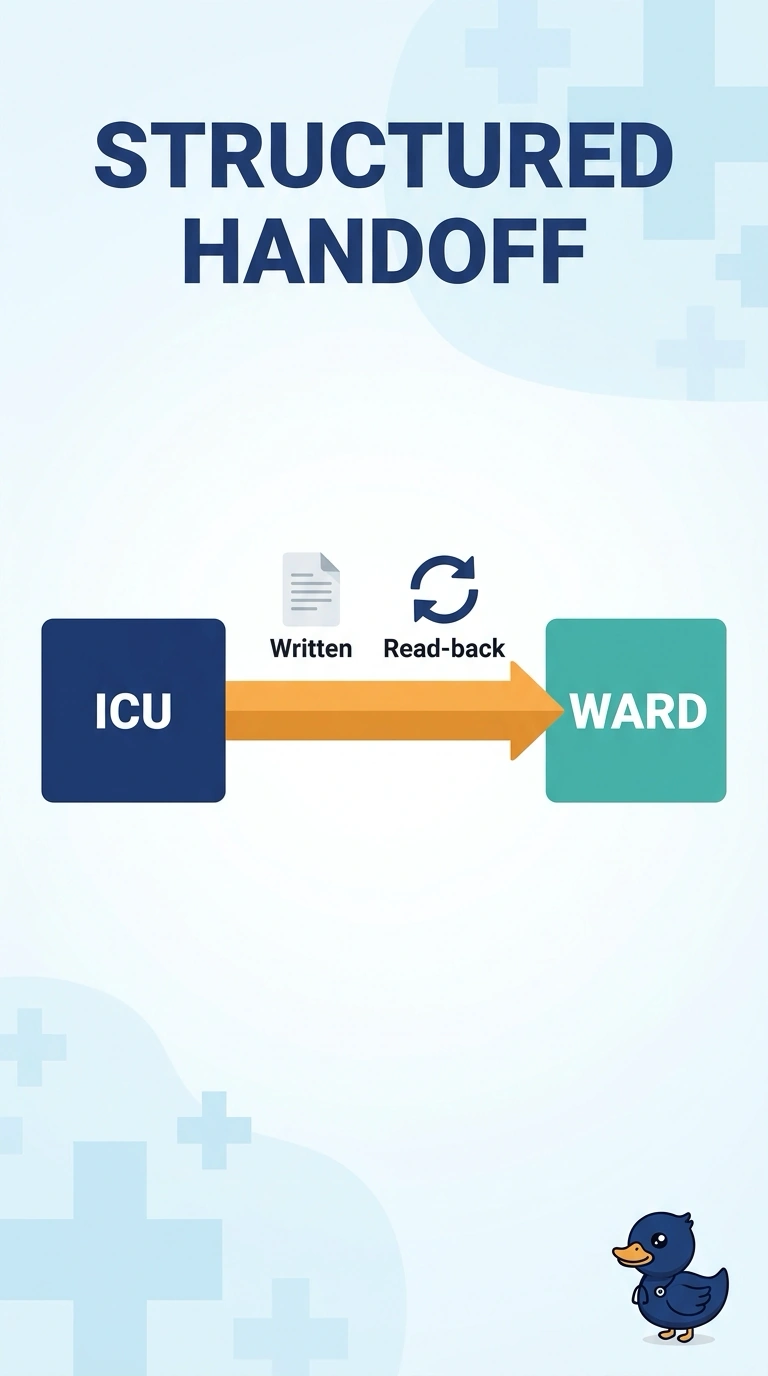
Think of a clinical handoff like passing a baton in a relay race: when you toss it without a clear plan, crucial details can hit the floor. A structured verbal and written handoff with read-back helps you confirm shared understanding before care responsibility shifts, unlike extra chart sign-offs, weekly incident emails, or a call delayed until after arrival.
Full Explanation
A structured verbal and written handoff bundle with read-back verification directly addresses communication breakdowns during high-risk unit transfers. Evidence-based handoff frameworks organize essential elements—such as illness severity, patient summary, pending action items, contingency plans, and receiver synthesis—so critical anticoagulation holds and escalation triggers are not left to memory. A mandatory two-nurse sign-off on all transfer orders in the electronic chart relies on passive human checking and does not ensure that the sending and receiving teams share the same clinical picture. A weekly email summary of transfer-related incidents to unit supervisors broadcasts retrospective problems but does not structure real-time communication during a transfer. Requiring receiving nurses to call the intensive care unit back within two hours delays clarification until after the patient has arrived on the ward, leaving a dangerous gap during the transition itself. One important caveat is that a handoff template can fail if staff treat it as a checkbox exercise without protected time and an uninterrupted space to speak. As a practical operational check, audit random intensive care-to-ward transfers each week to confirm that both the written summary and live read-back occurred before patient transport.
Prefer to study offline? Printable PDF study book + test engine ($7.50, unofficial). These questions stay free here.