
A busy medical-surgical unit experiences two wrong-patient blood draw incidents in one month after phlebotomists verify identity by checking the room number on the white board and asking patients to nod when called by their last name. Which standard safety practice directly prevents this error?
Select an answer to reveal the explanation.
Short Explanation
Asking 'Are you Mr. Jones?' to a sleepy patient in room 402 is an invitation for a nod to the wrong chart. The trap is relying on room numbers or passive yes-no questions instead of two active patient identifiers.
Full Explanation
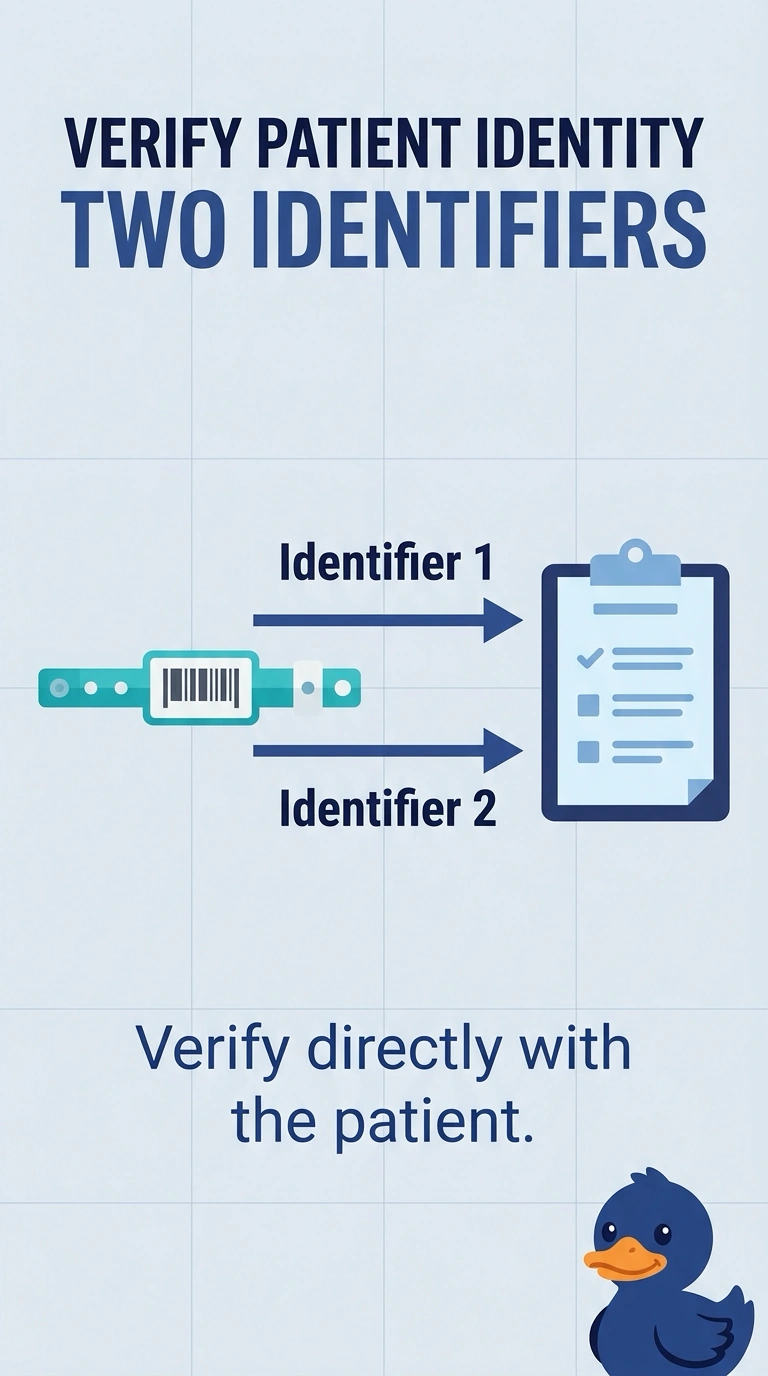
Verifying two independent patient identifiers directly with the patient—such as asking the patient to state their full name and date of birth and matching both to the wristband and requisition—prevents wrong-patient specimen and medication errors. Room numbers change frequently and drowsy or hard-of-hearing patients often nod reflexively to any name spoken aloud. Posting color-coded identity alert signs outside each occupied patient room fails because room-based visual cues still break down when patients are moved or share semi-private rooms, and they also risk privacy exposure. Asking the bedside nurse to confirm the patient's room assignment verbally relies on memory and room numbers rather than direct verification at the point of care. Using the patient's bed number and admitting diagnosis on specimen labels violates national patient safety identification standards because bed numbers are location-based rather than patient-specific. As a caveat, when patients are nonverbal or sedated, match two identifiers on the wristband to the order or requisition; a family member may assist but is not an identifier. Operationally, conduct direct observation audits of phlebotomy and medication passes to catch passive confirmation habits.
Prefer to study offline? Printable PDF study book + test engine ($7.50, unofficial). These questions stay free here.