
During morning rounds on a busy telemetry unit, a charge nurse notices two new float nurses bypassing bedside monitor checks because extra beds were placed in the hallway overnight. Which patient safety approach reflects a High Reliability Organization?
Select an answer to reveal the explanation.
Short Explanation
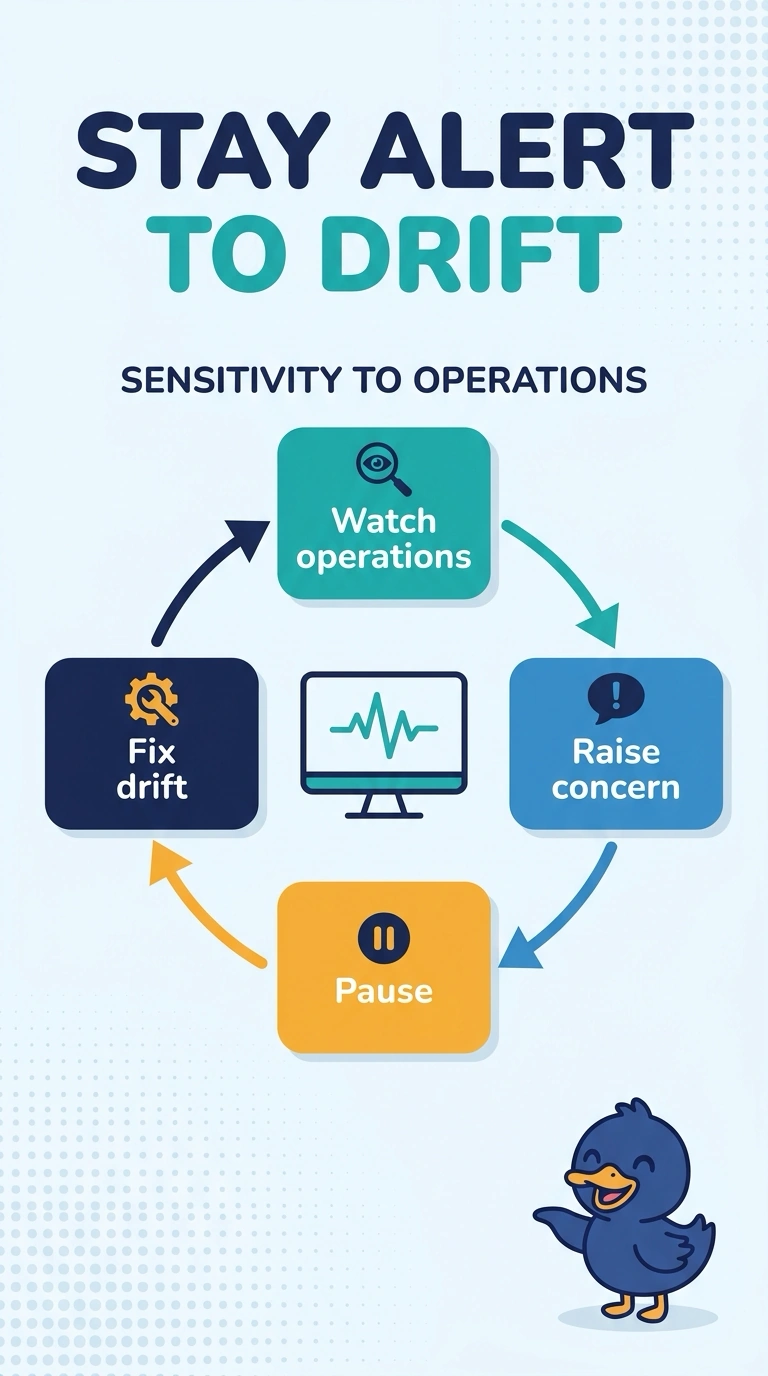
High reliability means spotting a loose lug nut while the car is still in the driveway—you adjust immediately rather than waiting for a breakdown on the highway. The trap is waiting for quarterly metrics, when Applying sensitivity to operations by empowering staff to pause and fix drift protects patients now.
Full Explanation
High Reliability Organizations maintain continuous awareness of how frontline work actually unfolds under shifting pressures. Applying sensitivity to operations by empowering staff to pause and fix drift works because it treats real-time workarounds—like skipped monitor checks during hallway surge—as immediate operational hazards that unit leaders and clinicians resolve on the spot. Deferring workflow adjustments to align with quarterly audit findings allows unsafe workarounds to normalize and accumulate risk over months. Moving safety huddles to a weekly email summary for staff updates delays critical information until it can no longer guide staffing and monitoring decisions during the surge. Asking nurses to consolidate equipment issues into the monthly unit report lets small glitches accumulate unseen instead of triggering prompt fixes. One caveat is that empowering frontline pauses requires clear escalation backups so staffing or equipment gaps are actually resourced rather than pushed back onto bedside staff. As an operational check, track how many real-time huddle escalations result in same-shift mitigation during surge periods.
Prefer to study offline? Printable PDF study book + test engine ($7.50, unofficial). These questions stay free here.