
A medical-surgical nurse notices a postoperative patient's blood pressure dropping and heart rate rising over two hours and needs to escalate the change immediately to an on-call physician. Which communication practice best supports a clear, actionable response?
Select an answer to reveal the explanation.
Short Explanation
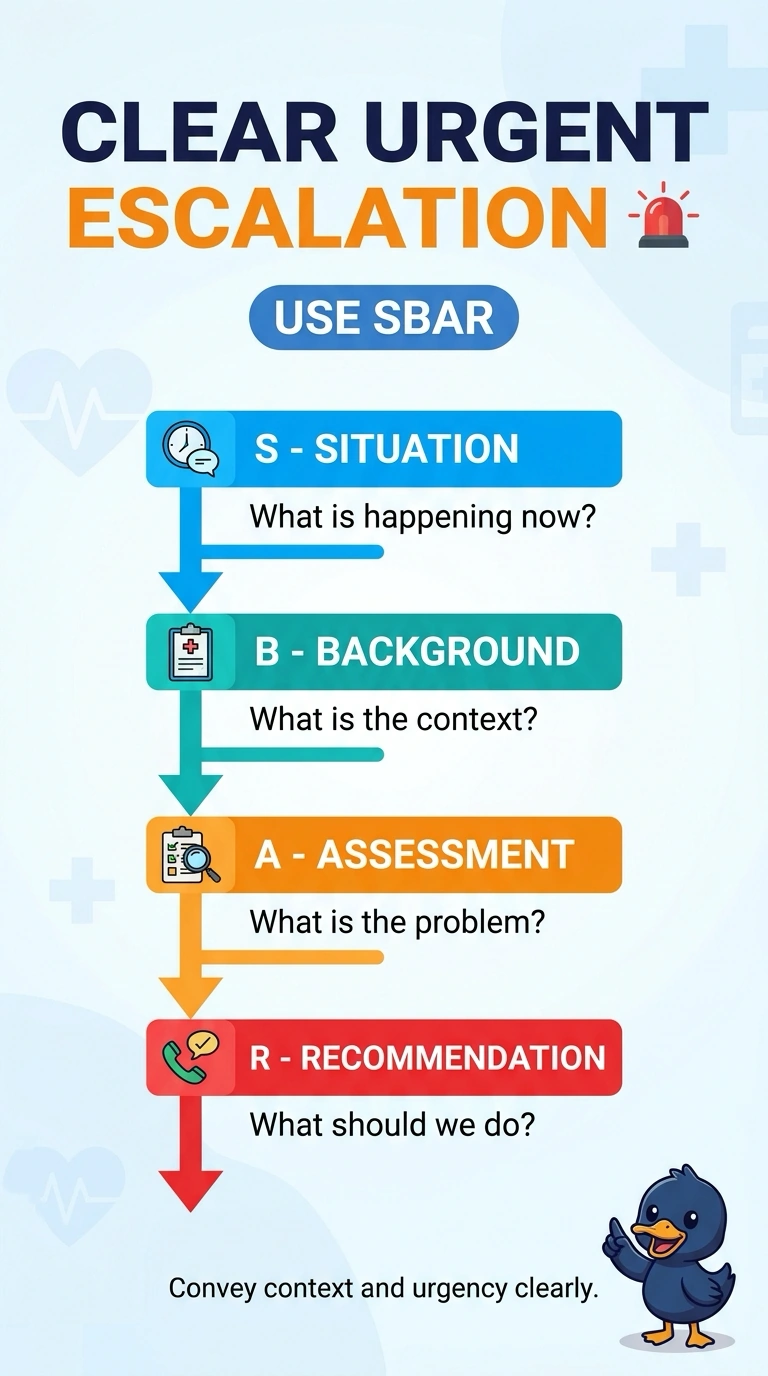
When a patient is deteriorating, a rambling phone call buries the lead while seconds tick away. Using a crisp SBAR structure lets you put the urgent problem and clear request up front, avoiding the trap of vague or delayed escalation.
Full Explanation
Using structured SBAR communication to convey context and urgency clearly organizes the escalation into Situation, Background, Assessment, and Recommendation so the receiving clinician immediately grasps who is calling, what changed, relevant clinical context, and what bedside action is requested. Standardizing escalation syntax reduces cognitive load and prevents critical vital-sign trends from getting lost across disciplines. Sending a brief text message that asks the clinician to call back when free omits clinical severity and creates dangerous uncertainty about whether immediate bedside evaluation is needed. Charting the trend and rechecking in an hour before calling delays intervention during active hemodynamic decline and risks preventable clinical deterioration. Calling and describing the full postoperative course before mentioning the vital sign change buries the urgent hemodynamic trend in excessive background detail and delays recognition when rapid decisions are needed. As a caveat, structured communication only works if the escalation ends with an explicit recommendation and closed-loop confirmation of the next step. As an operational check, review rapid-response and escalation logs monthly for documentation of SBAR elements and time from vital-sign change to clinician response.
Prefer to study offline? Printable PDF study book + test engine ($7.50, unofficial). These questions stay free here.