
A primary care network discovers that several patients experienced delayed cancer diagnoses because abnormal chest imaging reports noting incidental pulmonary nodules were filed in the electronic health record without documented clinician acknowledgment or follow-up scheduling. Which safety safeguard best prevents this failure?
Select an answer to reveal the explanation.
Short Explanation
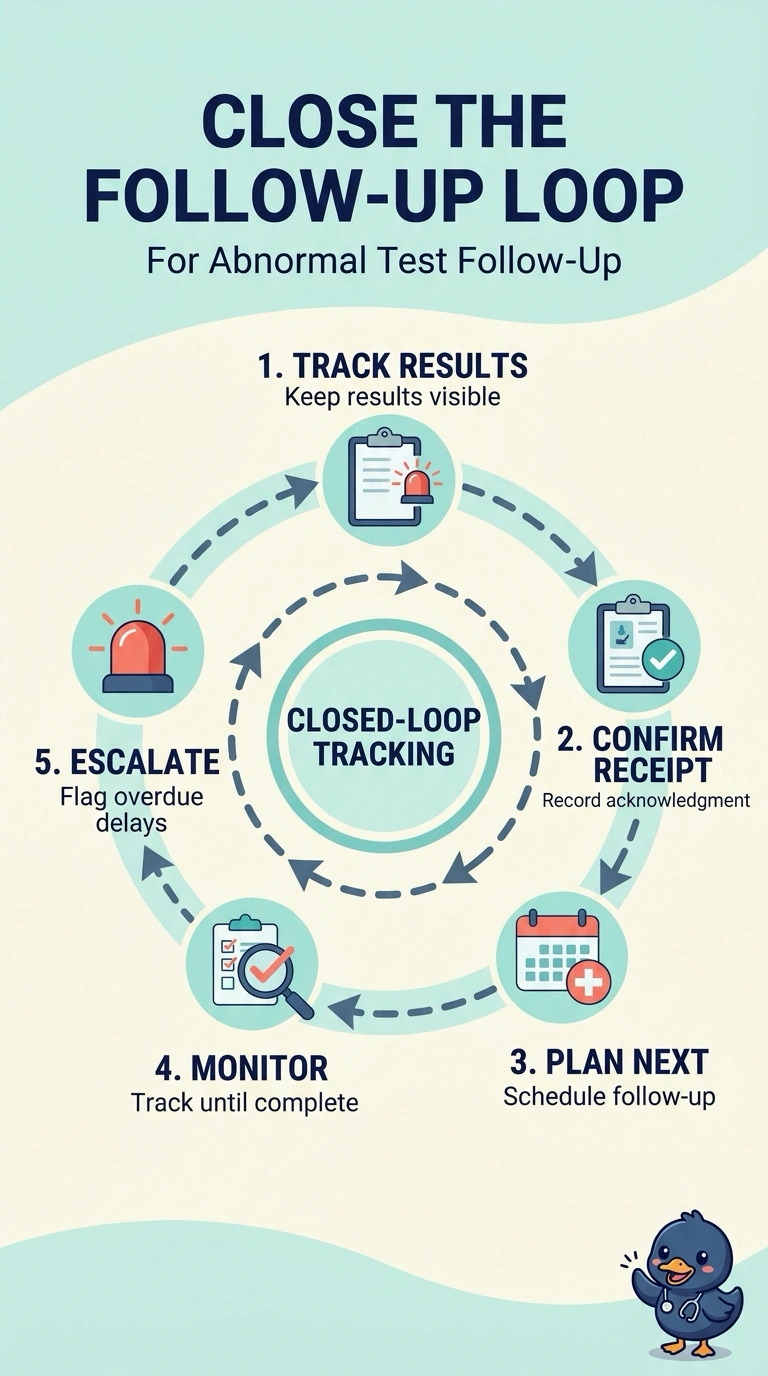
An unacknowledged scan is like a smoke detector chirping in an empty hallway—nobody acts unless someone owns the alert. When you build closed-loop result tracking, every critical or incidental finding stays open until a clinician documents follow-up. The trap is filing reports without acknowledgment or relying on passive reminders or patients to close the loop.
Full Explanation
Establishing closed-loop tracking for abnormal test follow-up creates a reliable safety net that tracks every actionable finding from result release through clinician review, patient notification, and scheduled diagnostic follow-up. Diagnostic delays frequently occur during handoffs between ordering providers, covering clinicians, and specialists when inbox alerts go unread or lack escalation rules. Automated tracking queues with time-based escalation ensure incidental findings such as pulmonary nodules do not disappear into the chart. Sending the abnormal report to the ordering clinician's inbox with a read receipt only confirms a message was opened and does not ensure follow-up action, leaving findings with no owner or escalation if the clinician is absent or busy. Adding an annual reminder to review old imaging for incidental findings provides passive review and allows cancers to progress while nodules remain unmonitored. Requiring patients to call the radiology department for their own results shifts system accountability onto patients who may not understand medical urgency or face language and access barriers. Even electronic tracking fails without clear covering-clinician handoff protocols during vacations. Audit radiology reports flagged with incidental recommendations to verify documented patient communication and scheduled follow-up within the target window.
Prefer to study offline? Printable PDF study book + test engine ($7.50, unofficial). These questions stay free here.