
A pediatric hospital finishes constructing a new acute stabilization bay and plans to begin admitting critically ill patients next week. Before opening the space, how should the patient safety team proactively identify hidden equipment, layout, and communication hazards?
Select an answer to reveal the explanation.
Short Explanation
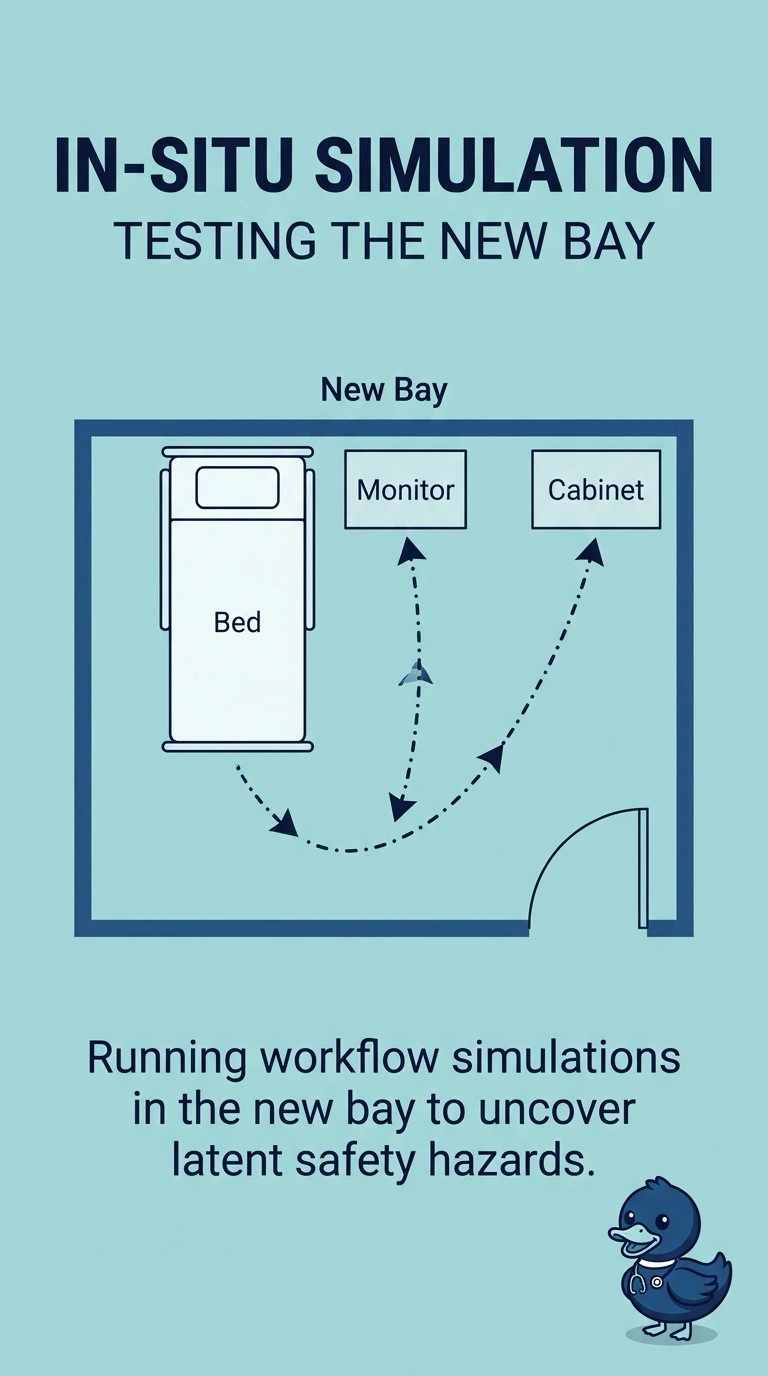
Blueprints look neat on a table, but you only discover where crash carts block doorways or cords fall short when teams move through the real room. Running in-situ simulations catches latent hazards before a real child is at risk. Don't fall for the trap of relying on signed floor-plan checklists or waiting for live incidents.
Full Explanation
Proactive safety design requires testing how people, tools, and the physical environment interact under realistic clinical pressure. "Running in-situ workflow simulations in the new bay to uncover latent safety hazards" places actual nurses, physicians, and respiratory therapists inside the finished room with a manikin to expose missing supplies, awkward monitor sightlines, and communication dead zones before go-live. "Waiting until the first month of live patient care to log equipment placement issues" turns real patients into test subjects for preventable environmental defects. "Asking clinical staff to sign a checklist confirming they read the new unit floor plan" verifies passive reading rather than functional readiness during an emergency. "Reviewing architectural blueprints with the design team and approving the final layout" misses dynamic physical constraints such as reach distances, noise levels, and team crowding around the bed. As a caveat, simulations only improve safety when findings are logged, prioritized, and fixed before the unit opens. As an operational check, hold a structured debrief immediately after each drill and verify that every identified physical or supply hazard is resolved prior to the first patient admission.
Prefer to study offline? Printable PDF study book + test engine ($7.50, unofficial). These questions stay free here.