
During an understaffed night shift, a nurse administers the wrong medication dose after pulling one of two look-alike vials stored side by side in an automated dispensing cabinet. How should leadership respond first under a Just Culture framework?
Select an answer to reveal the explanation.
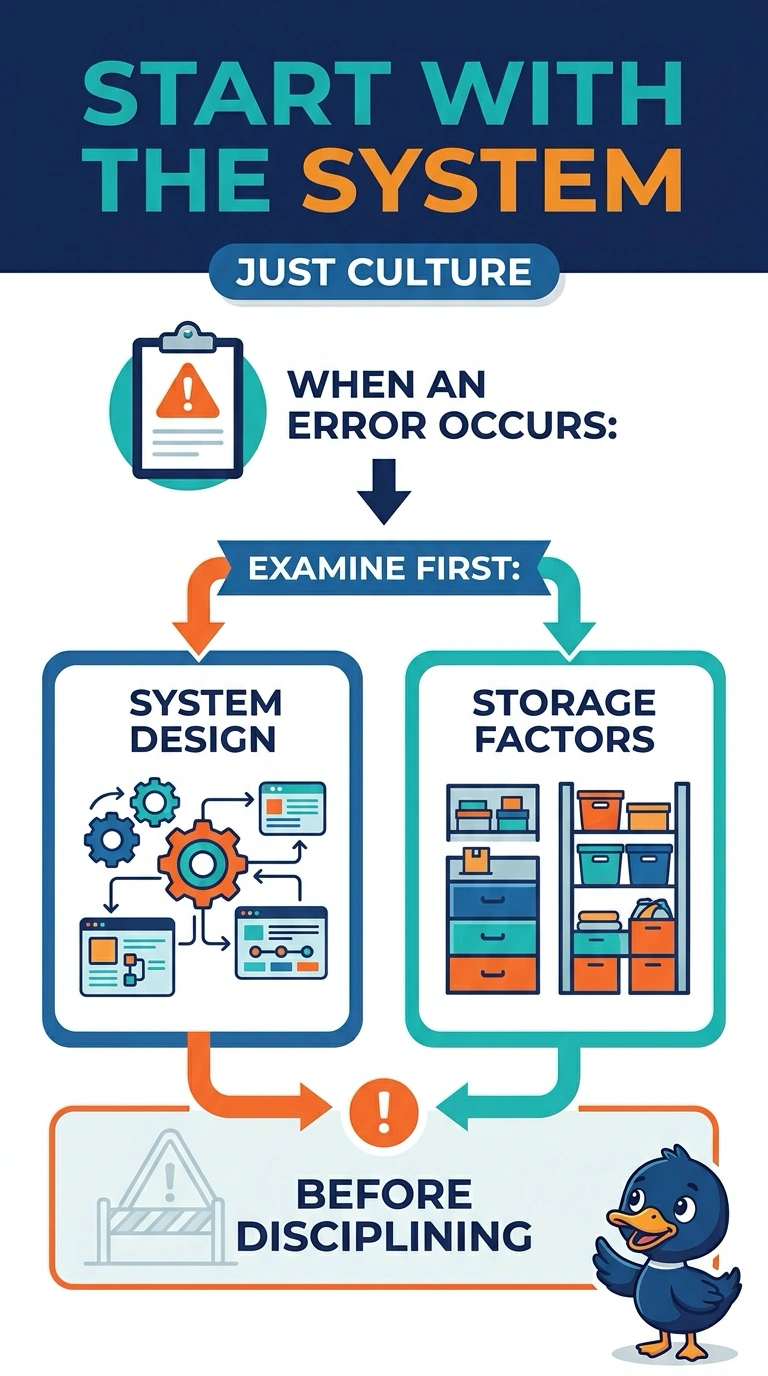
Short Explanation
Imagine putting salt and sugar in identical jars right next to each other and blaming the cook when a recipe goes wrong. With Just Culture, you examine system traps first, rather than punish a human slip, rely on a policy sign-off, or wait for another error while the cabinet hazard remains.
Full Explanation
Examine system design and storage factors before disciplining because Just Culture distinguishes human error and system-induced at-risk behavior from reckless conduct. Look-alike packaging and poor cabinet layout predictably set clinicians up to fail, especially during an understaffed shift. Issuing an immediate written warning to deter future medication errors punishes an honest human slip, can make staff fear reporting events, and leaves the hazardous storage configuration intact for the next shift. Requiring all nurses to sign a policy acknowledging medication rules relies on weak administrative reminders; it does not fix visual similarity or workload pressures at the point of care. Waiting for a second similar error before altering cabinet layouts ignores a known latent safety hazard and exposes additional patients to preventable harm. One caveat: Just Culture does not excuse intentional disregard of substantial and unjustifiable risk, so leadership must still assess whether reckless behavior occurred. As a practical check, physically separate look-alike vials into distinct cabinet bins, add high-alert auxiliary labels, and audit near-miss medication reports over the next quarter.
Prefer to study offline? Printable PDF study book + test engine ($7.50, unofficial). These questions stay free here.