
Intensive care nurses silence dozens of pulse oximetry and telemetry alarms each hour because most alerts reflect brief motion artifacts rather than true clinical deterioration, causing staff to miss an actual arrhythmia alarm. Which patient safety intervention best addresses this hazard?
Select an answer to reveal the explanation.
Short Explanation
When every minor wiggle triggers a siren, your brain eventually tunes out the noise—and that is how real emergencies get missed. To fix alarm fatigue, you have to cut down the false alarms at their source rather than adding paperwork, extra checks, or turning up the volume.
Full Explanation
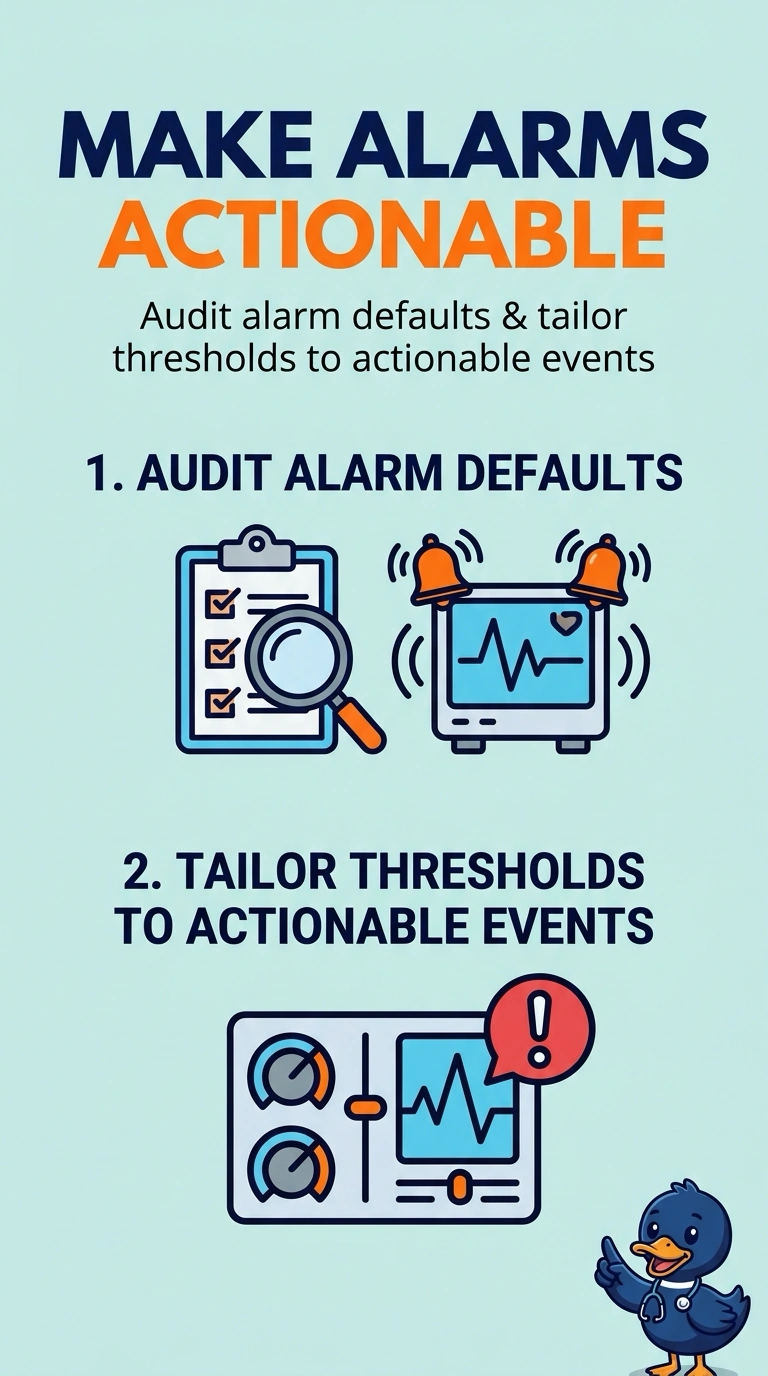
Audit alarm defaults and tailor thresholds to actionable events addresses alarm fatigue by eliminating non-actionable alerts caused by overly sensitive factory defaults, poor skin-electrode prep, or brief motion artifacts. When monitors sound primarily for clinically meaningful changes, nurses regain trust in alerts and respond faster to true patient deterioration. Require nurses to document a reason when silencing an alarm for more than five minutes adds documentation burden to an already overloaded workflow without reducing the underlying flood of false alerts. Add a second audible tone to telemetry alarms on each bedside monitor worsens noise pollution and cognitive strain without improving the signal-to-noise ratio. Add a charge nurse alarm review at each shift change adds staffing burden and verification delays without reducing false alarms at their source and is infeasible when dozens of alarms fire each hour. As a caveat, threshold adjustments must follow evidence-based clinical parameters and unit-approved protocols rather than ad hoc bedside silencing. For an operational check, pull monitor alert logs for two weeks, identify the top non-actionable alarm types, and track alarms per bed-day after updating default thresholds and lead-replacement schedules.
Prefer to study offline? Printable PDF study book + test engine ($7.50, unofficial). These questions stay free here.