
A hospitalized patient suffers a severe allergic reaction after receiving a documented contraindicated antibiotic during a shift change. Following immediate clinical stabilization, what is the most appropriate response by leadership and the patient safety team?
Select an answer to reveal the explanation.
Short Explanation
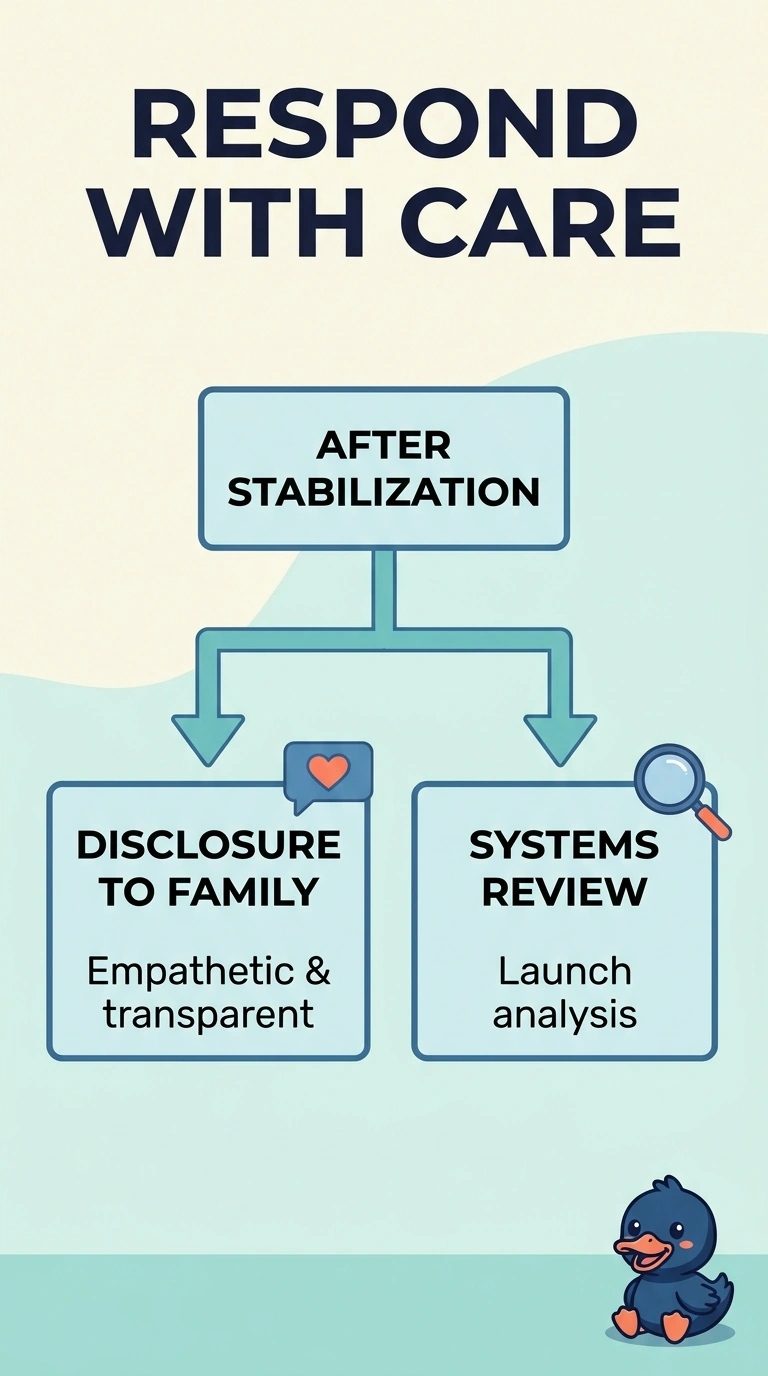
After patient harm, silence breeds distrust while blaming a single nurse hides the broken allergy alert that failed them. The trap is letting legal fear stall honest communication when your ethical and safety duty is prompt, empathetic openness paired with system learning.
Full Explanation
Under AHRQ's Communication and Optimal Resolution (CANDOR) framework and modern patient safety standards, ethical care after unexpected harm requires both honest communication and rigorous system learning. Leadership should Provide empathetic, transparent disclosure to the family while launching a systems review, sharing known facts promptly, offering emotional support, and investigating EHR alerts, handoff gaps, and pharmacy checks. Choosing to Share only a brief written statement with the family and delay further discussion until the review ends damages trust and contradicts transparency obligations. Choosing to Ask the bedside nurse to apologize informally and record it in the progress note leaves the clinician unsupported and prevents organizational learning or coordinated follow-up. Having risk management discuss repayment with the family before the care process is reviewed puts the billing conversation ahead of the systems review. Caveat: early disclosure should stick strictly to verified clinical facts and avoid speculating about root causes before the investigation finishes. Activate the CANDOR response team promptly, assign a family liaison, and begin the event investigation without delay.
Prefer to study offline? Printable PDF study book + test engine ($7.50, unofficial). These questions stay free here.