
A bank's prebuilt service copilot already handles card disputes and is missing only the current fee table. Leadership asks about funding a ground-up replacement. What should the architect recommend?
Select an answer to reveal the explanation.
Short Explanation
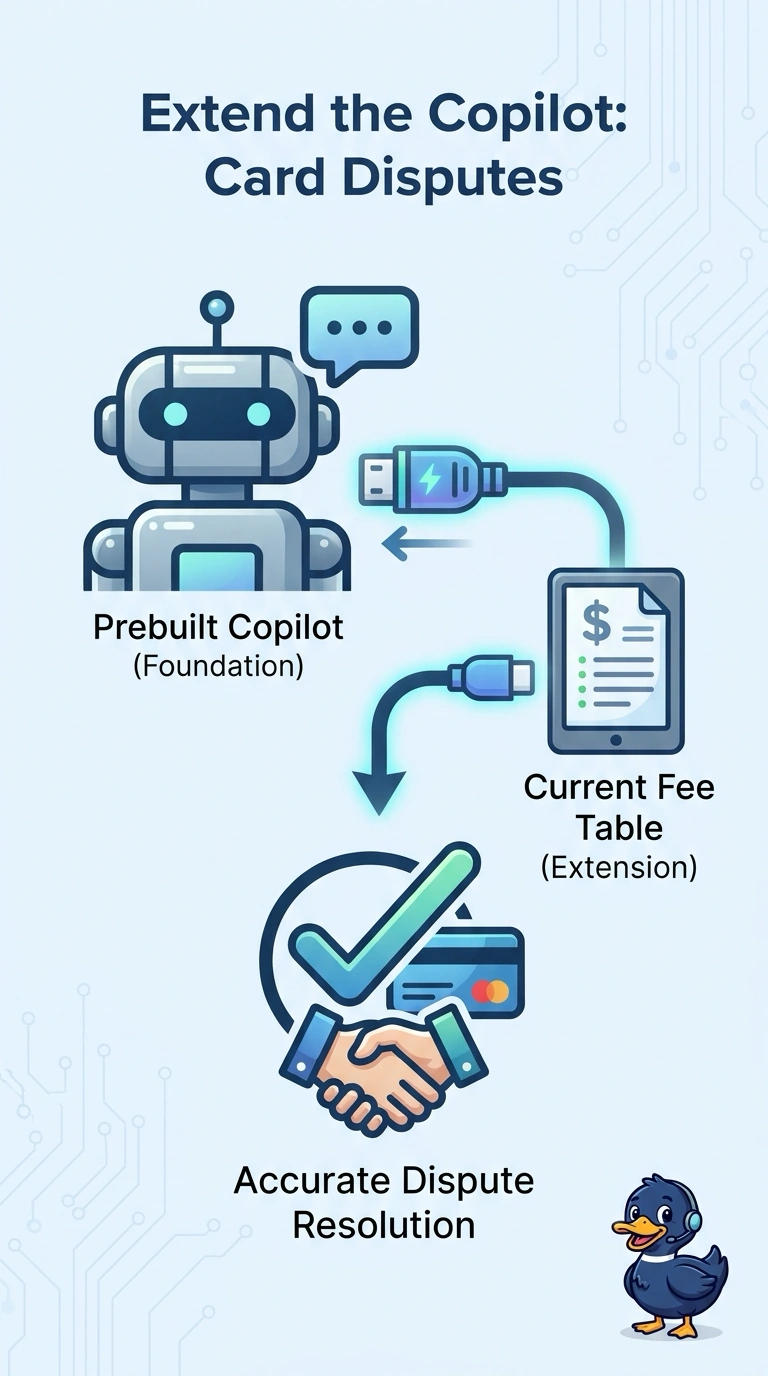
When the book is missing one table, you add the table. You extend the prebuilt dispute copilot with the current fee table. A ground-up replacement copies a copilot the bank already has.
Full Explanation
The gap is a fee table, and the prebuilt copilot already handles card disputes, so the fit is to extend that copilot rather than fund a replacement. The fee content is configuration or added knowledge on a product that already does the job. A new dispute copilot written from scratch repeats the dispute flow the bank has already paid for, and the fee table does not require that copy. A second dispute product beside the prebuilt copilot doubles the surface for the same cases and still does not, by itself, put the current fee table into the copilot that staff already use. Turning the prebuilt copilot off until a custom model memorizes the fee schedule abandons a working dispute flow for a training project that goes stale the next time a fee changes. Exam caveat: extending with a fee table still means the table has an owner and a refresh date, or the copilot will quote last quarter's fees. Operational check: ask the extended copilot for a fee that changed this month and confirm the answer matches the current table, not a rebuilt dispute flow. Change the fee again in the table and confirm the copilot follows the table without a new agent.